

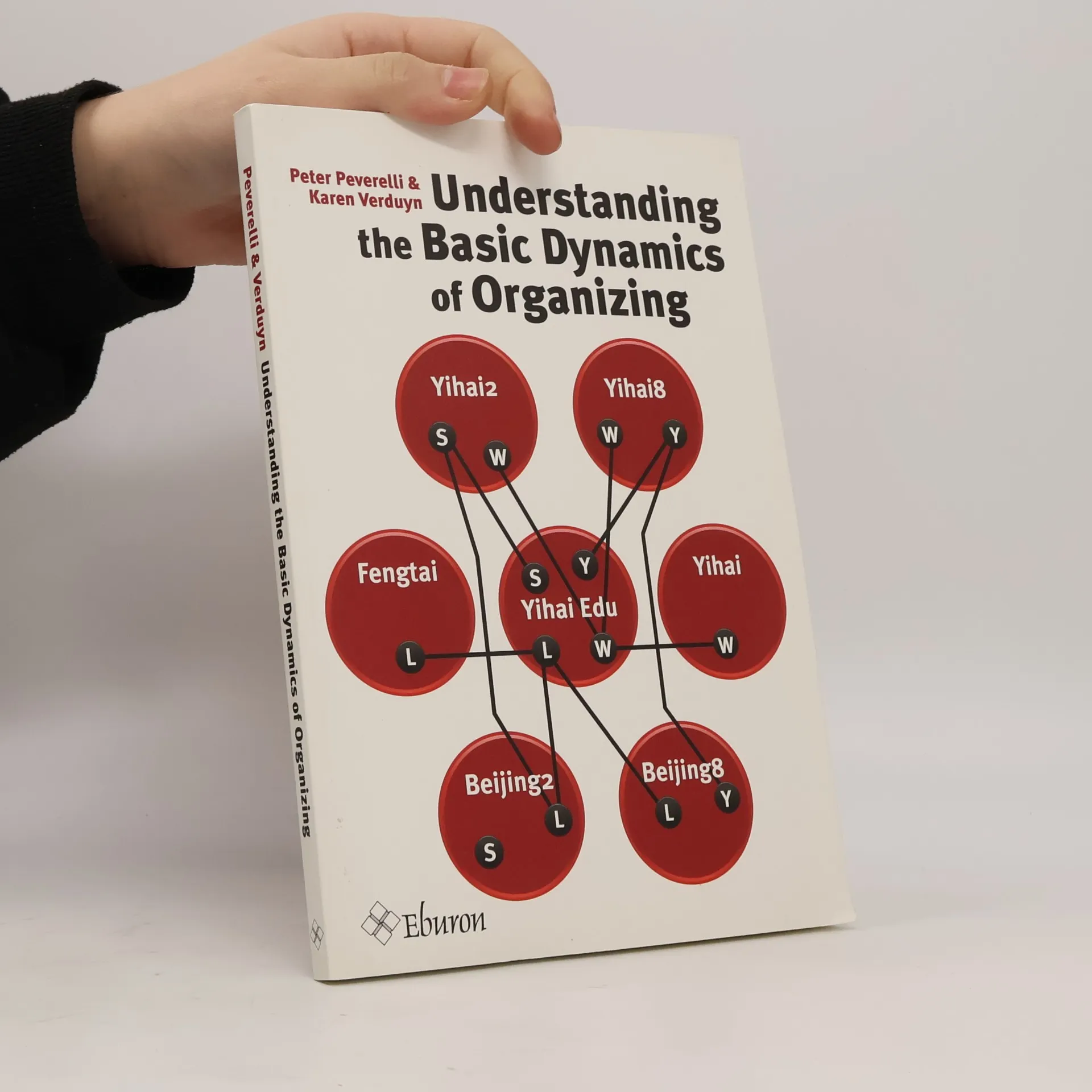


Understanding the Basic Dynamics of Organizing
Auteurs
Meer over het boek
Organisation theory is a theoretical field of study distinct from more practical fields such as general management, organisational behaviour and human resource management. It is a basic science studying the ways human actors organise themselves into groups with various degrees of complexity. Organisation theory is not the study of organisations. Groups of actors referred to as 'organisations' in everyday parlance only constitute one part of the groups introduced in this text. Organisation theory is, therefore, a necessary tool not only for students of business administration, but also for those of a wide range of other academic fields, including sociology, cultural anthropology, public administration, education and philosophy.
Een boek kopen
Understanding the Basic Dynamics of Organizing, Karen Verduyn, Peter Peverelli
- Taal

- Jaar van publicatie
- 2010
- Bindwijze
- (Paperback),
- Staat van het boek
- Zeer goed
- Prijs
- € 24,89
Betaalmethoden
Nog niemand heeft beoordeeld.
- Titel
- Understanding the Basic Dynamics of Organizing
- Taal
- Engels
- Auteurs
- Karen Verduyn, Peter Peverelli
- Uitgever
- Eburon Academic Publishers
- Jaar van publicatie
- 2010
- Formaat
- Paperback
- Aantal pagina's
- 162
- ISBN10
- 9059724151
- ISBN13
- 9789059724150
- Reeks
- Categorieën
- Tags
- Leerhulpmiddelen
- Aantekening
- Organisation theory is a theoretical field of study distinct from more practical fields such as general management, organisational behaviour and human resource management. It is a basic science studying the ways human actors organise themselves into groups with various degrees of complexity. Organisation theory is not the study of organisations. Groups of actors referred to as 'organisations' in everyday parlance only constitute one part of the groups introduced in this text. Organisation theory is, therefore, a necessary tool not only for students of business administration, but also for those of a wide range of other academic fields, including sociology, cultural anthropology, public administration, education and philosophy.