

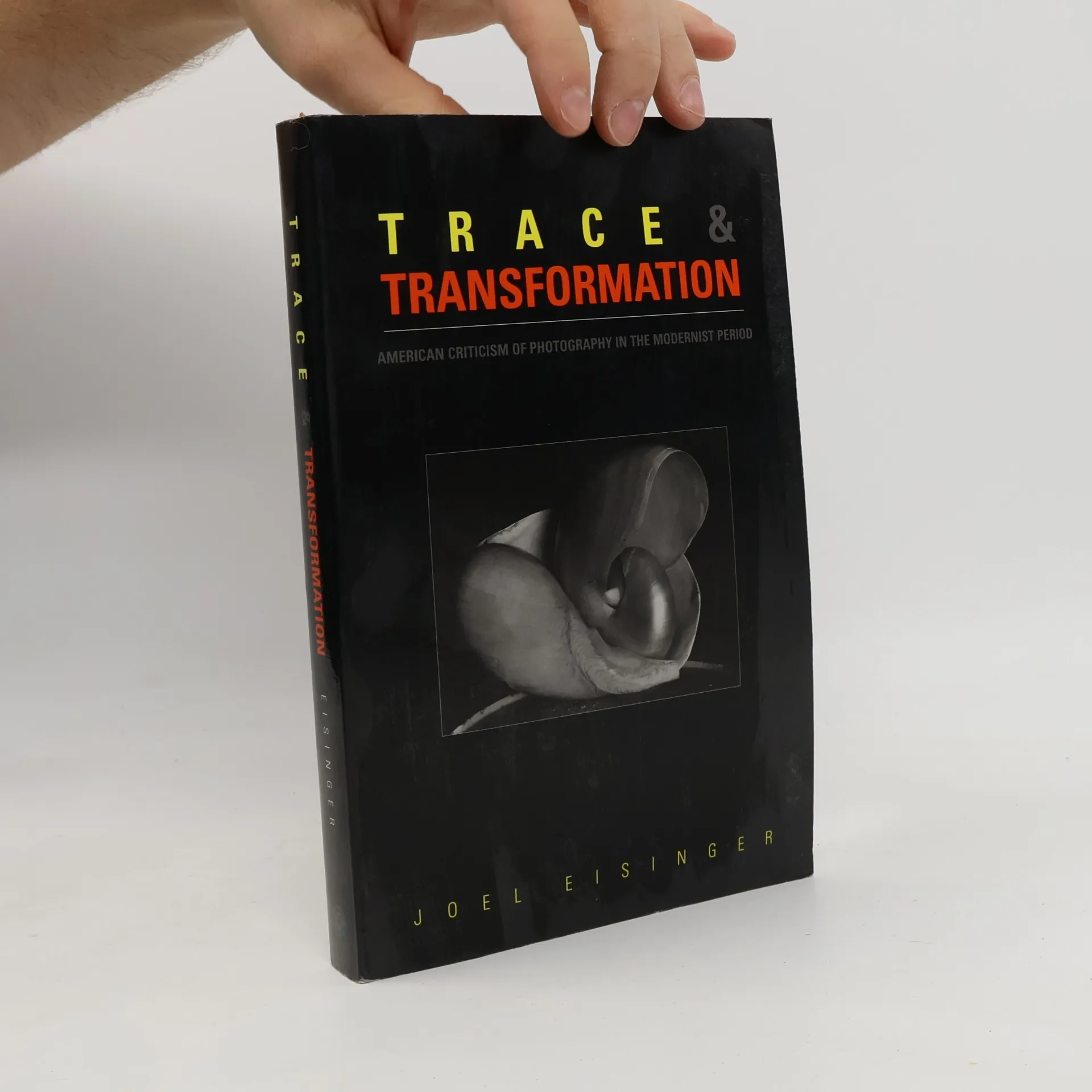
Trace and Transformation
American Criticism of Photography in the Modernist Period
Auteurs
Meer over het boek
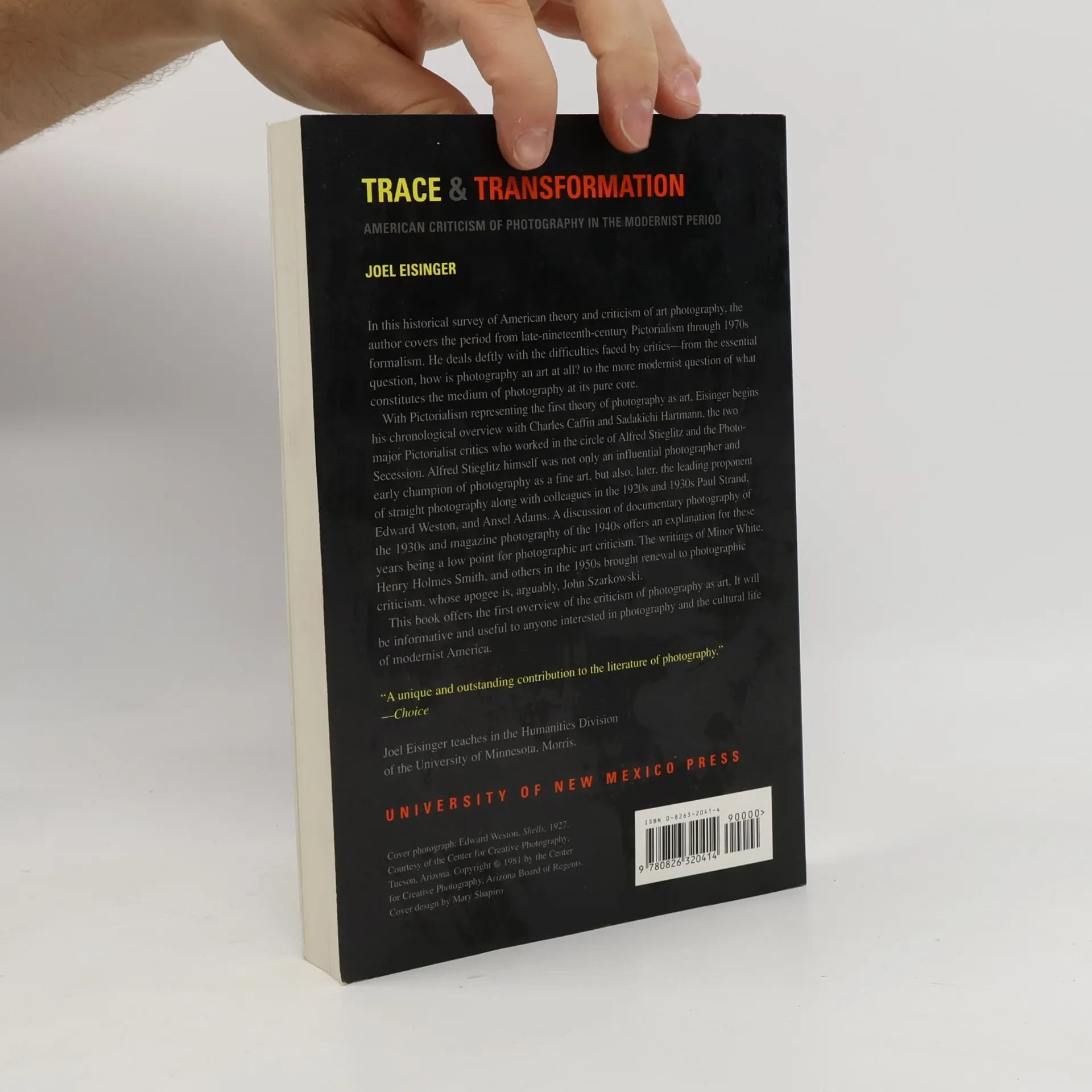
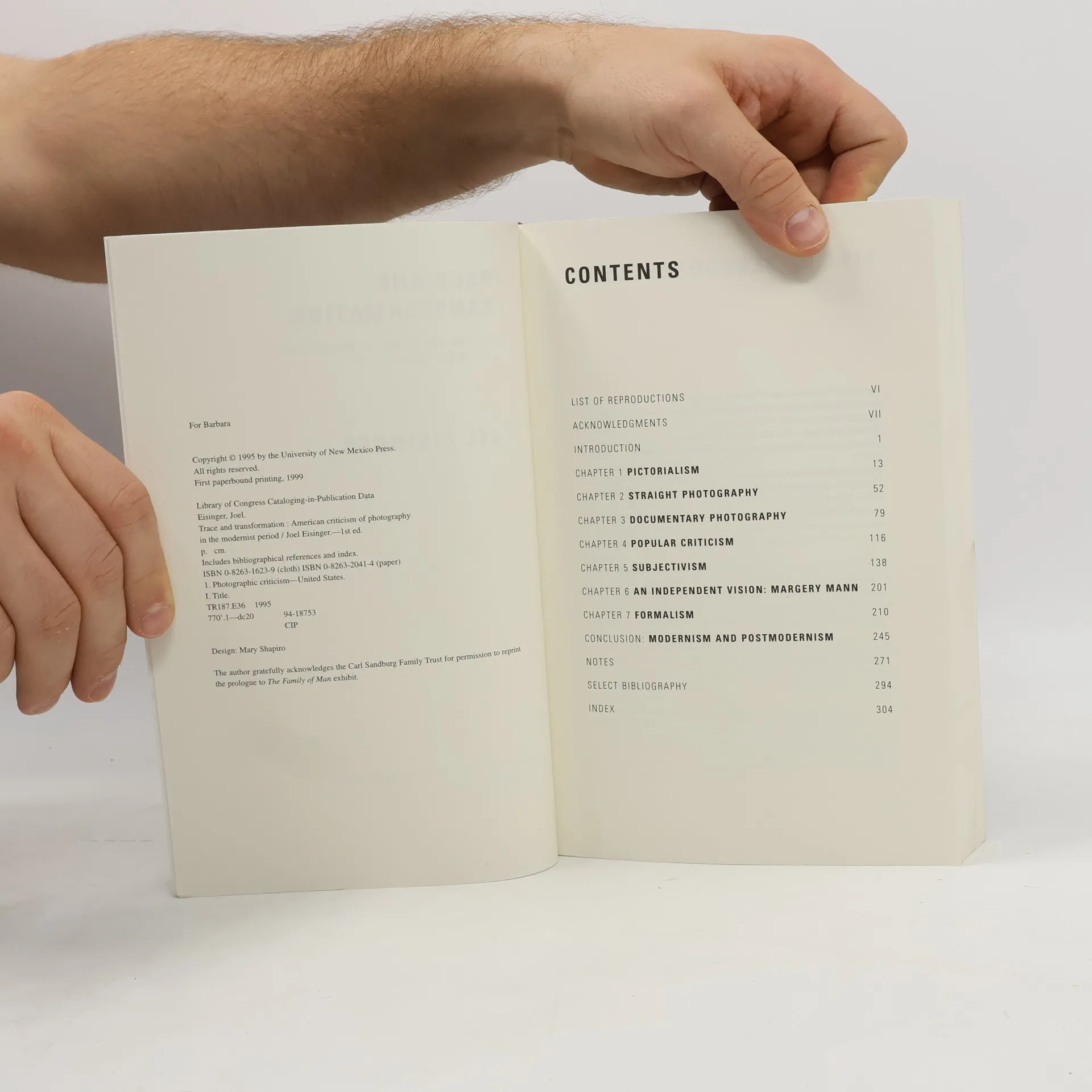
This historical survey of American theory and criticism of art photography covers the period from late-nineteenth-century Pictorialism through 1970s formalism. The author deals deftly with the difficulties faced by critics, from the essential question, how is photography an art at all? to the more modernist question of what constitutes the medium of photography at its pure core. With Pictorialism representing the first theory of photography as art, Eisinger begins his chronological overview with Charles Caffin and Sadakichi Hartmann, the two major Pictorialist critics who worked in the circle of Alfred Stieglitz and the Photo-Secession. A discussion of documentary photography of the 1930s and magazine photography of the 1940s offers an explanation for these years being a low point for photographic art criticism. The writings of Minor White, Henry Holmes Smith, and others in the 1950s brought renewal to photographic criticism, whose apogee is, arguably, John Szarkowski. This book offers the first overview of the criticism of photography as art. It will be informative and useful to anyone interested in photography and the cultural life of modernist America.
Een boek kopen
Trace and Transformation, Joel Eisinger
- Taal

- Jaar van publicatie
- 1999
- Bindwijze
- (Paperback),
- Staat van het boek
- Goed
- Prijs
- € 6,09
Betaalmethoden
Nog niemand heeft beoordeeld.
- Titel
- Trace and Transformation
- Ondertitel
- American Criticism of Photography in the Modernist Period
- Taal
- Engels
- Auteurs
- Joel Eisinger
- Uitgever
- University of New Mexico Press
- Jaar van publicatie
- 1999
- Formaat
- Paperback
- Aantal pagina's
- 314
- ISBN10
- 0826320414
- ISBN13
- 9780826320414
- Reeks
- Categorieën
- Tags
- Fotografie
- Aantekening
- This historical survey of American theory and criticism of art photography covers the period from late-nineteenth-century Pictorialism through 1970s formalism. The author deals deftly with the difficulties faced by critics, from the essential question, how is photography an art at all? to the more modernist question of what constitutes the medium of photography at its pure core. With Pictorialism representing the first theory of photography as art, Eisinger begins his chronological overview with Charles Caffin and Sadakichi Hartmann, the two major Pictorialist critics who worked in the circle of Alfred Stieglitz and the Photo-Secession. A discussion of documentary photography of the 1930s and magazine photography of the 1940s offers an explanation for these years being a low point for photographic art criticism. The writings of Minor White, Henry Holmes Smith, and others in the 1950s brought renewal to photographic criticism, whose apogee is, arguably, John Szarkowski. This book offers the first overview of the criticism of photography as art. It will be informative and useful to anyone interested in photography and the cultural life of modernist America.