

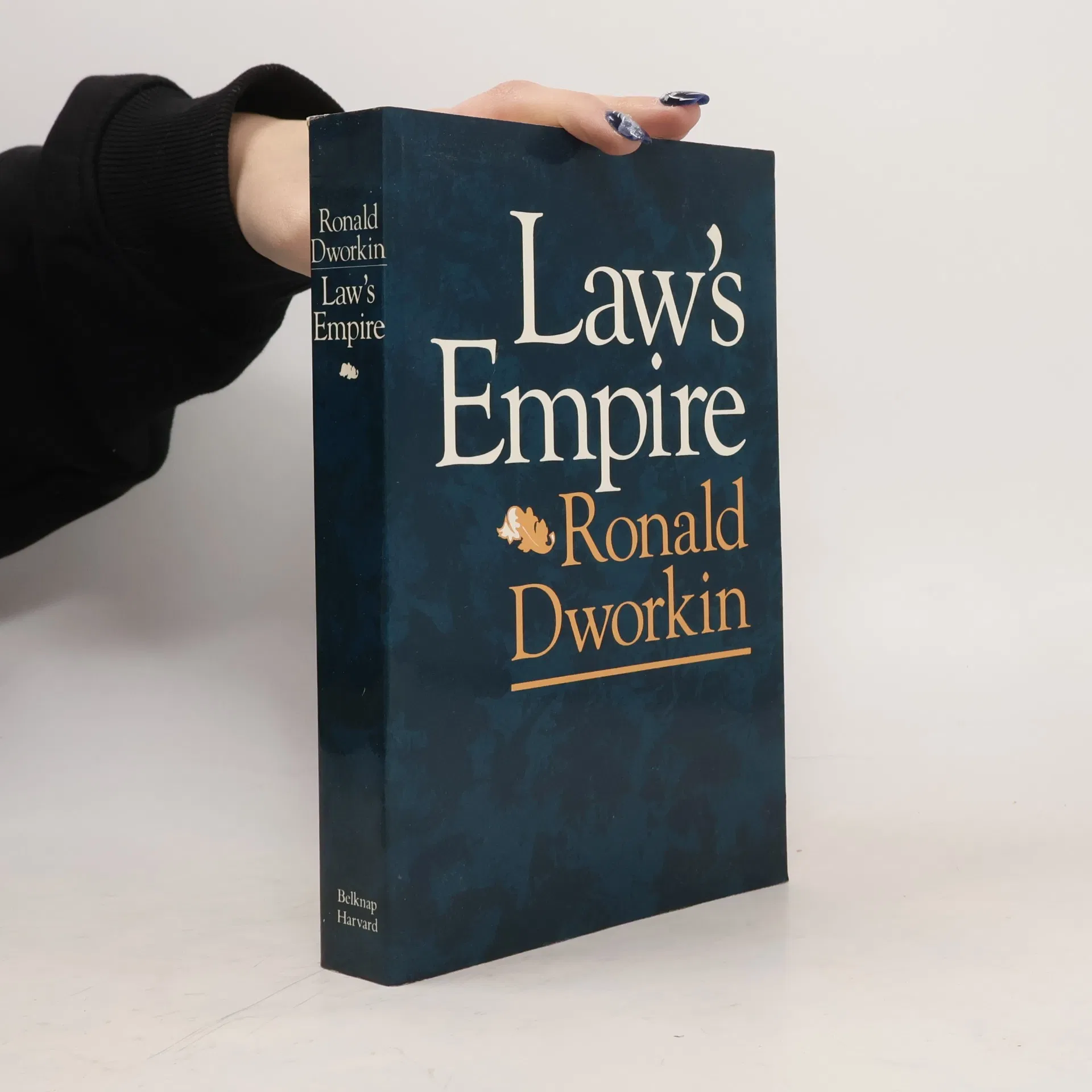



Law's Empire
Auteurs
Meer over het boek
With the incisiveness and lucid style for which he is renowned, Ronald Dworkin has written a masterful explanation of how the Anglo-American legal system works and on what principles it is grounded. Law’s Empire is a full-length presentation of his theory of law that will be studied and debated―by scholars and theorists, by lawyers and judges, by students and political activists―for years to come.Dworkin begins with the question that is at the heart of the whole legal in difficult cases how do (and how should) judges decide what the law is? He shows that judges must decide hard cases by interpreting rather than simply applying past legal decisions, and he produces a general theory of what interpretation is―in literature as well as in law―and of when one interpretation is better than others. Every legal interpretation reflects an underlying theory about the general character of Dworkin assesses three such theories. One, which has been very influential, takes the law of a community to be only what the established conventions of that community say it is. Another, currently in vogue, assumes that legal practice is best understood as an instrument of society to achieve its goals. Dworkin argues forcefully and persuasively against both these he insists that the most fundamental point of law is not to report consensus or provide efficient means to social goals, but to answer the requirement that a political community act in a coherent and principled manner toward all its members. He discusses, in the light of that view, cases at common law, cases arising under statutes, and great constitutional cases in the Supreme Court, and he systematically demonstrates that his concept of political and legal integrity is the key to Anglo-American legal theory and practice.
Een boek kopen
Law's Empire, Ronald M. Dworkin
- Taal

- Jaar van publicatie
- 1997
- Bindwijze
- (Paperback),
- Staat van het boek
- Goed
- Prijs
- € 22,49
Betaalmethoden
Nog niemand heeft beoordeeld.
- Titel
- Law's Empire
- Taal
- Engels
- Auteurs
- Ronald M. Dworkin
- Jaar van publicatie
- 1997
- Formaat
- Paperback
- Aantal pagina's
- 470
- ISBN10
- 0674518365
- ISBN13
- 9780674518360
- Reeks
- Categorieën
- Aantekening
- With the incisiveness and lucid style for which he is renowned, Ronald Dworkin has written a masterful explanation of how the Anglo-American legal system works and on what principles it is grounded. Law’s Empire is a full-length presentation of his theory of law that will be studied and debated―by scholars and theorists, by lawyers and judges, by students and political activists―for years to come.Dworkin begins with the question that is at the heart of the whole legal in difficult cases how do (and how should) judges decide what the law is? He shows that judges must decide hard cases by interpreting rather than simply applying past legal decisions, and he produces a general theory of what interpretation is―in literature as well as in law―and of when one interpretation is better than others. Every legal interpretation reflects an underlying theory about the general character of Dworkin assesses three such theories. One, which has been very influential, takes the law of a community to be only what the established conventions of that community say it is. Another, currently in vogue, assumes that legal practice is best understood as an instrument of society to achieve its goals. Dworkin argues forcefully and persuasively against both these he insists that the most fundamental point of law is not to report consensus or provide efficient means to social goals, but to answer the requirement that a political community act in a coherent and principled manner toward all its members. He discusses, in the light of that view, cases at common law, cases arising under statutes, and great constitutional cases in the Supreme Court, and he systematically demonstrates that his concept of political and legal integrity is the key to Anglo-American legal theory and practice.