

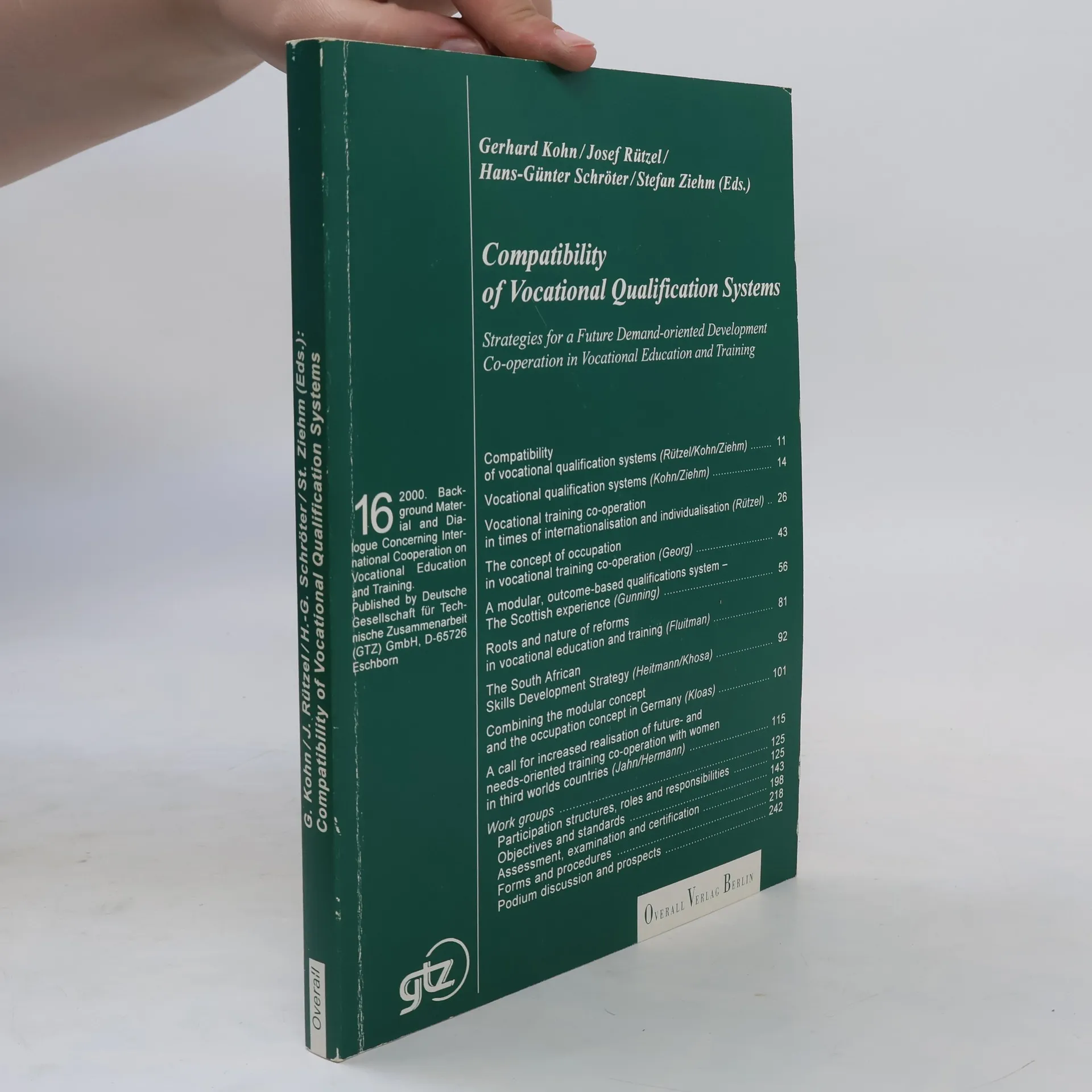


Compatibility of vocational qualification systems 16
Strategies for a Future Demand Oriented Development Co-operation in Vocational Education and Training
Auteurs
Meer over het boek
Focus of the volume is the dicussion of strategies for vocationale training cooperation that are geared to the occupation concept and the modular approaches. In view of the challenges facing vocational training world-wide at the end of this millenium both strategies display specific strenghts and specific weaknesses. These are to be spotlighted through the analysis of the impacts of these strategies on the design of programmes and projects and the processes these go through. In addition to outlining the two strategies the contributions look for ways of linking them in such as way as to ensure higher quality, greater efficiency and an optimal utilisation of resources. The wide spectrum and the sheer wealth of the experience, competence and points of view gathered is an excellent basis on which to tackle the topic.
Een boek kopen
Compatibility of vocational qualification systems 16, Gerhard Kohn
- Taal

- Jaar van publicatie
- 2000
Betaalmethoden
Nog niemand heeft beoordeeld.
- Titel
- Compatibility of vocational qualification systems 16
- Ondertitel
- Strategies for a Future Demand Oriented Development Co-operation in Vocational Education and Training
- Taal
- Engels
- Auteurs
- Gerhard Kohn
- Uitgever
- Overall-Verl.
- Jaar van publicatie
- 2000
- Aantal pagina's
- 248
- ISBN10
- 3925961291
- ISBN13
- 9783925961298
- Reeks
- Categorieën
- Tags
- Aantekening
- Focus of the volume is the dicussion of strategies for vocationale training cooperation that are geared to the occupation concept and the modular approaches. In view of the challenges facing vocational training world-wide at the end of this millenium both strategies display specific strenghts and specific weaknesses. These are to be spotlighted through the analysis of the impacts of these strategies on the design of programmes and projects and the processes these go through. In addition to outlining the two strategies the contributions look for ways of linking them in such as way as to ensure higher quality, greater efficiency and an optimal utilisation of resources. The wide spectrum and the sheer wealth of the experience, competence and points of view gathered is an excellent basis on which to tackle the topic.