



Meer over het boek
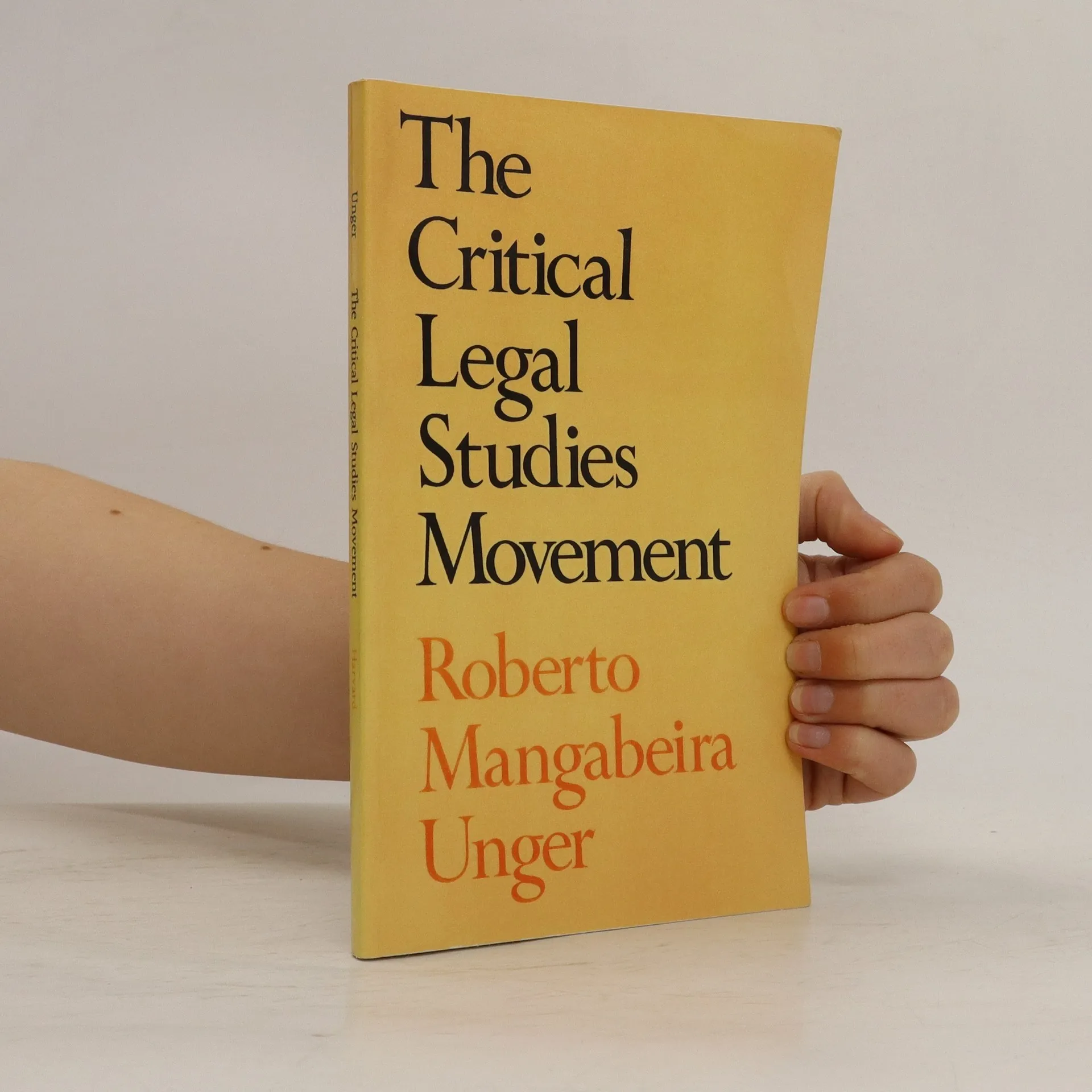
The civil rights and feminist movements of the sixties did not leave legal theory untouched. Over the following two decades, the critical legal studies movement—led by the Brazilian philosopher, social theorist and politician Roberto Unger—sought to transform traditional views of law and legal doctrine, revealing the hidden interests and class dominations in prevailing legal frameworks. It remains highly influential, having spawned more recent movements, including feminist legal studies and critical race theory. The Critical Legal Studies Movement develops its major ideas, showing how laws and legal discourse hide the social inequalities and political biases that so interest philosophy and revolutionary politics.
Een boek kopen
The Critical Legal Studies Movement, Roberto Mangabeira Unger
- Taal

- Jaar van publicatie
- 1986
- Bindwijze
- (Paperback)
Betaalmethoden
We missen je recensie hier.
- Titel
- The Critical Legal Studies Movement
- Taal
- Engels
- Auteurs
- Roberto Mangabeira Unger
- Uitgever
- Harvard University Press
- Jaar van publicatie
- 1986
- Formaat
- Paperback
- Aantal pagina's
- 144
- ISBN10
- 0674177363
- ISBN13
- 9780674177369
- Reeks
- Categorieën
- Beoordeling
- 3,85 van 5
- Aantekening
- The civil rights and feminist movements of the sixties did not leave legal theory untouched. Over the following two decades, the critical legal studies movement—led by the Brazilian philosopher, social theorist and politician Roberto Unger—sought to transform traditional views of law and legal doctrine, revealing the hidden interests and class dominations in prevailing legal frameworks. It remains highly influential, having spawned more recent movements, including feminist legal studies and critical race theory. The Critical Legal Studies Movement develops its major ideas, showing how laws and legal discourse hide the social inequalities and political biases that so interest philosophy and revolutionary politics.