

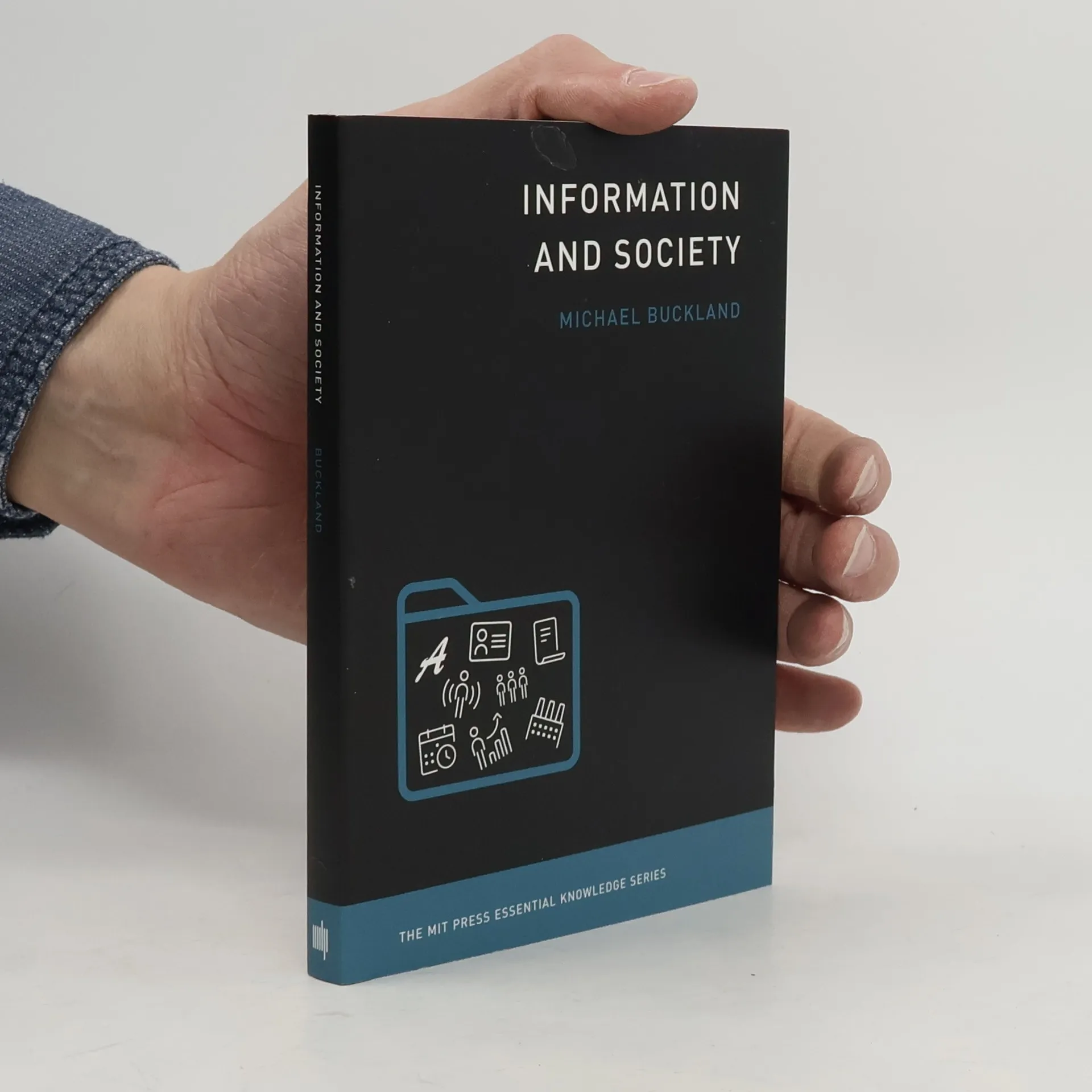
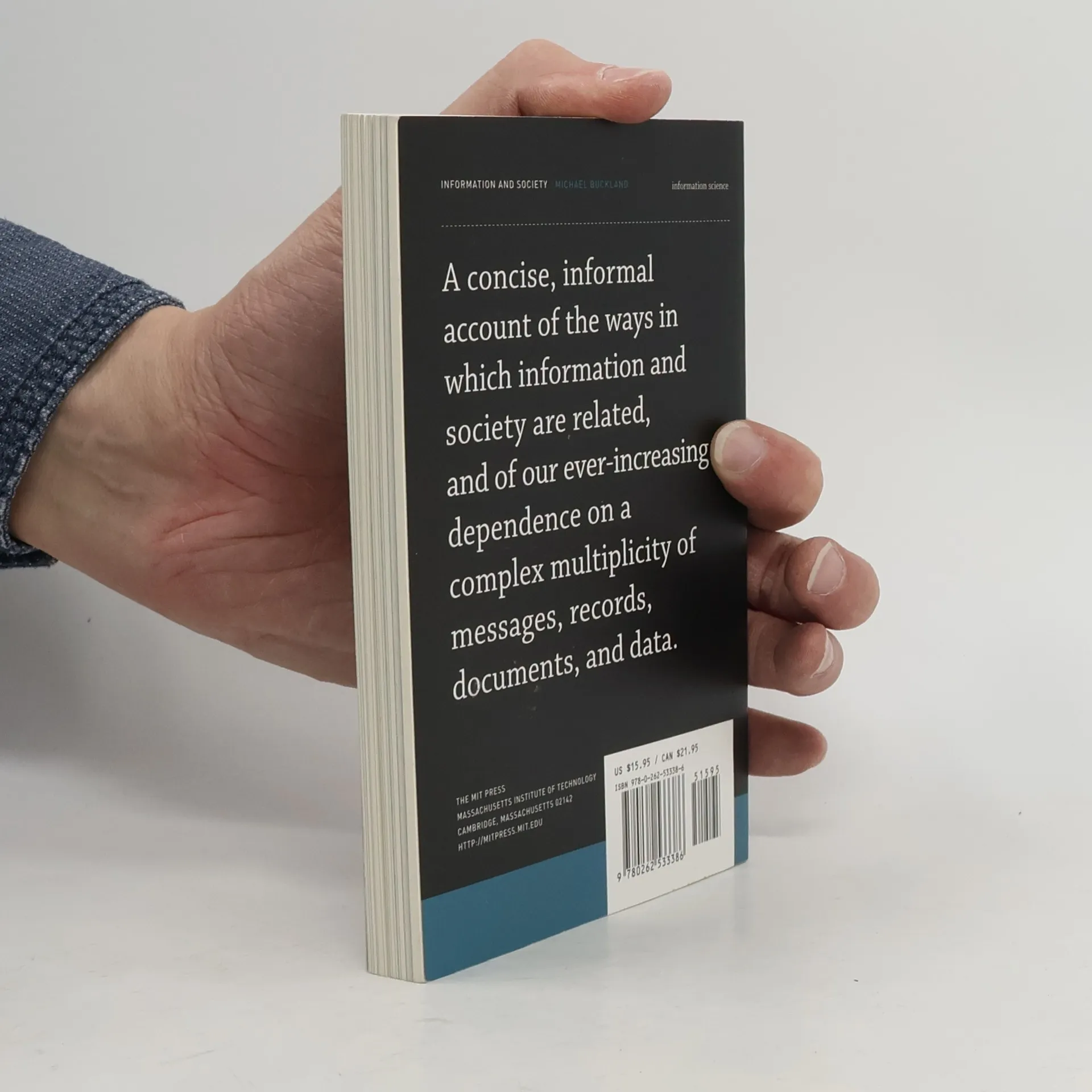

Meer over het boek
We live in an information society, or so we are often told. But what does that mean? This volume in the MIT Press Essential Knowledge series offers a concise, informal account of the ways in which information and society are related and of our ever-increasing dependence on a complex multiplicity of messages, records, documents, and data. Using information in its everyday, nonspecialized sense, Michael Buckland explores the influence of information on what we know, the role of communication and recorded information in our daily lives, and the difficulty (or ease) of finding information. He shows that all this involves human perception, social behavior, changing technologies, and issues of trust.
Een boek kopen
Information and Society, Michael Buckland
- Taal

- Jaar van publicatie
- 2017
- Bindwijze
- (Paperback)
Betaalmethoden
We missen je recensie hier.
- Titel
- Information and Society
- Taal
- Engels
- Auteurs
- Michael Buckland
- Uitgever
- MIT Press
- Jaar van publicatie
- 2017
- Formaat
- Paperback
- Aantal pagina's
- 232
- ISBN10
- 0262533383
- ISBN13
- 9780262533386
- Reeks
- Categorieën
- Beoordeling
- 3,25 van 5
- Aantekening
- We live in an information society, or so we are often told. But what does that mean? This volume in the MIT Press Essential Knowledge series offers a concise, informal account of the ways in which information and society are related and of our ever-increasing dependence on a complex multiplicity of messages, records, documents, and data. Using information in its everyday, nonspecialized sense, Michael Buckland explores the influence of information on what we know, the role of communication and recorded information in our daily lives, and the difficulty (or ease) of finding information. He shows that all this involves human perception, social behavior, changing technologies, and issues of trust.