

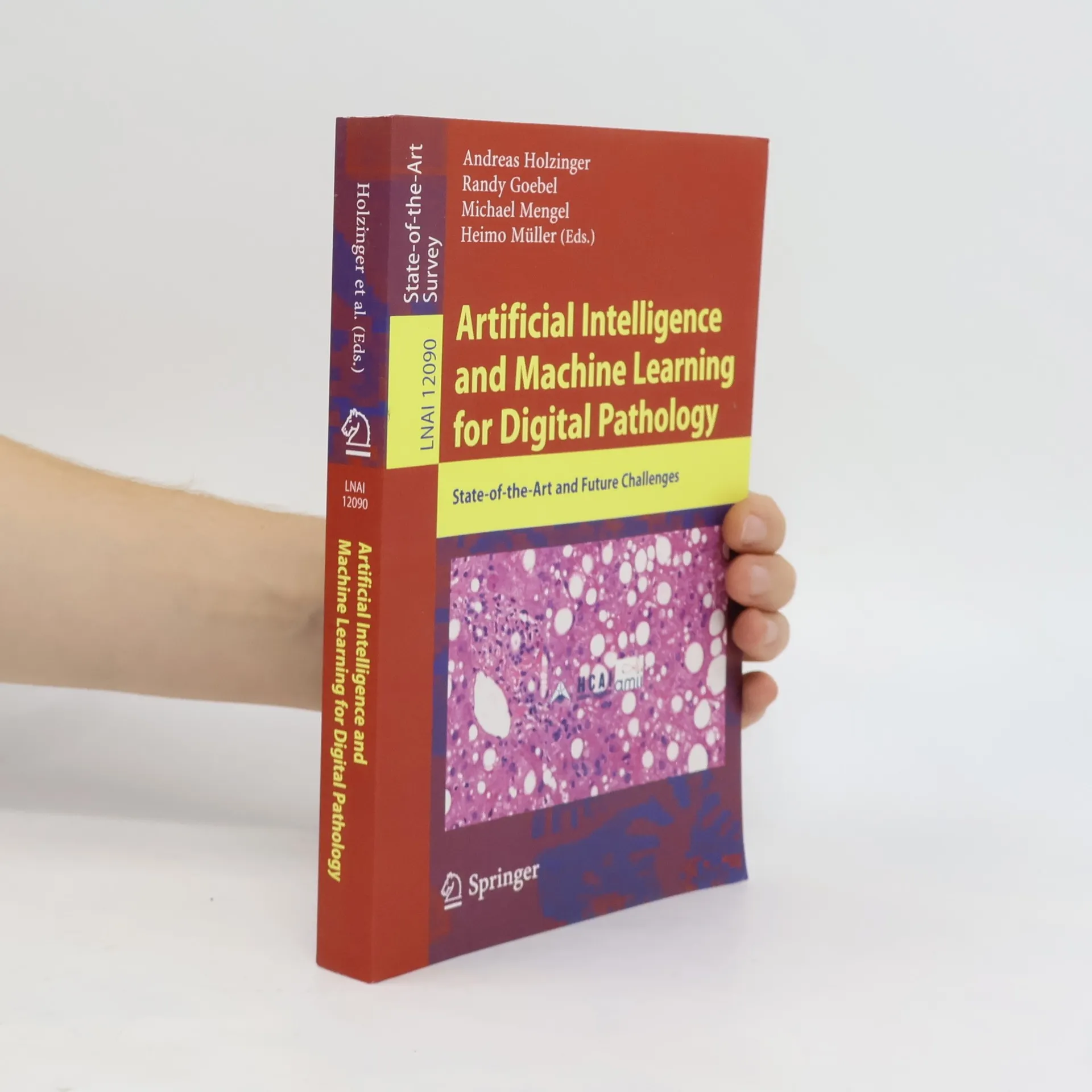


Meer over het boek
Data driven Artificial Intelligence (AI) and Machine Learning (ML) in digital pathology, radiology, and dermatology is very promising. In specific cases, for example, Deep Learning (DL), even exceeding human performance. However, in the context of medicine it is important for a human expert to verify the outcome. Consequently, there is a need for transparency and re-traceability of state-of-the-art solutions to make them usable for ethical responsible medical decision support. Moreover, big data is required for training, covering a wide spectrum of a variety of human diseases in different organ systems. These data sets must meet top-quality and regulatory criteria and must be well annotated for ML at patient-, sample-, and image-level. Here biobanks play a central and future role in providing large collections of high-quality, well-annotated samples and data. The main challenges are finding biobanks containing ‘‘fit-for-purpose’’ samples, providing quality related meta-data, gaining access to standardized medical data and annotations, and mass scanning of whole slides including efficient data management solutions.
Een boek kopen
Artificial Intelligence and Machine Learning for Digital Pathology, Andreas Holzinger, Michael Mengel, Randy Goebel, Heimo Müller
- Taal

- Jaar van publicatie
- 2020
- Bindwijze
- (Paperback)
Betaalmethoden
Nog niemand heeft beoordeeld.
- Titel
- Artificial Intelligence and Machine Learning for Digital Pathology
- Ondertitel
- State-of-the-Art and Future Challenges
- Taal
- Engels
- Uitgever
- Springer
- Jaar van publicatie
- 2020
- Formaat
- Paperback
- Aantal pagina's
- 353
- ISBN10
- 3030504018
- ISBN13
- 9783030504014
- Reeks
- Tags
- Aantekening
- Data driven Artificial Intelligence (AI) and Machine Learning (ML) in digital pathology, radiology, and dermatology is very promising. In specific cases, for example, Deep Learning (DL), even exceeding human performance. However, in the context of medicine it is important for a human expert to verify the outcome. Consequently, there is a need for transparency and re-traceability of state-of-the-art solutions to make them usable for ethical responsible medical decision support. Moreover, big data is required for training, covering a wide spectrum of a variety of human diseases in different organ systems. These data sets must meet top-quality and regulatory criteria and must be well annotated for ML at patient-, sample-, and image-level. Here biobanks play a central and future role in providing large collections of high-quality, well-annotated samples and data. The main challenges are finding biobanks containing ‘‘fit-for-purpose’’ samples, providing quality related meta-data, gaining access to standardized medical data and annotations, and mass scanning of whole slides including efficient data management solutions.