

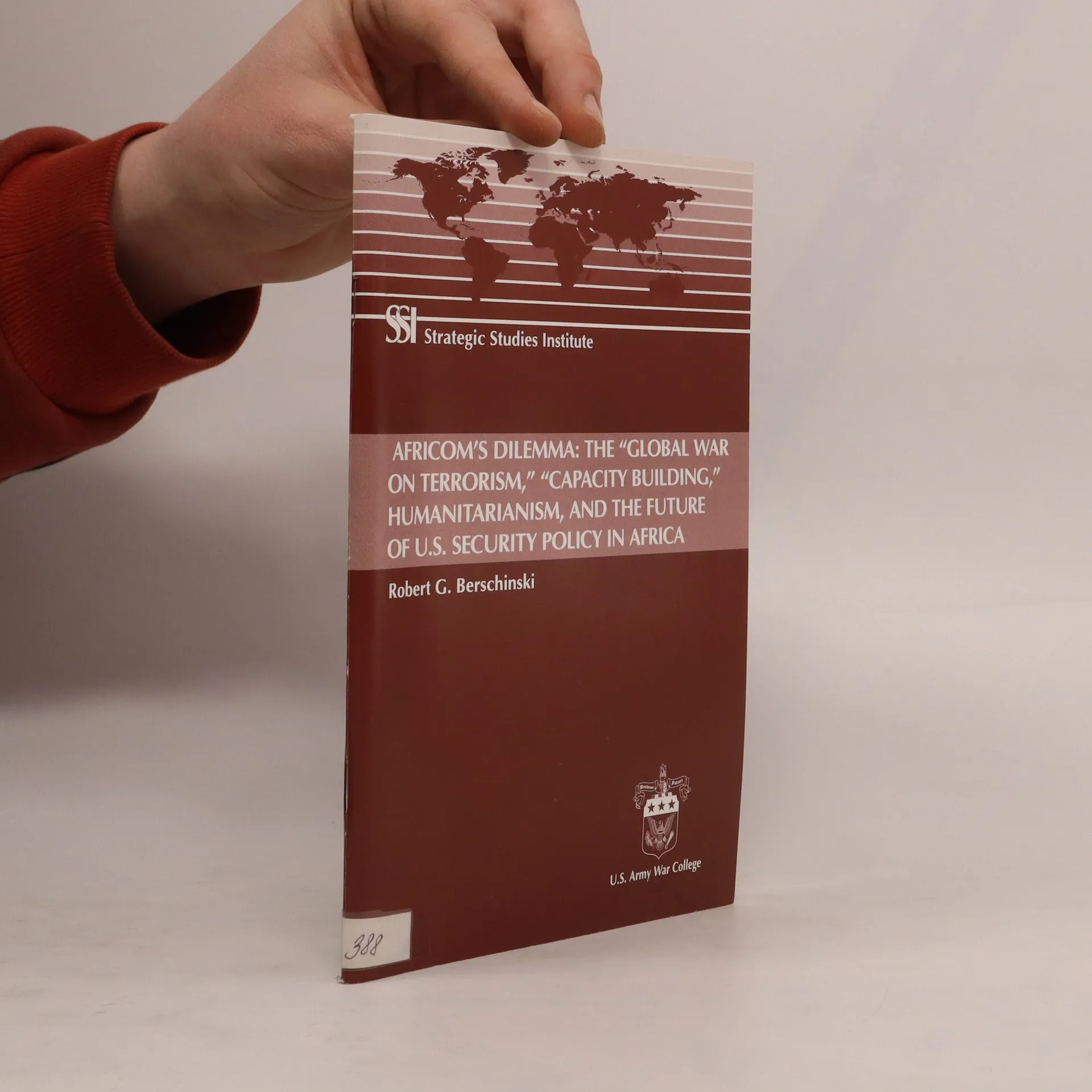
AFRICOM's Dilemma
Auteurs
Meer over het boek
Africa is a continent of growing economic, social, political, and geostrategic importance. The establishment of a new Combatant Command for Africa -- AFRICOM -- marks an important milestone in the evolution of relations between the United States and the governments of Africa. Through AFRICOM, the U.S. Department of Defense will consolidate the efforts of three existing command headquarters as it seeks a more stable environment for political and economic growth in Africa. In line with this goal, AFRICOM is pioneering a bold new method of military engagement focused on war prevention, interagency cooperation, and development rather than on traditional war fighting. The author contends that to achieve its goals vis-à-vis the African security landscape, AFRICOM must depart from the model of U.S. military operations on the continent since September 11, 2001. Using case studies from North and East Africa, the author argues that by amalgamating threats, overemphasizing "hard" counterterrorism initiatives, and intertwining military operations with humanitarianism, AFRICOM's predecessors have harmed U.S. strategic interests. In line with this conclusion, he offers policy recommendations to maximize AFRICOM's potential for future success.
Een boek kopen
AFRICOM's Dilemma, Robert G. Berschinski
- Taal

- Jaar van publicatie
- 2007
- Bindwijze
- (Paperback)
Betaalmethoden
Nog niemand heeft beoordeeld.
- Titel
- AFRICOM's Dilemma
- Taal
- Engels
- Auteurs
- Robert G. Berschinski
- Jaar van publicatie
- 2007
- Formaat
- Paperback
- Aantal pagina's
- 71
- ISBN10
- 1584873280
- ISBN13
- 9781584873280
- Reeks
- Aantekening
- Africa is a continent of growing economic, social, political, and geostrategic importance. The establishment of a new Combatant Command for Africa -- AFRICOM -- marks an important milestone in the evolution of relations between the United States and the governments of Africa. Through AFRICOM, the U.S. Department of Defense will consolidate the efforts of three existing command headquarters as it seeks a more stable environment for political and economic growth in Africa. In line with this goal, AFRICOM is pioneering a bold new method of military engagement focused on war prevention, interagency cooperation, and development rather than on traditional war fighting. The author contends that to achieve its goals vis-à-vis the African security landscape, AFRICOM must depart from the model of U.S. military operations on the continent since September 11, 2001. Using case studies from North and East Africa, the author argues that by amalgamating threats, overemphasizing "hard" counterterrorism initiatives, and intertwining military operations with humanitarianism, AFRICOM's predecessors have harmed U.S. strategic interests. In line with this conclusion, he offers policy recommendations to maximize AFRICOM's potential for future success.