

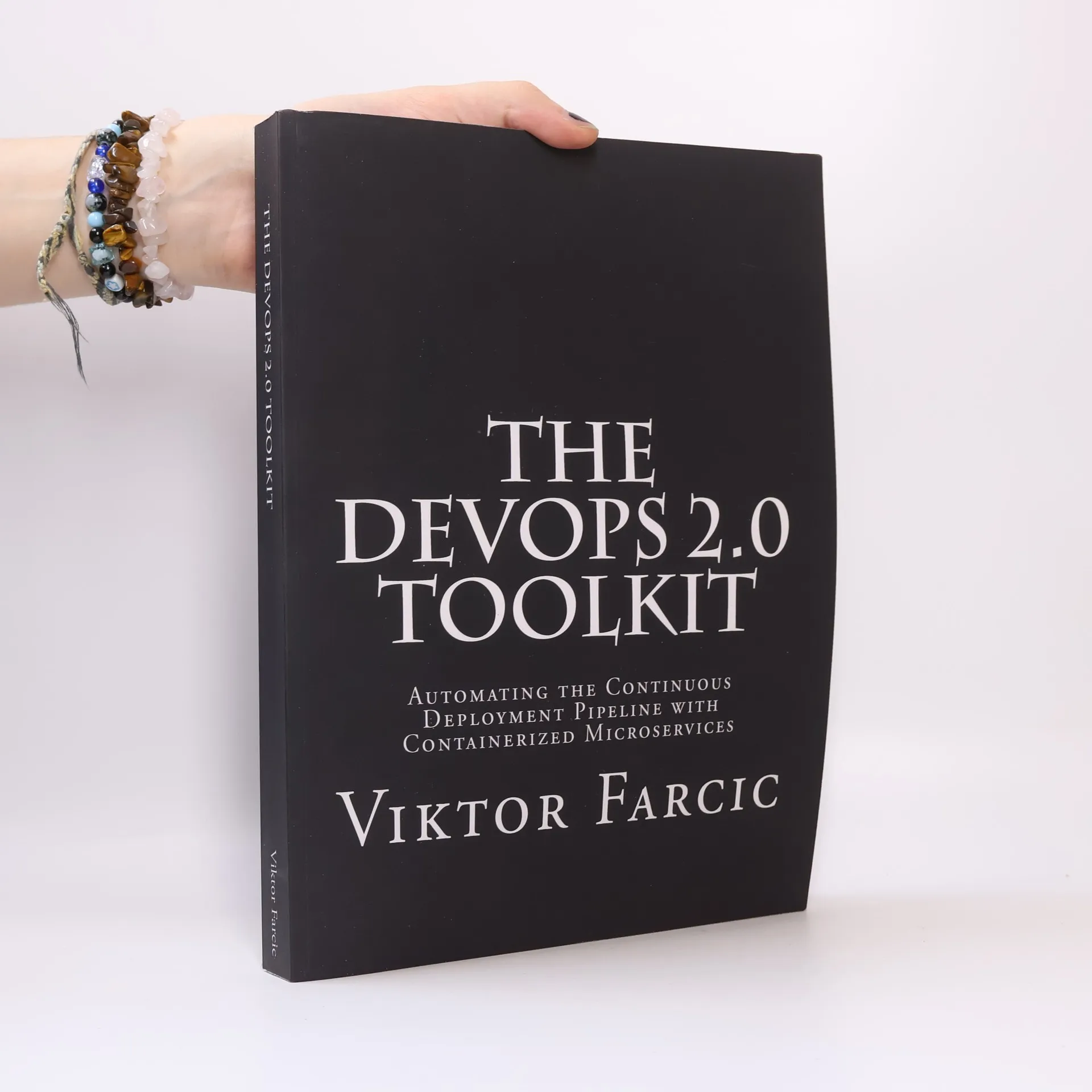


The DevOps 2.0 Toolkit
Automating the Continuous Deployment Pipeline with Containerized Microservices
Auteurs
Boekbeoordeling
Meer over het boek
"This book is about techniques that help us architect software in a better and more efficient way: With microservices packed as immutable containers, then tested and deployed continuously to servers that are automatically provisioned with configuration management tools. It's about fast, reliable and continuous deployments with zero-downtime and the ability to roll-back. It's about scaling to any number of servers, designing self-healing systems capable of recovering from both hardware and software failures, and about centralized logging and monitoring of a cluster. We will cover some of the latest and greatest practices and a variety of tools such as: Docker, Kubernetes, Ansible, Ubuntu, Docker Swarm, Docker Compose, and Consul."--Back cover.
Een boek kopen
The DevOps 2.0 Toolkit, Farcic Viktor
- Taal

- Jaar van publicatie
- 2016
- Bindwijze
- (Paperback)
Betaalmethoden
We missen je recensie hier.
- Titel
- The DevOps 2.0 Toolkit
- Ondertitel
- Automating the Continuous Deployment Pipeline with Containerized Microservices
- Taal
- Engels
- Auteurs
- Farcic Viktor
- Jaar van publicatie
- 2016
- Formaat
- Paperback
- Aantal pagina's
- 414
- ISBN10
- 152391744X
- ISBN13
- 9781523917440
- Reeks
- Tags
- Technologie
- Beoordeling
- 3,35 van 5
- Aantekening
- "This book is about techniques that help us architect software in a better and more efficient way: With microservices packed as immutable containers, then tested and deployed continuously to servers that are automatically provisioned with configuration management tools. It's about fast, reliable and continuous deployments with zero-downtime and the ability to roll-back. It's about scaling to any number of servers, designing self-healing systems capable of recovering from both hardware and software failures, and about centralized logging and monitoring of a cluster. We will cover some of the latest and greatest practices and a variety of tools such as: Docker, Kubernetes, Ansible, Ubuntu, Docker Swarm, Docker Compose, and Consul."--Back cover.