

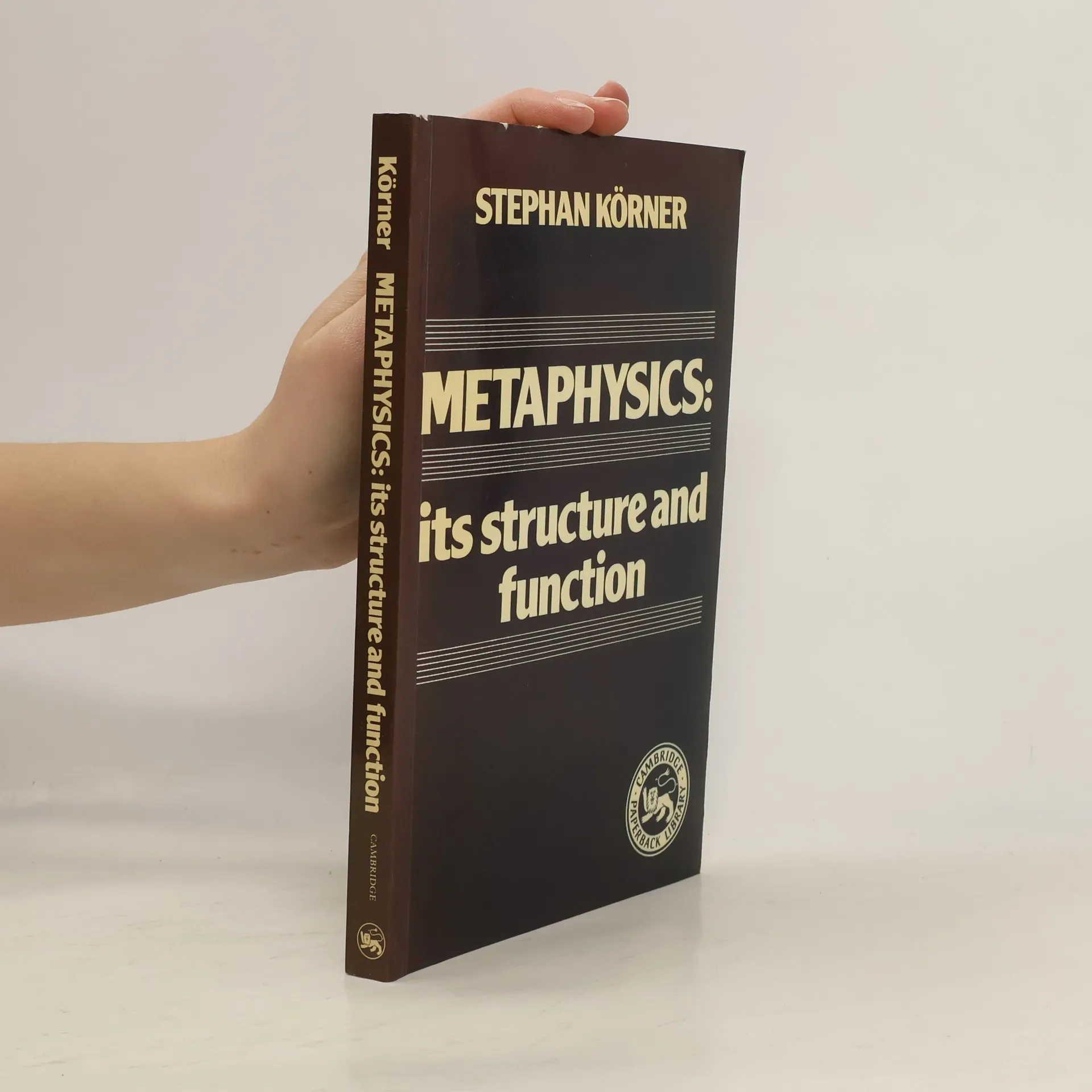


Metaphysics
Its Structure and Function
Auteurs
Parameters
Meer over het boek
This is an ambitious and substantial study of metaphysics: its nature and inescapability. Professor Körner's method may be described as 'philosophical anthropology', and aims to arrive at a characterisation of the metaphysical beliefs with which we (have to) operate. Professor Körner begins by describing how the categorical framework of a person's metaphysical beliefs may be embedded in more ordinary beliefs and practical attitudes to the world. He illustrates the variety of such frameworks and describes their role, going on to explain how they may be modified by argument and reflection. This is an independent inquiry, but also the culmination of a series of Professor Körner's earlier works. The writing is extremely clear and the material sensitively controlled, revealing great learning and many suggestive insights and comparisons. It presents overall a comprehensive and carefully thought-out account of metaphysics.
Een boek kopen
Metaphysics, Stephan Körner
- Taal

- Jaar van publicatie
- 1986
- Bindwijze
- (Paperback)
Betaalmethoden
Nog niemand heeft beoordeeld.
- Titel
- Metaphysics
- Ondertitel
- Its Structure and Function
- Taal
- Engels
- Auteurs
- Stephan Körner
- Uitgever
- Cambridge University Press
- Jaar van publicatie
- 1986
- Formaat
- Paperback
- ISBN10
- 0521338026
- ISBN13
- 9780521338028
- Reeks
- Categorieën
- Tags
- Metafysica
- Aantekening
- This is an ambitious and substantial study of metaphysics: its nature and inescapability. Professor Körner's method may be described as 'philosophical anthropology', and aims to arrive at a characterisation of the metaphysical beliefs with which we (have to) operate. Professor Körner begins by describing how the categorical framework of a person's metaphysical beliefs may be embedded in more ordinary beliefs and practical attitudes to the world. He illustrates the variety of such frameworks and describes their role, going on to explain how they may be modified by argument and reflection. This is an independent inquiry, but also the culmination of a series of Professor Körner's earlier works. The writing is extremely clear and the material sensitively controlled, revealing great learning and many suggestive insights and comparisons. It presents overall a comprehensive and carefully thought-out account of metaphysics.