


Meer over het boek
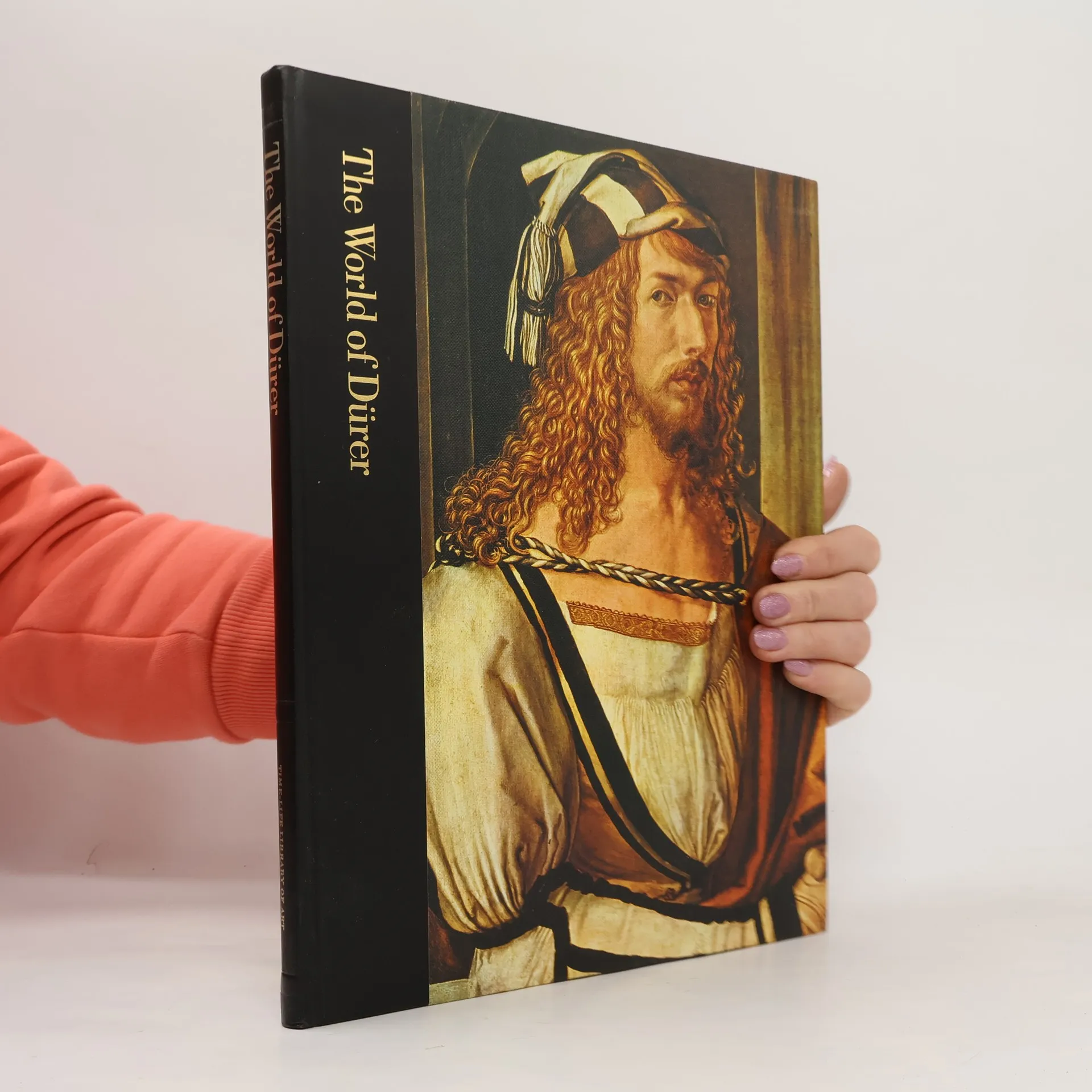
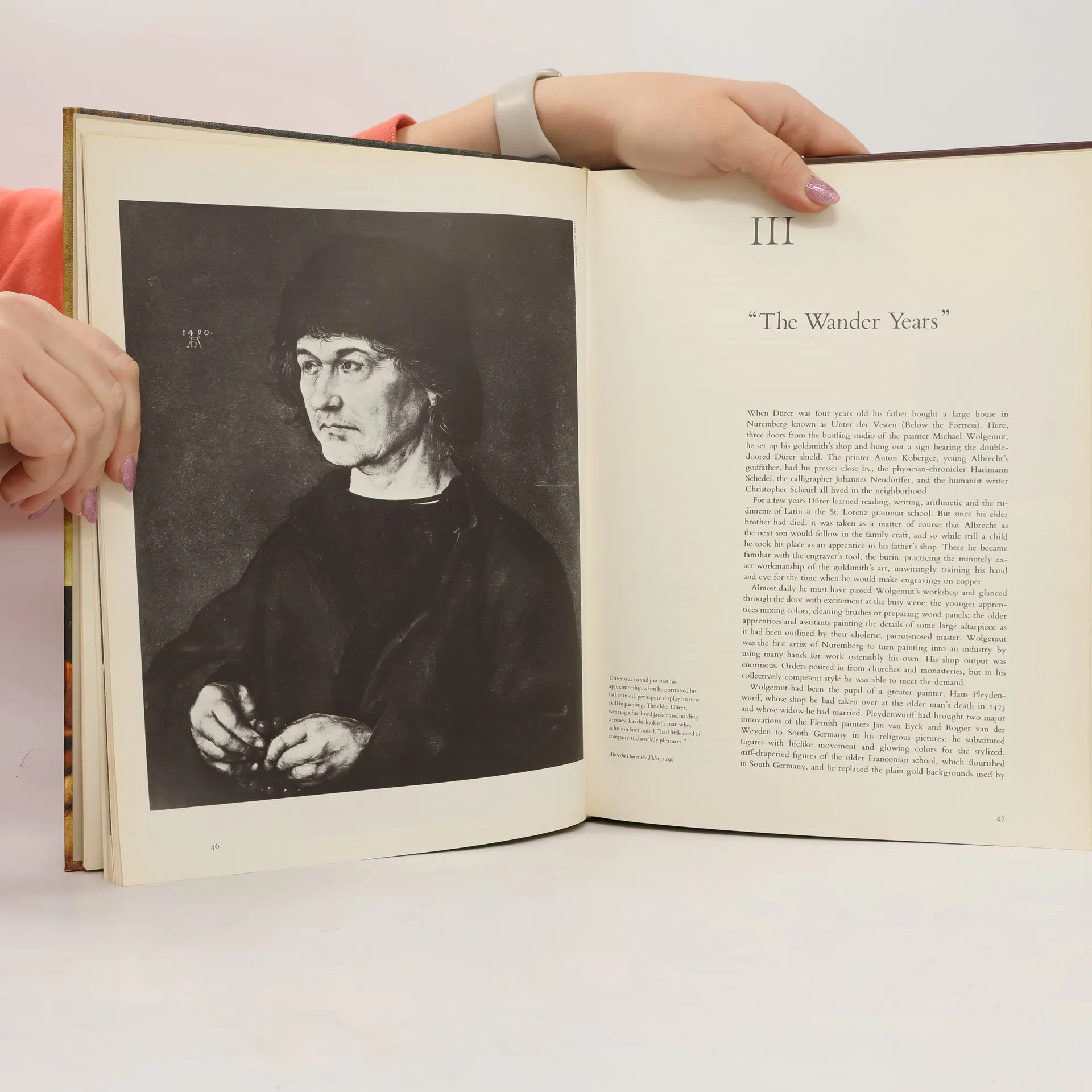
Albrecht Dürer (21 May 1471 – 6 April 1528) was a painter, printmaker, mathematician, engraver, and theorist from Nuremberg. His prints established his reputation across Europe when he was still in his twenties, and he has been regarded as the greatest artist of the Northern Renaissance ever since. His vast body of work includes altarpieces and religious works, numerous portraits and self-portraits, and copper engravings. His woodcuts, such as the Apocalypse series (1498), retain a more Gothic flavour than the rest of his work. His well-known works include the Knight, Death, and the Devil (1513), Saint Jerome in his Study (1514), and Melencolia I (1514), which has been the subject of extensive analysis and interpretation. His watercolours mark him as one of the first European landscape artists, while his ambitious woodcuts revolutionized the potential of that medium. Dürer's introduction of classical motifs into Northern art, through his knowledge of Italian artists and German humanists, has secured his reputation as one of the most important figures of the Northern Renaissance. This is reinforced by his theoretical treatises, which involve principles of mathematics, perspective, and ideal proportions.
Een boek kopen
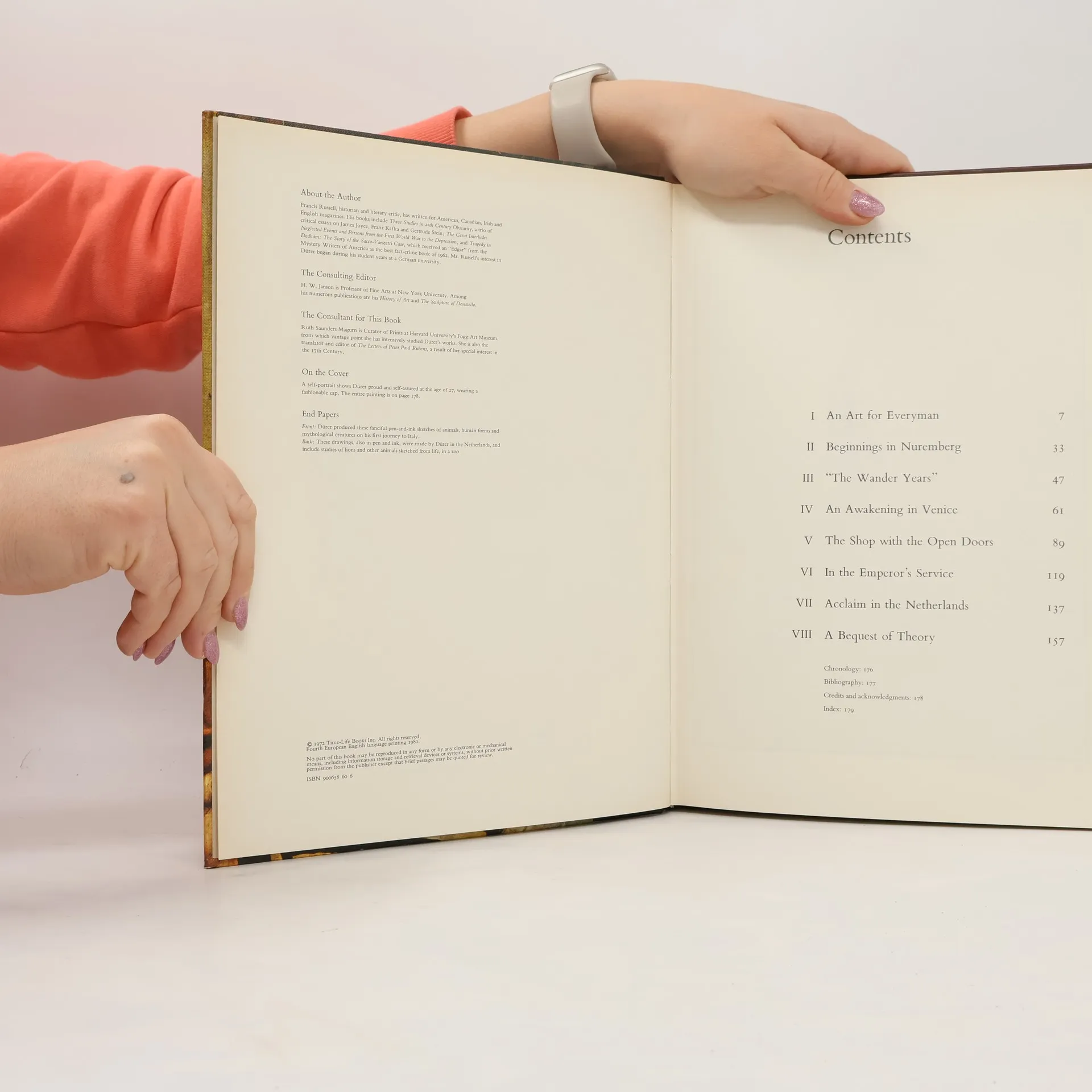
World of Dürer, Francis Russell
- Taal

- Jaar van publicatie
- 1969
- Bindwijze
- (Hardcover)
Betaalmethoden
Nog niemand heeft beoordeeld.
- Titel
- World of Dürer
- Taal
- Engels
- Auteurs
- Francis Russell
- Uitgever
- Time-Life
- Jaar van publicatie
- 1969
- Formaat
- Hardcover
- Aantal pagina's
- 184
- ISBN10
- 0900658606
- ISBN13
- 9780900658600
- Reeks
- Categorieën
- Aantekening
- Albrecht Dürer (21 May 1471 – 6 April 1528) was a painter, printmaker, mathematician, engraver, and theorist from Nuremberg. His prints established his reputation across Europe when he was still in his twenties, and he has been regarded as the greatest artist of the Northern Renaissance ever since. His vast body of work includes altarpieces and religious works, numerous portraits and self-portraits, and copper engravings. His woodcuts, such as the Apocalypse series (1498), retain a more Gothic flavour than the rest of his work. His well-known works include the Knight, Death, and the Devil (1513), Saint Jerome in his Study (1514), and Melencolia I (1514), which has been the subject of extensive analysis and interpretation. His watercolours mark him as one of the first European landscape artists, while his ambitious woodcuts revolutionized the potential of that medium. Dürer's introduction of classical motifs into Northern art, through his knowledge of Italian artists and German humanists, has secured his reputation as one of the most important figures of the Northern Renaissance. This is reinforced by his theoretical treatises, which involve principles of mathematics, perspective, and ideal proportions.