

Meer over het boek
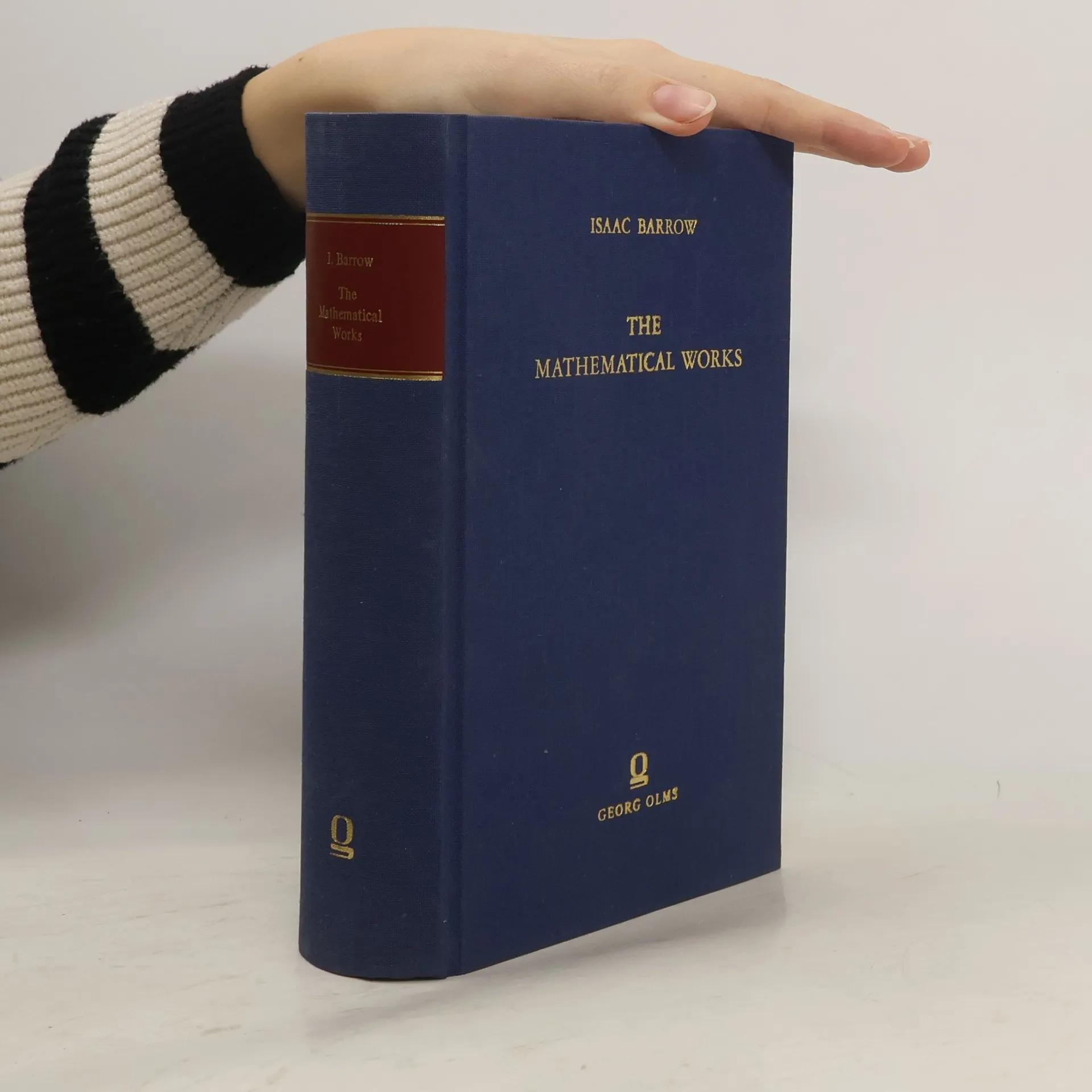
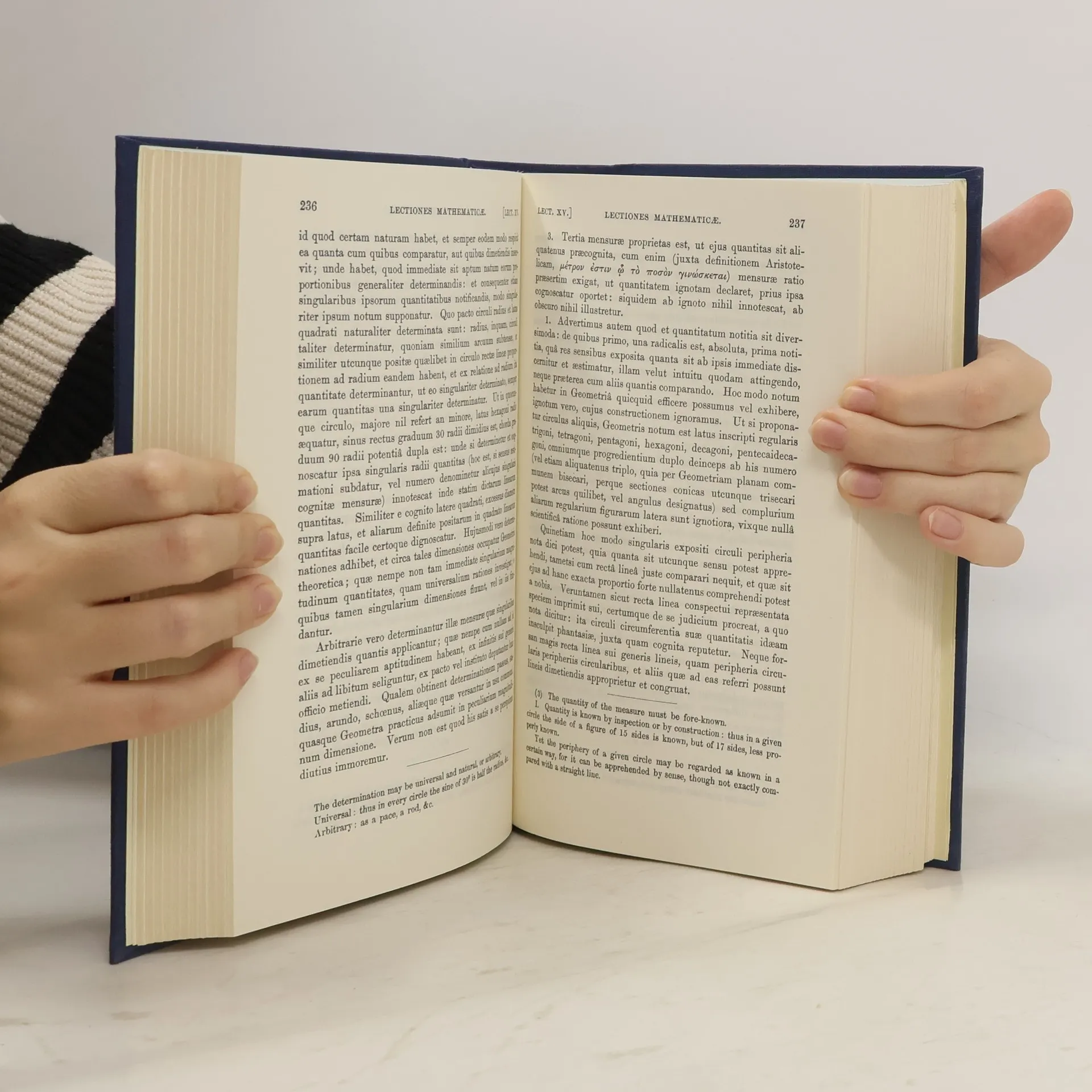
The Cambridge polymath Isaac Barrow (1630 77) gained recognition as a theologian, classicist and mathematician. This one-volume collection of his mathematical writings, dutifully edited by one of his successors as Master of Trinity College, William Whewell (1794 1866), was first published in 1860. Containing significant contributions to the field, the work consists chiefly of the lectures on mathematics, optics and geometry that Barrow gave in his position as Lucasian Professor of Mathematics between 1663 and 1669. It includes the first general statement of the fundamental theorem of calculus as well as Barrow's 'differential triangle'. Not only did he precede Isaac Newton in the Lucasian chair, but his works were also to be found in the library of Gottfried Leibniz. However, rather than considering arid questions of priority, scholars can see in these Latin texts the status of advanced mathematics just before the great revolution of Newton and Leibniz."
Een boek kopen
The Mathematical Works, Isaac Barrow
- Taal


- Jaar van publicatie
- 1973
- Bindwijze
- (Hardcover)
Betaalmethoden
Nog niemand heeft beoordeeld.
- Titel
- The Mathematical Works
- Taal
- Engels, Latijn
- Auteurs
- Isaac Barrow
- Uitgever
- Georg Olms Publishers
- Jaar van publicatie
- 1973
- Formaat
- Hardcover
- Aantal pagina's
- 734
- ISBN10
- 3487047888
- ISBN13
- 9783487047881
- Reeks
- Categorieën
- Tags
- Aantekening
- The Cambridge polymath Isaac Barrow (1630 77) gained recognition as a theologian, classicist and mathematician. This one-volume collection of his mathematical writings, dutifully edited by one of his successors as Master of Trinity College, William Whewell (1794 1866), was first published in 1860. Containing significant contributions to the field, the work consists chiefly of the lectures on mathematics, optics and geometry that Barrow gave in his position as Lucasian Professor of Mathematics between 1663 and 1669. It includes the first general statement of the fundamental theorem of calculus as well as Barrow's 'differential triangle'. Not only did he precede Isaac Newton in the Lucasian chair, but his works were also to be found in the library of Gottfried Leibniz. However, rather than considering arid questions of priority, scholars can see in these Latin texts the status of advanced mathematics just before the great revolution of Newton and Leibniz."