

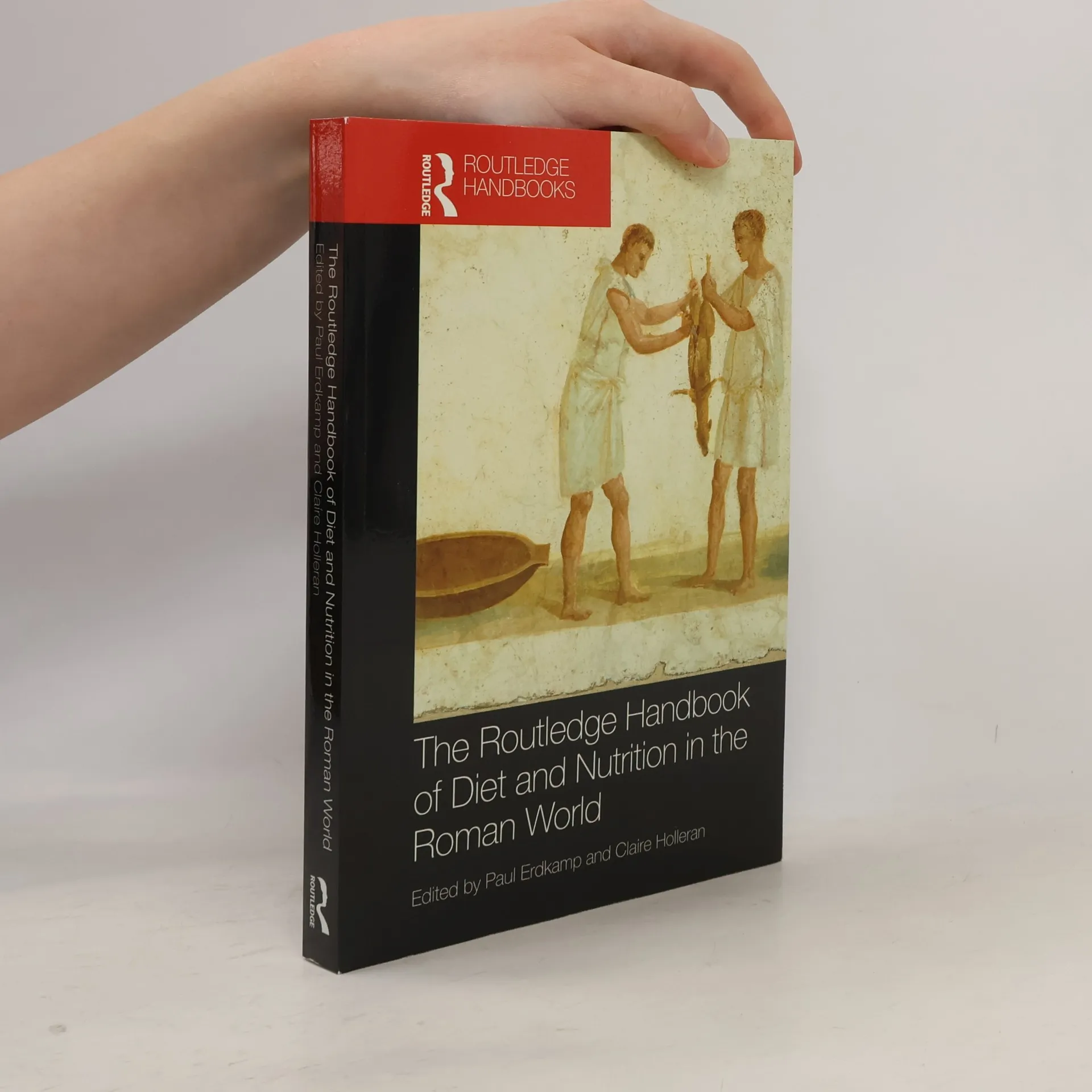
Meer over het boek
The Routledge Handbook of Diet and Nutrition in the Roman World offers a comprehensive overview of the sources, issues, and methodologies related to the study of diet in the Roman era, focusing on the Mediterranean from the second century BC to the third and fourth centuries AD. Food is essential for life, but dietary choices are influenced by social and historical factors, making this a vital area of study. The Handbook employs a multidisciplinary approach, integrating various sources and disciplines to examine the nutrition of men, women, and children in both urban and rural settings. The chapters are organized into five parts. Part I presents a range of textual, material, and bioarchaeological evidence regarding food and nutrition. Part II discusses various food and drink types, such as cereals, pulses, olive oil, meat, and fish, along with their social contexts. Part III shifts focus to women and children, exploring cultures in Roman Egypt, Central Europe, and Jewish communities in Palestine, as well as the influence of Christianity. Part IV features insights from three scholars on the contributions of physical anthropology to understanding health and nutrition. The final section addresses food supply issues within the framework of community and empire.
Een boek kopen
The Routledge Handbook of Diet and Nutrition in the Roman World, Paul Erdkamp, Claire Holleran
- Taal

- Jaar van publicatie
- 2021
- Bindwijze
- (Paperback)
Betaalmethoden
Nog niemand heeft beoordeeld.
- Titel
- The Routledge Handbook of Diet and Nutrition in the Roman World
- Taal
- Engels
- Auteurs
- Paul Erdkamp, Claire Holleran
- Uitgever
- Routledge
- Jaar van publicatie
- 2021
- Formaat
- Paperback
- Aantal pagina's
- 380
- ISBN10
- 1032094567
- ISBN13
- 9781032094564
- Reeks
- Categorieën
- Aantekening
- The Routledge Handbook of Diet and Nutrition in the Roman World offers a comprehensive overview of the sources, issues, and methodologies related to the study of diet in the Roman era, focusing on the Mediterranean from the second century BC to the third and fourth centuries AD. Food is essential for life, but dietary choices are influenced by social and historical factors, making this a vital area of study. The Handbook employs a multidisciplinary approach, integrating various sources and disciplines to examine the nutrition of men, women, and children in both urban and rural settings. The chapters are organized into five parts. Part I presents a range of textual, material, and bioarchaeological evidence regarding food and nutrition. Part II discusses various food and drink types, such as cereals, pulses, olive oil, meat, and fish, along with their social contexts. Part III shifts focus to women and children, exploring cultures in Roman Egypt, Central Europe, and Jewish communities in Palestine, as well as the influence of Christianity. Part IV features insights from three scholars on the contributions of physical anthropology to understanding health and nutrition. The final section addresses food supply issues within the framework of community and empire.