



Meer over het boek
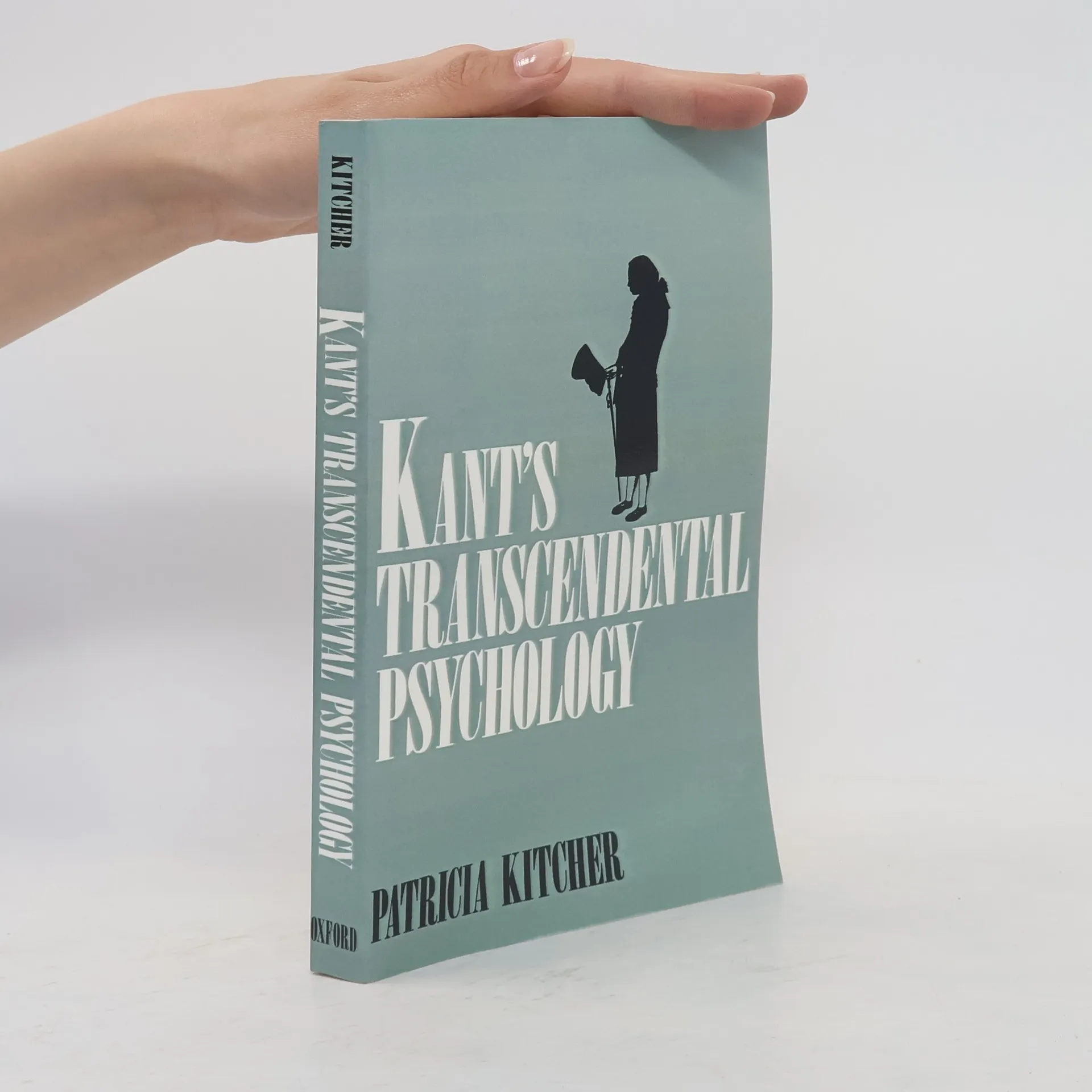
For the last 100 years historians have denigrated the psychology of the Critique of Pure Reason . In opposition, Patricia Kitcher argues that we can only understand the deduction of the categories in terms of Kant's attempt to fathom the psychological prerequisites of thought, and that this investigation illuminates thinking itself. Kant tried to understand the "task environment" of knowledge and Given the data we acquire and the scientific generalizations we make, what basic cognitive capacities are necessary to perform these feats? What do these capacities imply about the inevitable structure of our knowledge? Kitcher specifically considers Kant's claims about the unity of the thinking self; the spatial forms of human perceptions; the relations among mental states necessary for them to have content; the relations between perceptions and judgment; the malleability essential to empirical concepts; the structure of empirical concepts required for inductive inference; andthe limits of philosophical insight into psychological processes.
Een boek kopen
Kant's Transcendental Psychology, Patricia Kitcher
- Taal

- Jaar van publicatie
- 1990
- Bindwijze
- (Paperback)
Betaalmethoden
Nog niemand heeft beoordeeld.
- Titel
- Kant's Transcendental Psychology
- Taal
- Engels
- Auteurs
- Patricia Kitcher
- Uitgever
- Oxford University Press
- Jaar van publicatie
- 1990
- Formaat
- Paperback
- Aantal pagina's
- 312
- ISBN10
- 0195085639
- ISBN13
- 9780195085631
- Reeks
- Categorieën
- Aantekening
- For the last 100 years historians have denigrated the psychology of the Critique of Pure Reason . In opposition, Patricia Kitcher argues that we can only understand the deduction of the categories in terms of Kant's attempt to fathom the psychological prerequisites of thought, and that this investigation illuminates thinking itself. Kant tried to understand the "task environment" of knowledge and Given the data we acquire and the scientific generalizations we make, what basic cognitive capacities are necessary to perform these feats? What do these capacities imply about the inevitable structure of our knowledge? Kitcher specifically considers Kant's claims about the unity of the thinking self; the spatial forms of human perceptions; the relations among mental states necessary for them to have content; the relations between perceptions and judgment; the malleability essential to empirical concepts; the structure of empirical concepts required for inductive inference; andthe limits of philosophical insight into psychological processes.