



Parameters
- 256bladzijden
- 9 uur lezen
Meer over het boek
Democracy varies significantly between First and Third World countries. In the West, the focus is primarily on democratic institutions, elections, and civil liberties, often overlooking the importance of emancipatory policies. In contrast, in the Third World, particularly South Africa, socio-economic redistribution and emancipation are central to the public's understanding of democracy, overshadowing institutional functionality. This divergence places the ANC-led government at odds with Western perspectives. Thomas Koelble argues that the consolidation of democratic institutions in South Africa hinges on resource redistribution. He examines critical policy areas like housing and education to highlight the challenges facing the current government. For institutional democracy to take root, Western political and financial support for redistribution is essential; without it, the ANC's promise to enhance the quality of life may remain unfulfilled, risking governmental failure. Koelble also notes that the new South African constitution, while incorporating elements of a consensus-oriented system, is largely dominated by a single political party that is not mandated to share power. He contends that the ANC's exclusion of opposition from governance undermines democracy, potentially leading to a form of "race politics" that could harm both the political landscape and the economy of South Africa.
Een boek kopen
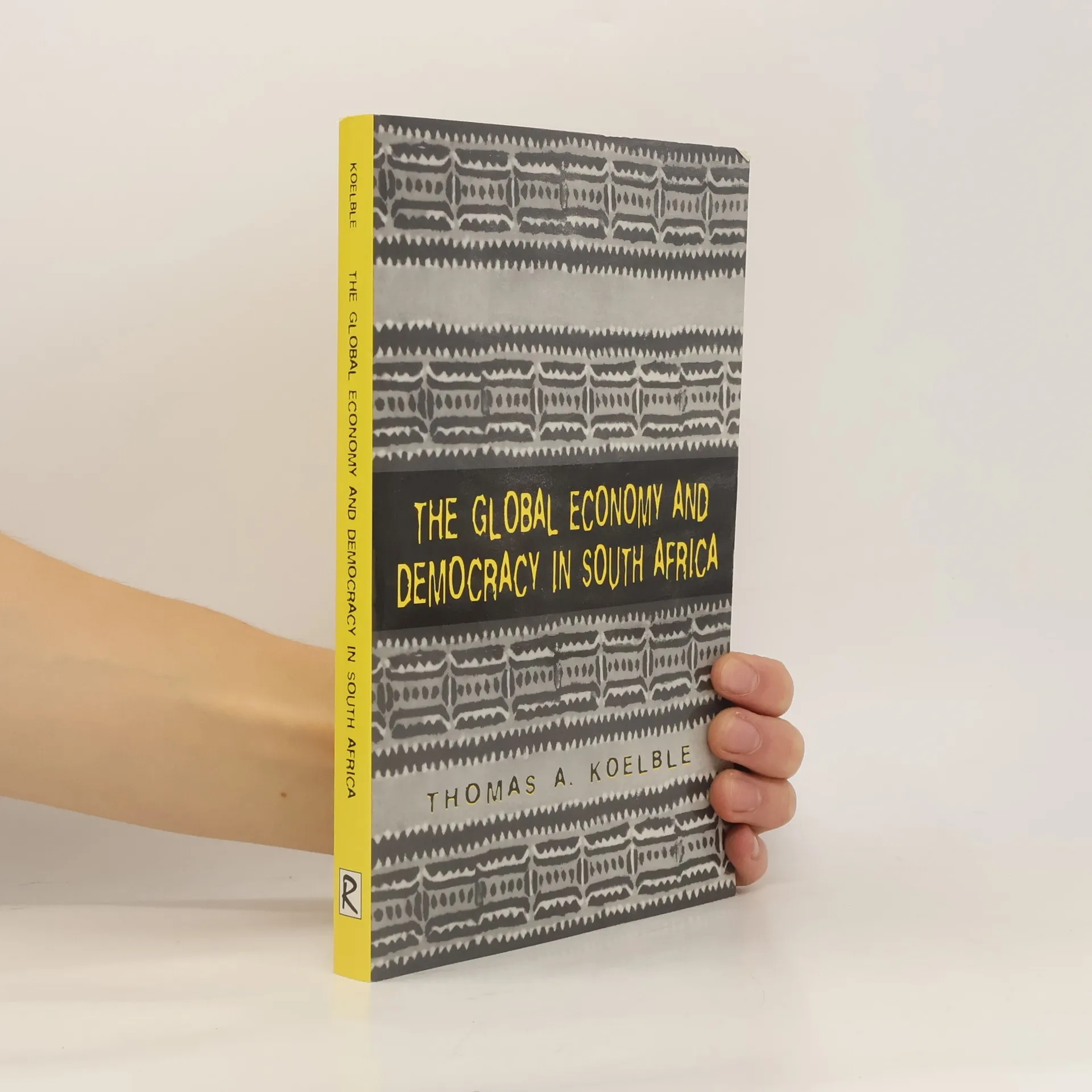
The Global Economy and Democracy in South Africa, Thomas A. Koelble
- Taal

- Jaar van publicatie
- 1998
- Bindwijze
- (Paperback),
- Staat van het boek
- Goed
- Prijs
- € 5,69
Betaalmethoden
Nog niemand heeft beoordeeld.
- Titel
- The Global Economy and Democracy in South Africa
- Taal
- Engels
- Auteurs
- Thomas A. Koelble
- Uitgever
- Rutgers University Press
- Jaar van publicatie
- 1998
- Formaat
- Paperback
- Aantal pagina's
- 256
- ISBN10
- 0813525683
- ISBN13
- 9780813525686
- Reeks
- Categorieën
- Tags
- Handel, Politiek, Verenigde Staten, Afrika, Politieke theorieën, Internationale Betrekkingen, Democratie, Republiek Zuid-Afrika, Economische Politiek
- Aantekening
- Democracy varies significantly between First and Third World countries. In the West, the focus is primarily on democratic institutions, elections, and civil liberties, often overlooking the importance of emancipatory policies. In contrast, in the Third World, particularly South Africa, socio-economic redistribution and emancipation are central to the public's understanding of democracy, overshadowing institutional functionality. This divergence places the ANC-led government at odds with Western perspectives. Thomas Koelble argues that the consolidation of democratic institutions in South Africa hinges on resource redistribution. He examines critical policy areas like housing and education to highlight the challenges facing the current government. For institutional democracy to take root, Western political and financial support for redistribution is essential; without it, the ANC's promise to enhance the quality of life may remain unfulfilled, risking governmental failure. Koelble also notes that the new South African constitution, while incorporating elements of a consensus-oriented system, is largely dominated by a single political party that is not mandated to share power. He contends that the ANC's exclusion of opposition from governance undermines democracy, potentially leading to a form of "race politics" that could harm both the political landscape and the economy of South Africa.