

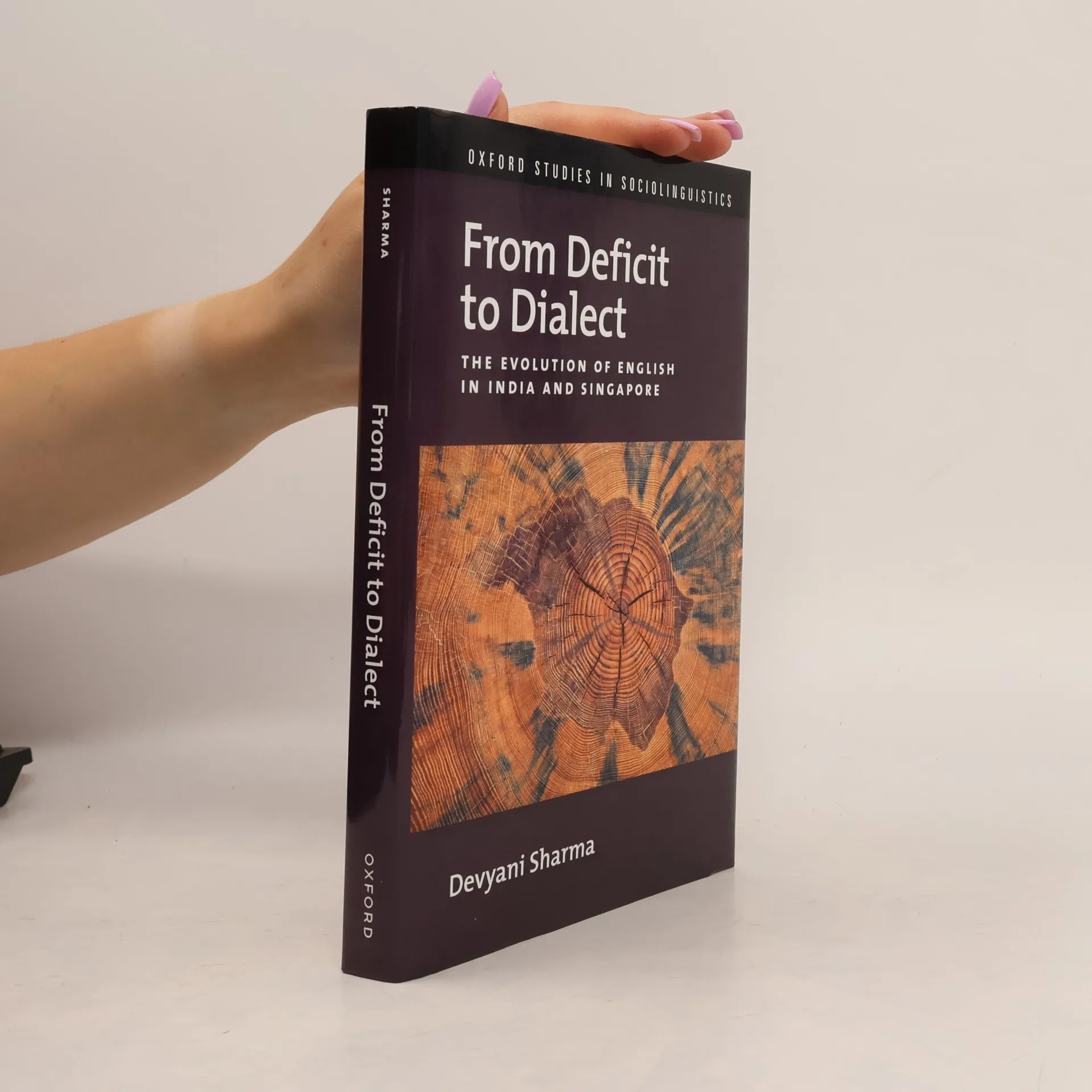

Oxford Studies in Sociolinguistics: From Deficit to Dialect
The Evolution of English in India and Singapore
Auteurs
Meer over het boek
The emergence of new English dialects in postcolonial regions has transformed the politics of English in the world and language ecologies in many regions. Why, how, and when did these dialects develop? Why do they have the accents and grammars that we hear? Are the grammars of these dialects completely different due to the influence of local languages, or similar due to natural tendencies in human cognition? In terms of social identity, do these new speakers behave like native speakers of British or American English, or like language learners?Focusing on two prominent cases; English in India and in Singapore; this book examines the social, historical, and cognitive forces that together created and continue to shape these dialects. Differences in the linguistic ecology of the two regions help us to identify the strongest mechanisms of dialect formation under long-term cultural contact. The multi-scale analysis of a range of bilinguals moves beyond a simplistic divide between 'deficit' and 'dialect' views of these speech communities, showing that change proceeds unevenly across the language system and the social group, with feedback loops between social history, language learning, language structure, and identity.
Een boek kopen
Oxford Studies in Sociolinguistics: From Deficit to Dialect, Devyani Sharma
- Taal

- Jaar van publicatie
- 2023
- Bindwijze
- (Hardcover),
- Staat van het boek
- Zeer goed
- Prijs
- € 8,09
Betaalmethoden
Nog niemand heeft beoordeeld.
- Titel
- Oxford Studies in Sociolinguistics: From Deficit to Dialect
- Ondertitel
- The Evolution of English in India and Singapore
- Taal
- Engels
- Auteurs
- Devyani Sharma
- Uitgever
- Oxford University Press
- Jaar van publicatie
- 2023
- Formaat
- Hardcover
- Aantal pagina's
- 320
- ISBN10
- 019530750X
- ISBN13
- 9780195307504
- Reeks
- Categorieën
- Tags
- Onderwijs, schoolwezen, Linguïstiek, Indië, Sociale aspecten, Dialecten, Sociolinguïstiek, Singapore, Mondelinge Toespraak
- Aantekening
- The emergence of new English dialects in postcolonial regions has transformed the politics of English in the world and language ecologies in many regions. Why, how, and when did these dialects develop? Why do they have the accents and grammars that we hear? Are the grammars of these dialects completely different due to the influence of local languages, or similar due to natural tendencies in human cognition? In terms of social identity, do these new speakers behave like native speakers of British or American English, or like language learners?Focusing on two prominent cases; English in India and in Singapore; this book examines the social, historical, and cognitive forces that together created and continue to shape these dialects. Differences in the linguistic ecology of the two regions help us to identify the strongest mechanisms of dialect formation under long-term cultural contact. The multi-scale analysis of a range of bilinguals moves beyond a simplistic divide between 'deficit' and 'dialect' views of these speech communities, showing that change proceeds unevenly across the language system and the social group, with feedback loops between social history, language learning, language structure, and identity.