

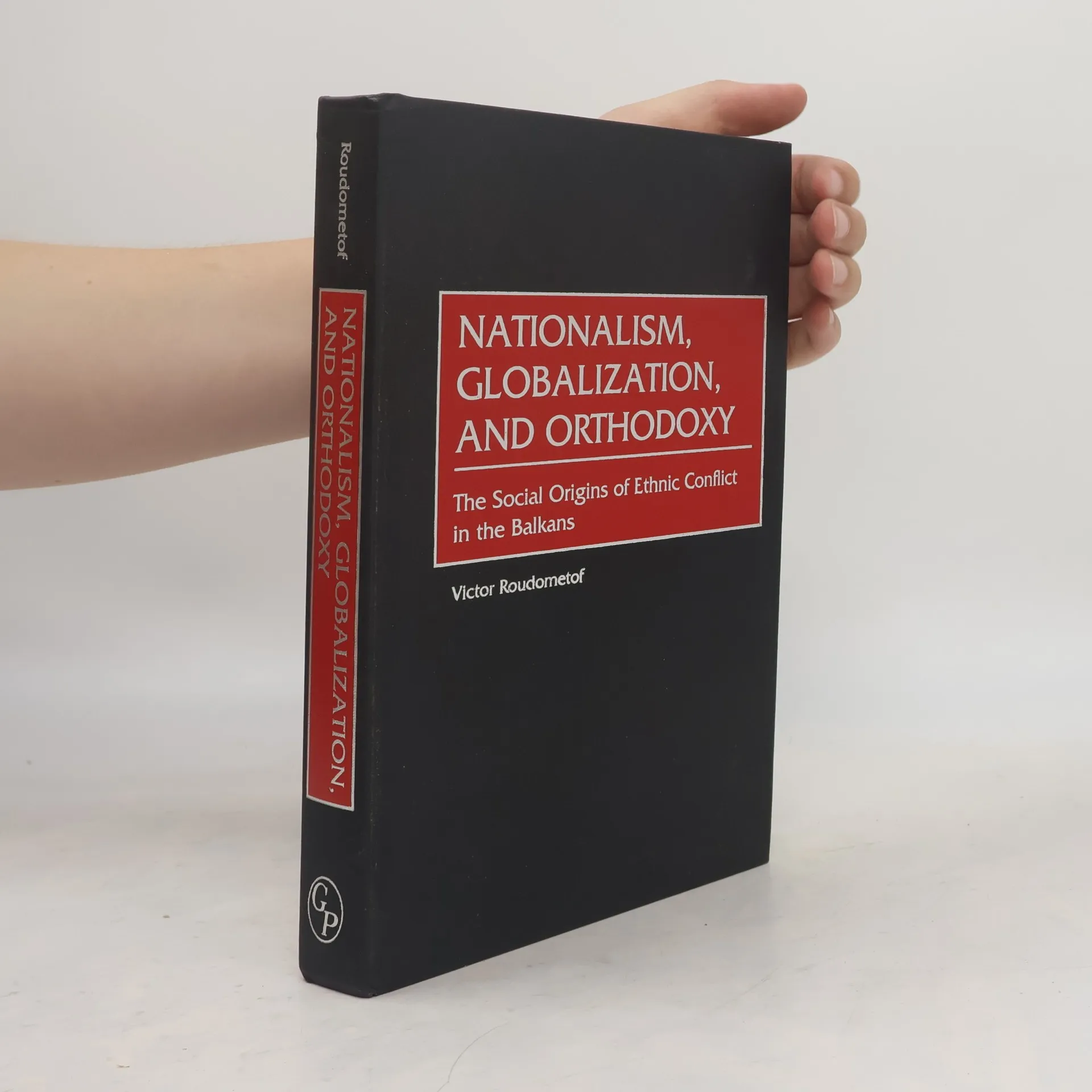


Nationalism, Globalization, and Orthodoxy
The Social Origins of Ethnic Conflict in the Balkans
Auteurs
Parameters
- 320bladzijden
- 12 uur lezen
Meer over het boek
Roudometof provides an in-depth sociological analysis of the birth and historical evolution of nationalism in the Balkans. The rise of nationalism in the region is viewed as part of a world-historical process of globalization over the last five centuries. With the growing contacts between the Ottoman Empire and the Western European system, the Eastern Orthodox of the Balkans abandoned the enthoconfessional system of social organization in favor of secular national identities.Prior to 1820, local nationalism was influenced by the Enlightenment, though later it came to be developed on an ethnonational basis. In the post-1830 Balkans, citizenship rights were subordinated to ethnic nationalism, according to which membership to a nation is accorded on the basis of church affiliation and ethnicity. In the 19th and 20th centuries, the discourse of nationhood was institutionalized by the native intelligentsia of the Balkan states. In the first half of the 20th century, the efforts of Balkan states to achieve national homogenization produced interstate rivalry, forced population exchanges, and discrimination against minority groups. While the Cold War helped contain some of these problems, the post-1989 period has seen a return of these issues to the forefront of the Balkan political agenda.
Een boek kopen
Nationalism, Globalization, and Orthodoxy, Victor Roudometof
- Taal

- Jaar van publicatie
- 2001
- Bindwijze
- (Hardcover)
Betaalmethoden
Nog niemand heeft beoordeeld.
- Titel
- Nationalism, Globalization, and Orthodoxy
- Ondertitel
- The Social Origins of Ethnic Conflict in the Balkans
- Taal
- Engels
- Auteurs
- Victor Roudometof
- Uitgever
- Praeger
- Jaar van publicatie
- 2001
- Formaat
- Hardcover
- Aantal pagina's
- 320
- ISBN10
- 0313319499
- ISBN13
- 9780313319495
- Reeks
- Tags
- Historisch thema, Juridische thematiek, Politiek, Europa, Geschiedenis van Europa, Politieke theorieën, Internationale Betrekkingen, Globalisatie, Sociale aspecten, Nationalisme, Etnische Relaties
- Aantekening
- Roudometof provides an in-depth sociological analysis of the birth and historical evolution of nationalism in the Balkans. The rise of nationalism in the region is viewed as part of a world-historical process of globalization over the last five centuries. With the growing contacts between the Ottoman Empire and the Western European system, the Eastern Orthodox of the Balkans abandoned the enthoconfessional system of social organization in favor of secular national identities.Prior to 1820, local nationalism was influenced by the Enlightenment, though later it came to be developed on an ethnonational basis. In the post-1830 Balkans, citizenship rights were subordinated to ethnic nationalism, according to which membership to a nation is accorded on the basis of church affiliation and ethnicity. In the 19th and 20th centuries, the discourse of nationhood was institutionalized by the native intelligentsia of the Balkan states. In the first half of the 20th century, the efforts of Balkan states to achieve national homogenization produced interstate rivalry, forced population exchanges, and discrimination against minority groups. While the Cold War helped contain some of these problems, the post-1989 period has seen a return of these issues to the forefront of the Balkan political agenda.