


Parameters
- 696bladzijden
- 25 uur lezen
Meer over het boek
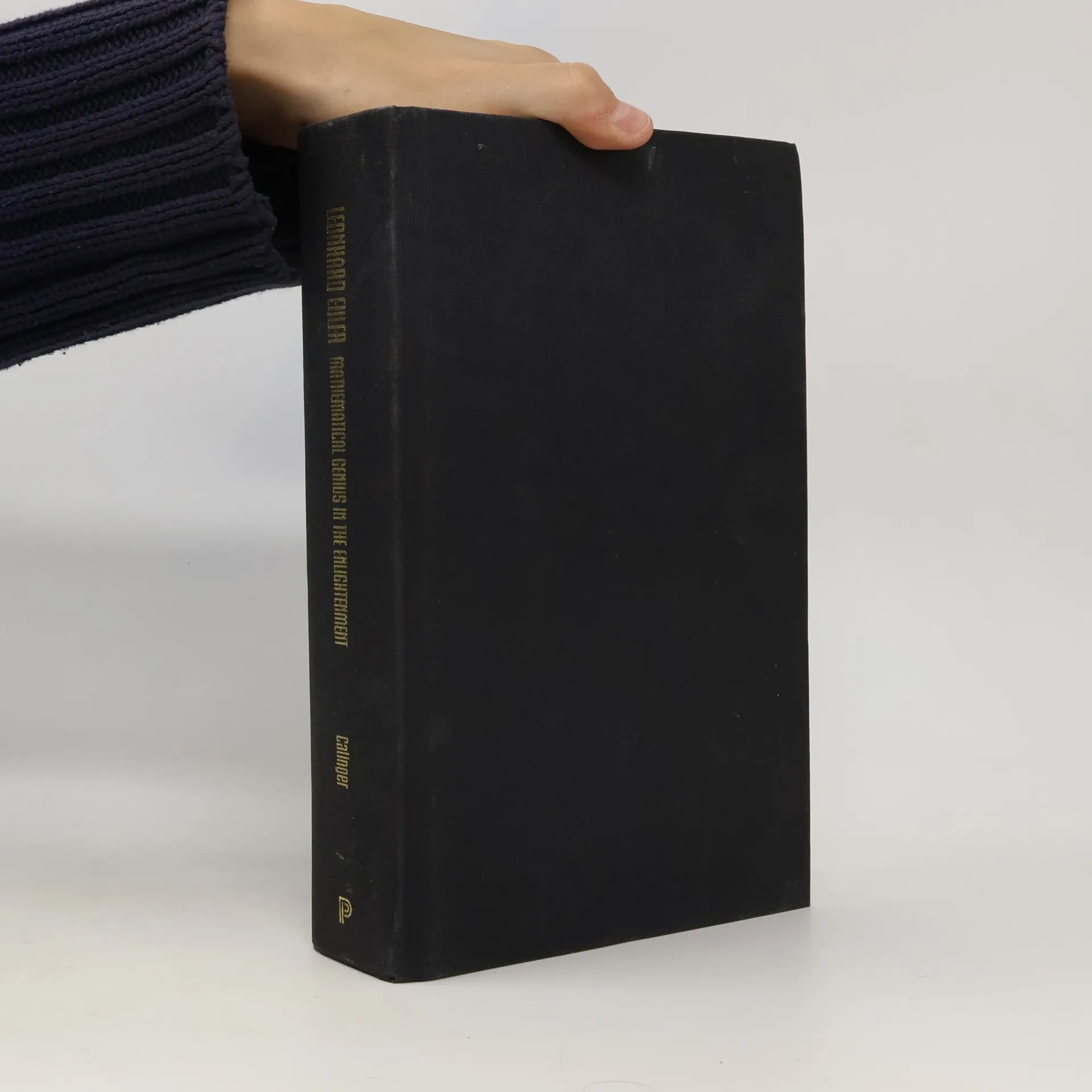
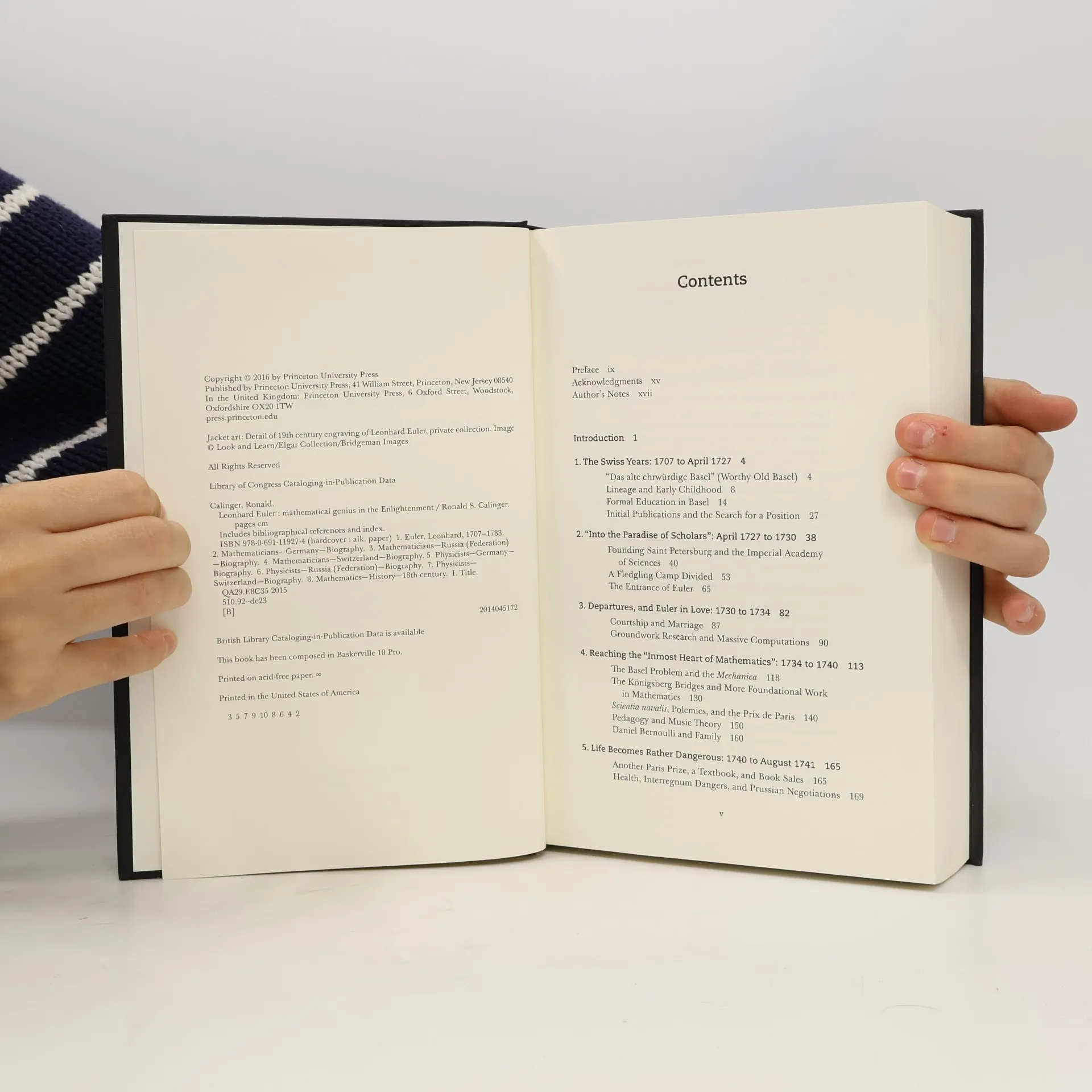
This biography offers a comprehensive account of Leonhard Euler (1707-83), one of history's foremost mathematicians and theoretical physicists. Ronald Calinger intricately weaves Euler's remarkable life story with his groundbreaking achievements, placing him alongside greats like Archimedes, Newton, and Gauss. Drawing from Euler's extensive published works and correspondence, this narrative contextualizes his contributions within personal, intellectual, and cultural frameworks. Euler's prolific output spans nearly all areas of mathematics, including calculus, number theory, and mechanics, as well as advancements in shipbuilding, telescopes, and music theory. The journey begins with Euler's childhood and education in Basel, leading to his early years in St. Petersburg (1727-41), where he gained prominence by solving the Basel problem and advancing analytical mechanics. His move to Berlin saw the publication of his influential work, Introductio in analysin infinitorum, and the development of continuum mechanics, all while navigating challenges posed by Frederick the Great. Upon returning to St. Petersburg in 1766, despite facing severe eye problems that culminated in near-total blindness, Euler created the analytical calculus of variations and refined lunar theory to support Newton's dynamics. This biography not only chronicles Euler's extraordinary achievements but also highlights the pivotal role of mathematics during the Enl
Een boek kopen
Leonhard Euler, Ronald S. Calinger
- Taal

- Jaar van publicatie
- 2016
- Bindwijze
- (Hardcover)
Betaalmethoden
Nog niemand heeft beoordeeld.
- Titel
- Leonhard Euler
- Ondertitel
- Mathematical Genius in the Enlightenment
- Taal
- Engels
- Auteurs
- Ronald S. Calinger
- Uitgever
- Princeton University Press
- Jaar van publicatie
- 2016
- Formaat
- Hardcover
- Aantal pagina's
- 696
- ISBN10
- 0691119279
- ISBN13
- 9780691119274
- Reeks
- Categorieën
- Tags
- Historisch thema, Natuurwetenschappen, Wetenschap, Duitsland, Herinneringen, Zwitserland, Geschiedenis van de wetenschap, Wetenschappers, Wiskundigen, Geschiedenis van de Wiskunde
- Aantekening
- This biography offers a comprehensive account of Leonhard Euler (1707-83), one of history's foremost mathematicians and theoretical physicists. Ronald Calinger intricately weaves Euler's remarkable life story with his groundbreaking achievements, placing him alongside greats like Archimedes, Newton, and Gauss. Drawing from Euler's extensive published works and correspondence, this narrative contextualizes his contributions within personal, intellectual, and cultural frameworks. Euler's prolific output spans nearly all areas of mathematics, including calculus, number theory, and mechanics, as well as advancements in shipbuilding, telescopes, and music theory. The journey begins with Euler's childhood and education in Basel, leading to his early years in St. Petersburg (1727-41), where he gained prominence by solving the Basel problem and advancing analytical mechanics. His move to Berlin saw the publication of his influential work, Introductio in analysin infinitorum, and the development of continuum mechanics, all while navigating challenges posed by Frederick the Great. Upon returning to St. Petersburg in 1766, despite facing severe eye problems that culminated in near-total blindness, Euler created the analytical calculus of variations and refined lunar theory to support Newton's dynamics. This biography not only chronicles Euler's extraordinary achievements but also highlights the pivotal role of mathematics during the Enl