



Meer over het boek
"Liberty and Nature - an Aristotelian Defense of Liberal Order" describes the manner in which Aristotle's way of thinking has normally been understood as hostile to modern liberal, pluralistic, and commercial society. In opposition to this prevailing view, the authors set out to show that the Aristotelian approach to ethics supports the natural rights which forms the most secure basis for liberal principles. Rasmussen and Den Uyl lay the foundations of their thesis by rebutting the most prominent arguments against the Aristotelian approach; they then offer a new interpretation of the basic nature of Aristotelian ethics as a natural-end ethics in which the human flourishing is the ultimate moral standard. "Liberty and Nature" examines the concept of the common good in the light of theory of rights. The Aristotelian claim that the function of the state is the promotion of the common good is consistent with the Lockean claim that the function of the state is to protect the natural right to liberty in all its forms, for "the common good of a political community need not be a single goal that all men must strive to attain. Rather, the common good need only be that set of conditions that allows for the well-being and self-actualization of the community's members". The authors provide a close analysis of the relation between Aristotelian friendship and commercial transactions. They also compare their own theory with alternative defences of liberal social orders.
Een boek kopen
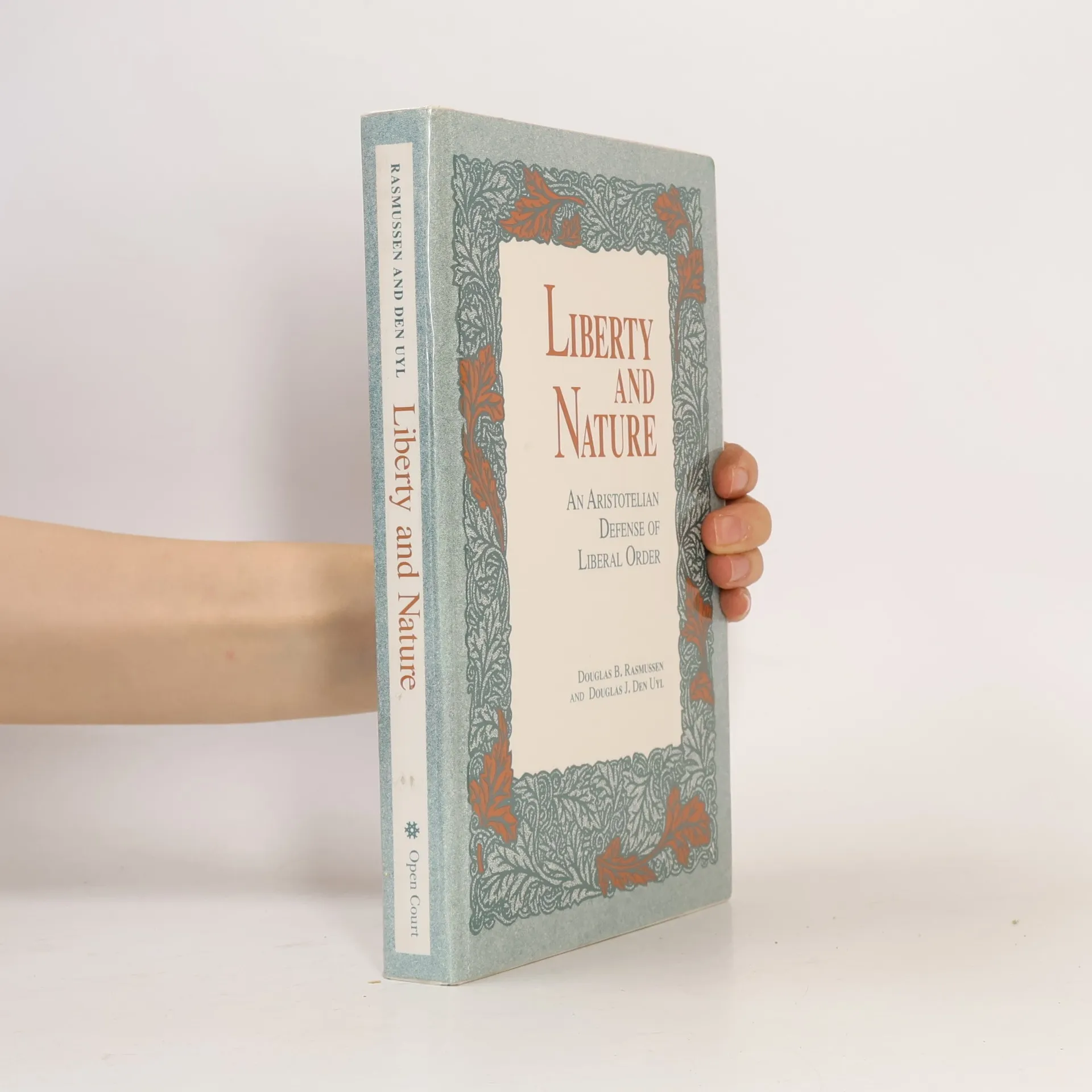
Liberty and Nature, Douglas B. Rasmussen, Douglas J. Den Uyl
- Taal

- Jaar van publicatie
- 1991
- Bindwijze
- (Hardcover),
- Staat van het boek
- Beschadigd
- Prijs
- € 20,61
Betaalmethoden
Nog niemand heeft beoordeeld.
- Titel
- Liberty and Nature
- Ondertitel
- An Aristotelian Defense of Liberal Order
- Taal
- Engels
- Uitgever
- Open Court Publishing Company
- Jaar van publicatie
- 1991
- Formaat
- Hardcover
- Aantal pagina's
- 208
- ISBN10
- 0812691199
- ISBN13
- 9780812691191
- Reeks
- Categorieën
- Tags
- Historisch thema, Filosofisch thema, Verenigde Staten, Literaire Critiek, Politieke theorieën, Oud-Griekenland, Politieke filosofie, Liberalismus
- Aantekening
- "Liberty and Nature - an Aristotelian Defense of Liberal Order" describes the manner in which Aristotle's way of thinking has normally been understood as hostile to modern liberal, pluralistic, and commercial society. In opposition to this prevailing view, the authors set out to show that the Aristotelian approach to ethics supports the natural rights which forms the most secure basis for liberal principles. Rasmussen and Den Uyl lay the foundations of their thesis by rebutting the most prominent arguments against the Aristotelian approach; they then offer a new interpretation of the basic nature of Aristotelian ethics as a natural-end ethics in which the human flourishing is the ultimate moral standard. "Liberty and Nature" examines the concept of the common good in the light of theory of rights. The Aristotelian claim that the function of the state is the promotion of the common good is consistent with the Lockean claim that the function of the state is to protect the natural right to liberty in all its forms, for "the common good of a political community need not be a single goal that all men must strive to attain. Rather, the common good need only be that set of conditions that allows for the well-being and self-actualization of the community's members". The authors provide a close analysis of the relation between Aristotelian friendship and commercial transactions. They also compare their own theory with alternative defences of liberal social orders.