



Parameters
- 336bladzijden
- 12 uur lezen
Meer over het boek
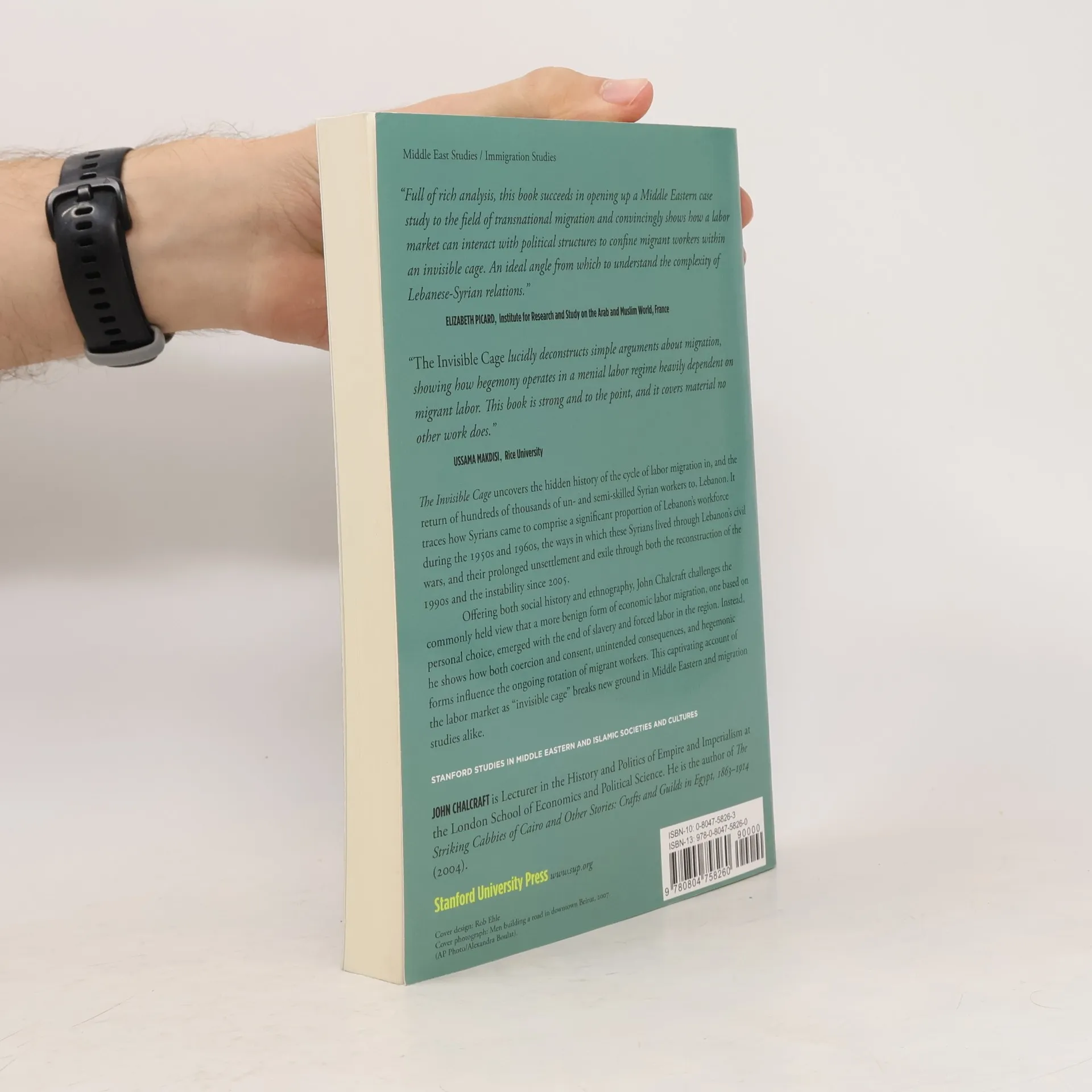
The Invisible Cage uncovers the hidden history of the cycle of labor migration and return of hundreds of thousands of un- and semi-skilled Syrian workers in Lebanon. It traces how Syrians came to comprise a significant proportion of Lebanon's workforce during the 1950s and 1960s, the ways in which these Syrians lived through Lebanon's civil wars, and their prolonged unsettlement and exile through both the reconstruction of the 1990s and instability since 2005. Offering both social history and ethnography, John Chalcraft challenges the commonly held view that a more benign form of economic labor migration, one based on personal choice, emerged with the end of slavery and forced labor in the region. Instead, he shows how both coercion and consent, unintended consequences, and hegemonic forms influence the ongoing rotation of migrant workers. This captivating account of the labor market as 'invisible cage' breaks new ground in Middle East and migration studies alike.
Een boek kopen
Stanford Studies in Middle Eastern and Islamic Societies and Cultures: The Invisible Cage, John T. Chalcraft
- Taal

- Jaar van publicatie
- 2008
- Bindwijze
- (Paperback),
- Staat van het boek
- Zeer goed
- Prijs
- € 6,99
Betaalmethoden
Nog niemand heeft beoordeeld.
- Titel
- Stanford Studies in Middle Eastern and Islamic Societies and Cultures: The Invisible Cage
- Ondertitel
- Syrian Migrant Workers in Lebanon
- Taal
- Engels
- Auteurs
- John T. Chalcraft
- Uitgever
- Stanford University Press
- Jaar van publicatie
- 2008
- Formaat
- Paperback
- Aantal pagina's
- 336
- ISBN10
- 0804758263
- ISBN13
- 9780804758260
- Reeks
- Categorieën
- Tags
- Historisch thema, Handel, Politieke theorieën, Internationale Betrekkingen, Syrië, Noord-Afrika, Libanon
- Aantekening
- The Invisible Cage uncovers the hidden history of the cycle of labor migration and return of hundreds of thousands of un- and semi-skilled Syrian workers in Lebanon. It traces how Syrians came to comprise a significant proportion of Lebanon's workforce during the 1950s and 1960s, the ways in which these Syrians lived through Lebanon's civil wars, and their prolonged unsettlement and exile through both the reconstruction of the 1990s and instability since 2005. Offering both social history and ethnography, John Chalcraft challenges the commonly held view that a more benign form of economic labor migration, one based on personal choice, emerged with the end of slavery and forced labor in the region. Instead, he shows how both coercion and consent, unintended consequences, and hegemonic forms influence the ongoing rotation of migrant workers. This captivating account of the labor market as 'invisible cage' breaks new ground in Middle East and migration studies alike.