




Meer over het boek
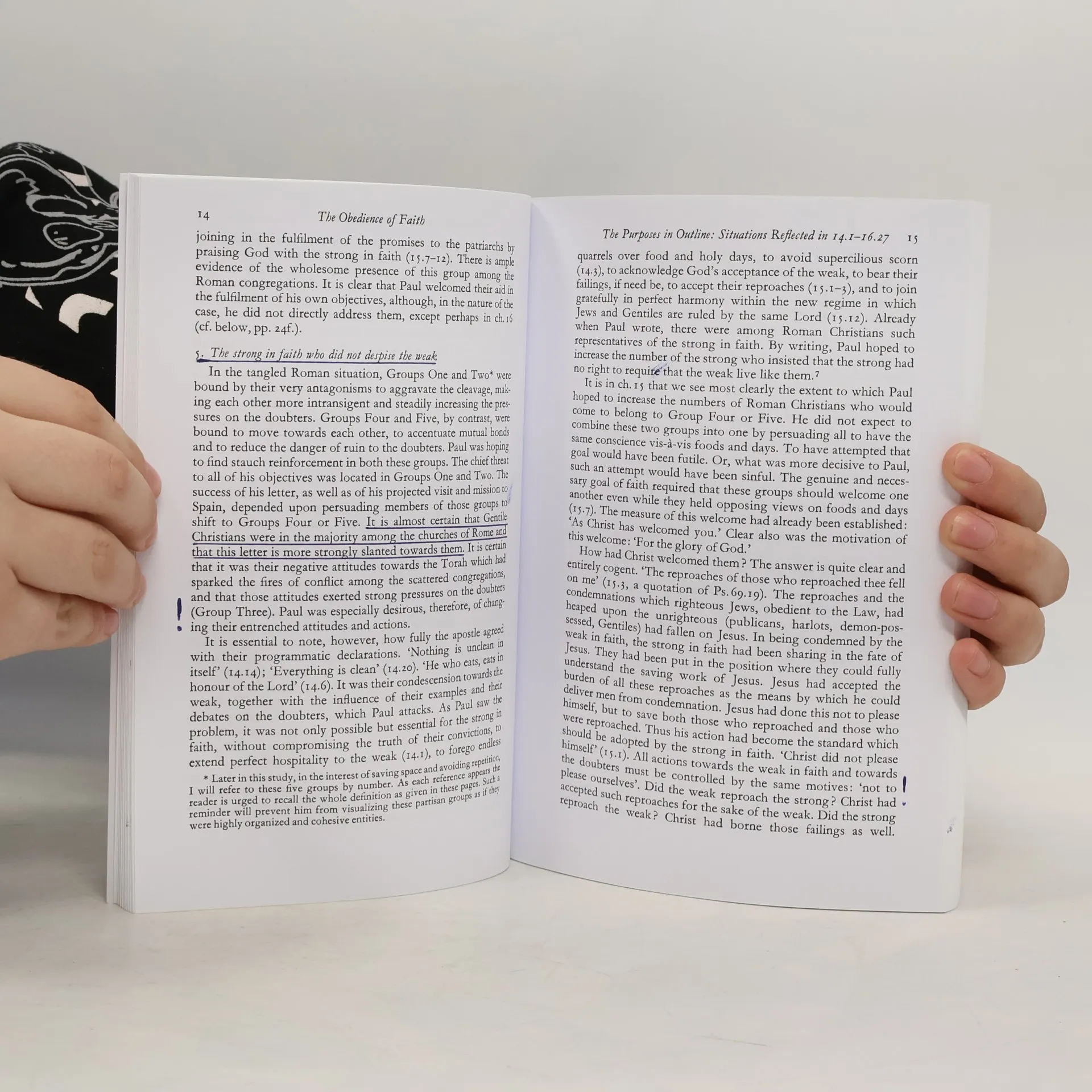
Minear puts forward the significance of using the information uncovered from the last three chapters of Romans (14-16) to reconstruct the picture of the situation in Rome and to interpret the letter as a whole accordingly. He challenges the assumption held by many commentators that there was a single Christian congregation in Rome where different groups of Christians worshipped side by side. Minear proposes that Paul is trying to unite the strong and the weak communities in Rome. Paul does this by employing twelve axioms in efforts at reconciliation in 14.1-15.13. According to Minear, it is the purpose of the rest of Romans to explain, support, and defend these axioms.
Een boek kopen
Studies in Biblical Theology: Second Series: The Obedience of Faith, Paul Sevier Minear
- Taal

- Jaar van publicatie
- 2003
- Bindwijze
- (Paperback),
- Staat van het boek
- Beschadigd
- Prijs
- € 11,50
Betaalmethoden
Nog niemand heeft beoordeeld.
- Titel
- Studies in Biblical Theology: Second Series: The Obedience of Faith
- Ondertitel
- The Purposes of Paul in the Epistle to the Romans
- Taal
- Engels
- Auteurs
- Paul Sevier Minear
- Uitgever
- Wipf & Stock Publishers
- Jaar van publicatie
- 2003
- Formaat
- Paperback
- Aantal pagina's
- 126
- ISBN10
- 1592442250
- ISBN13
- 9781592442256
- Reeks
- Categorieën
- Aantekening
- Minear puts forward the significance of using the information uncovered from the last three chapters of Romans (14-16) to reconstruct the picture of the situation in Rome and to interpret the letter as a whole accordingly. He challenges the assumption held by many commentators that there was a single Christian congregation in Rome where different groups of Christians worshipped side by side. Minear proposes that Paul is trying to unite the strong and the weak communities in Rome. Paul does this by employing twelve axioms in efforts at reconciliation in 14.1-15.13. According to Minear, it is the purpose of the rest of Romans to explain, support, and defend these axioms.