


The Abolition of Britain
Auteurs
Parameters
- 368bladzijden
- 13 uur lezen
Meer over het boek
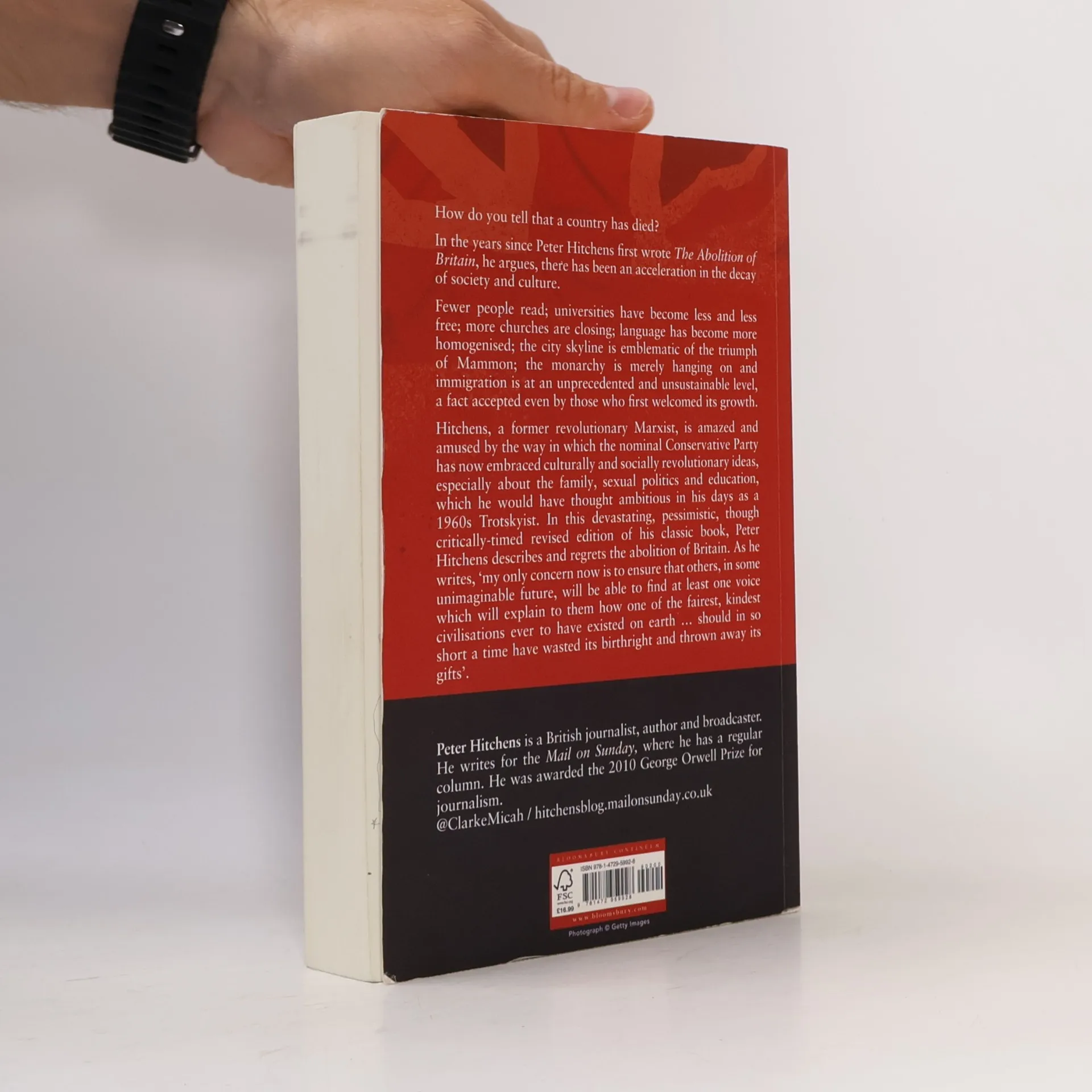
How do you tell that a country has died? In this devastating, pessimistic, though critically-timed revised edition of his classic book, Peter Hitchens describes and regrets the abolition of Britain. In the years since Peter Hitchens first wrote The Abolition of Britain, he argues, there has been an acceleration in the decay of society and culture. Fewer people read; universities have become less and less free; more churches are closing; language has become more homogenised; the city skyline is emblematic of the triumph of Mammon; the monarchy is merely hanging on and immigration is at an unprecedented and unsustainable level, a fact accepted even by those who first welcomed its growth. Hitchens, a former revolutionary Marxist, is amazed and amused by the way in which the nominal Conservative Party has now embraced culturally and socially revolutionary ideas, especially about the family, sexual politics and education, which he would have thought ambitious in his days as a 1960s Trotskyist. As he writes, 'my only concern now is to ensure that others, in some unimaginable future, will be able to find at least one voice which will explain to them how one of the fairest, kindest civilisations ever to have existed on earth ... should in so short a time have wasted its birthright and thrown away its gifts'.
Een boek kopen
The Abolition of Britain, Peter Hitchens
- Taal

- Jaar van publicatie
- 2018
- Bindwijze
- (Paperback),
- Staat van het boek
- Goed
- Prijs
- € 9,79
Betaalmethoden
Nog niemand heeft beoordeeld.
- Titel
- The Abolition of Britain
- Taal
- Engels
- Auteurs
- Peter Hitchens
- Uitgever
- Bloomsbury Publishing PLC
- Jaar van publicatie
- 2018
- Formaat
- Paperback
- Aantal pagina's
- 368
- ISBN10
- 1472959922
- ISBN13
- 9781472959928
- Reeks
- Categorieën
- Tags
- Historisch thema, Politiek, 20e Eeuw, Britse Literatuur, Europa, Wetenschappelijke literatuur, Samenleving, Verenigd Koninkrijk, Geschiedenis van Europa, 21e Eeuw, Kerk, Sociale Geschiedenis, Journalisten, Journalistes, Nationalisme, Sociale Verhoudingen, Sociale Verandering, Links, Aftakeling
- Aantekening
- How do you tell that a country has died? In this devastating, pessimistic, though critically-timed revised edition of his classic book, Peter Hitchens describes and regrets the abolition of Britain. In the years since Peter Hitchens first wrote The Abolition of Britain, he argues, there has been an acceleration in the decay of society and culture. Fewer people read; universities have become less and less free; more churches are closing; language has become more homogenised; the city skyline is emblematic of the triumph of Mammon; the monarchy is merely hanging on and immigration is at an unprecedented and unsustainable level, a fact accepted even by those who first welcomed its growth. Hitchens, a former revolutionary Marxist, is amazed and amused by the way in which the nominal Conservative Party has now embraced culturally and socially revolutionary ideas, especially about the family, sexual politics and education, which he would have thought ambitious in his days as a 1960s Trotskyist. As he writes, 'my only concern now is to ensure that others, in some unimaginable future, will be able to find at least one voice which will explain to them how one of the fairest, kindest civilisations ever to have existed on earth ... should in so short a time have wasted its birthright and thrown away its gifts'.