

The narrative highlights Stephen Hawking's extraordinary journey as a theoretical physicist who, despite a dire diagnosis at age 21 predicting only two years to live, made groundbreaking contributions to our understanding of the universe. His resilience and intellect allowed him to overcome immense challenges and unravel some of the cosmos' greatest mysteries, showcasing the triumph of human spirit and intellect against formidable odds.
Graham Farmelo Volgorde van de boeken
Graham Farmelo is een gevierd auteur die zich met ongebruikelijke diepgang in de complexiteit van wetenschap verdiept. Zijn werk kenmerkt zich door het vermogen om ingewikkelde wetenschappelijke concepten op een toegankelijke en boeiende manier over te brengen. Lezers waarderen zijn inzichtelijke verkenningen van de aard van wetenschappelijk onderzoek en zijn inspirerende perspectieven op de levens van degenen die ons begrip van het universum hebben gevormd. Zijn geschriften bieden een reis naar het hart van de wetenschap, die nieuwsgierigheid en verwondering oproept.


- 2025
- 2021
The Universe Speaks in Numbers
- 336bladzijden
- 12 uur lezen
A groundbreaking exploration of how the interplay of physics and mathematics has enriched our understanding of the universe - essential reading for anyone who wants to grasp how physicists are attempting, in Stephen Hawking's words, to 'know the mind of God'.
- 2020
Paul Dirac, nazywany niekiedy brytyjskim Einsteinem, był największym angielskim teoretykiem od czasów Newtona i jednym z najdziwniejszych geniuszy w całej historii nauki. Kiedy Dirac otrzymał Nagrodę Nobla w 1933 roku, po części za zadziwiające odkrycie antymaterii, był najmłodszym teoretykiem w historii, który uzyskał to wyróżnienie. Jego życie prywatne było jednak bardzo skomplikowane. Będąc niewrażliwym, traktującym wszystko dosłownie mrukiem być może dotkniętym autyzmem Dirac był również kochającym ojcem rodziny i absolutnie lojalnym przyjacielem. Publicznie zdawał się interesować wyłącznie nauką, lecz prywatnie miał szerokie spektrum zainteresowań od Beethovena i Rembrandta do Myszki Miki i Cher. Graham Farmelo wskrzesza dramatyczną historię życia Diraca oraz jego przełomowy wkład do nauki, między innymi współodkrycie mechaniki kwantowej, najbardziej rewolucyjnej teorii naukowej w ostatnim stuleciu. Książka, którą trzeba przeczytać i od której trudno się oderwać () odkrywcza, poruszająca i szczegółowa. New Scientist Wspaniała książka (). Poruszająca, miejscami komiczna, miejscami bardzo smutna i sięgająca do korzeni tego, co rozumiemy przez prawdę w nauce. Daily Telegraph Fascynująca lektura () wielkie osiągnięcie literatury biograficznej. The Times Wspaniała biografia () znakomicie napisana. Observer
- 2009
The first full biography of Paul Dirac, one of the most remarkable British physicists since Newton, explores the life of a genius who may have suffered from autism. A pioneer of quantum mechanics, Dirac was regarded as an equal by Einstein and predicted the existence of antimatter solely from his equations. He became the youngest recipient of the Nobel Prize for Physics, yet he was known for his extreme reticence, literal-mindedness, and inability to communicate or empathize. His legendary silences contrasted with the emotional void in his speech, often limited to remarks about the weather. Dirac's life was marked by trauma, including his brother's suicide and a lifelong disdain for his father. His political views were radical, and he maintained a friendship with Russian physicist Peter Kapitza, even vacationing in the Soviet Union during the purges. Despite his emotional challenges, Dirac was capable of love and fatherhood. The biography, based on newly discovered family archives, offers a compassionate portrait of Dirac, highlighting his profound appreciation for the beauty of mathematics and suggesting that his eccentricities may have stemmed from undiagnosed autism. Graham Farmelo, the author, is a Senior Research Fellow at the Science Museum in London and an Adjunct Professor of Physics at Northeastern University, Boston.
- 2004
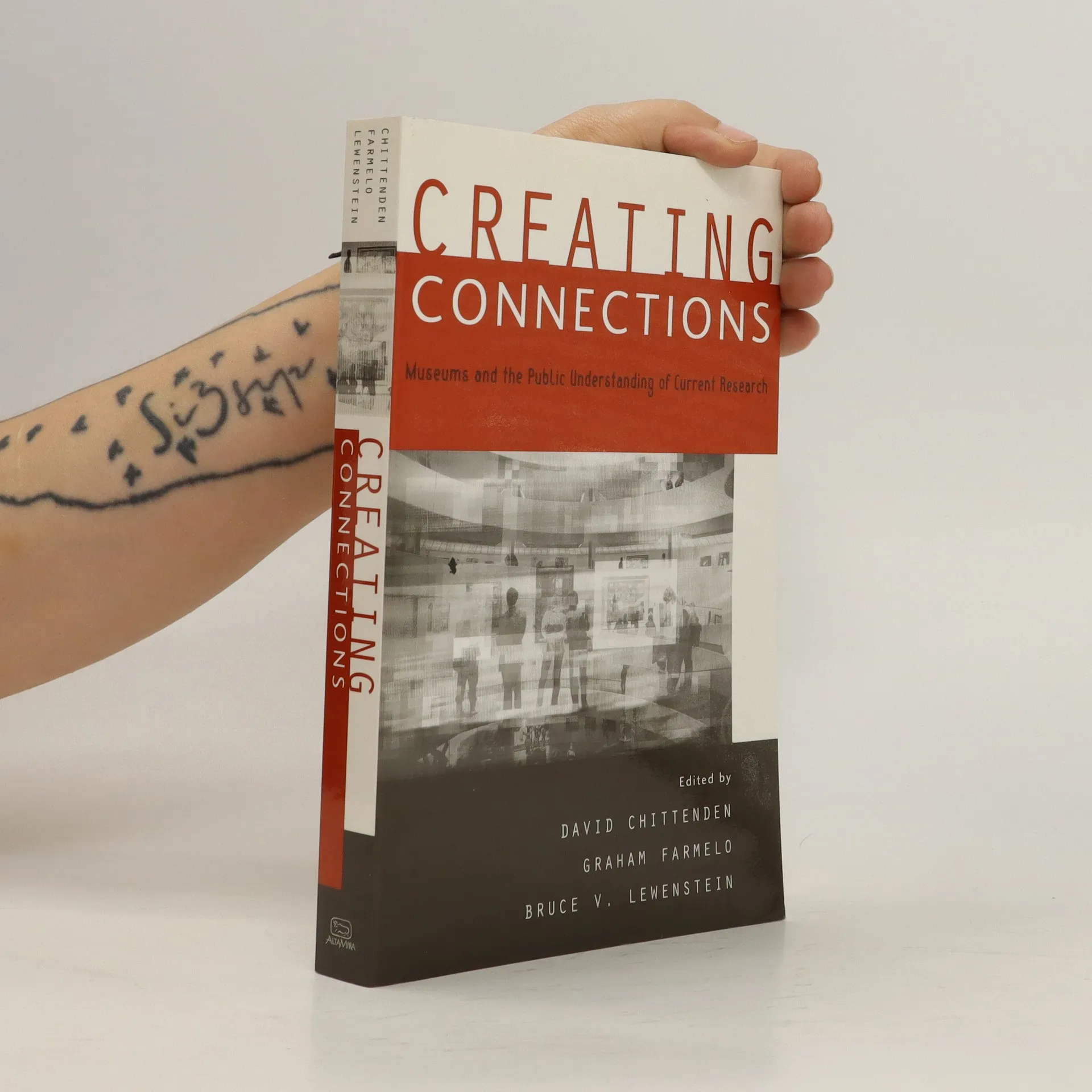
Science museums are in the business of making science accessible to the public--a public constantly bombarded with new information and research results. How the public understands this information will affect what they expect and take away from a museum's exhibits and programs. Creating Connections looks at the public understanding of research (PUR) and how it affects what science museums do. What are the opportunities and critical issues in PUR? What strategies are working and what are some pitfalls? What can be learned from the media's experiences with PUR? Creating Connections will be an invaluable resource for science museum professionals who want to guide their institutions and their visitors toward a new understanding of and appreciation for current research.