

Koop 10 boeken voor 10 € hier!
Bookbot

Hamid Dabashi

    15 juni 1951

    Hamid Dabashi is een vooraanstaand cultuurcriticus en auteur wiens werk de Perzische literatuur en Iraanse cultuur belicht. Zijn productieve oeuvre, dat talrijke boeken en essays omvat, behandelt thema's variërend van de middeleeuwse en moderne islam tot wereldkunst en filosofie. Dabashi doorbreekt de beperkingen van traditionele Europese oriëntalistische en Amerikaanse gebiedsstudies, waardoor Iraanse studies toegankelijk worden voor een breder publiek. Hij is tevens de oprichter van een project gericht op het behoud van Palestijnse cinema en een uitgesproken voorstander van transnationale kunst en onafhankelijke wereldcinema.

    Where Is Abbas Kiarostami?
    Iran in Revolt
    Masters and Masterpieces of Iranian Cinema
    The Emperor is Naked
    Reversing the Colonial Gaze
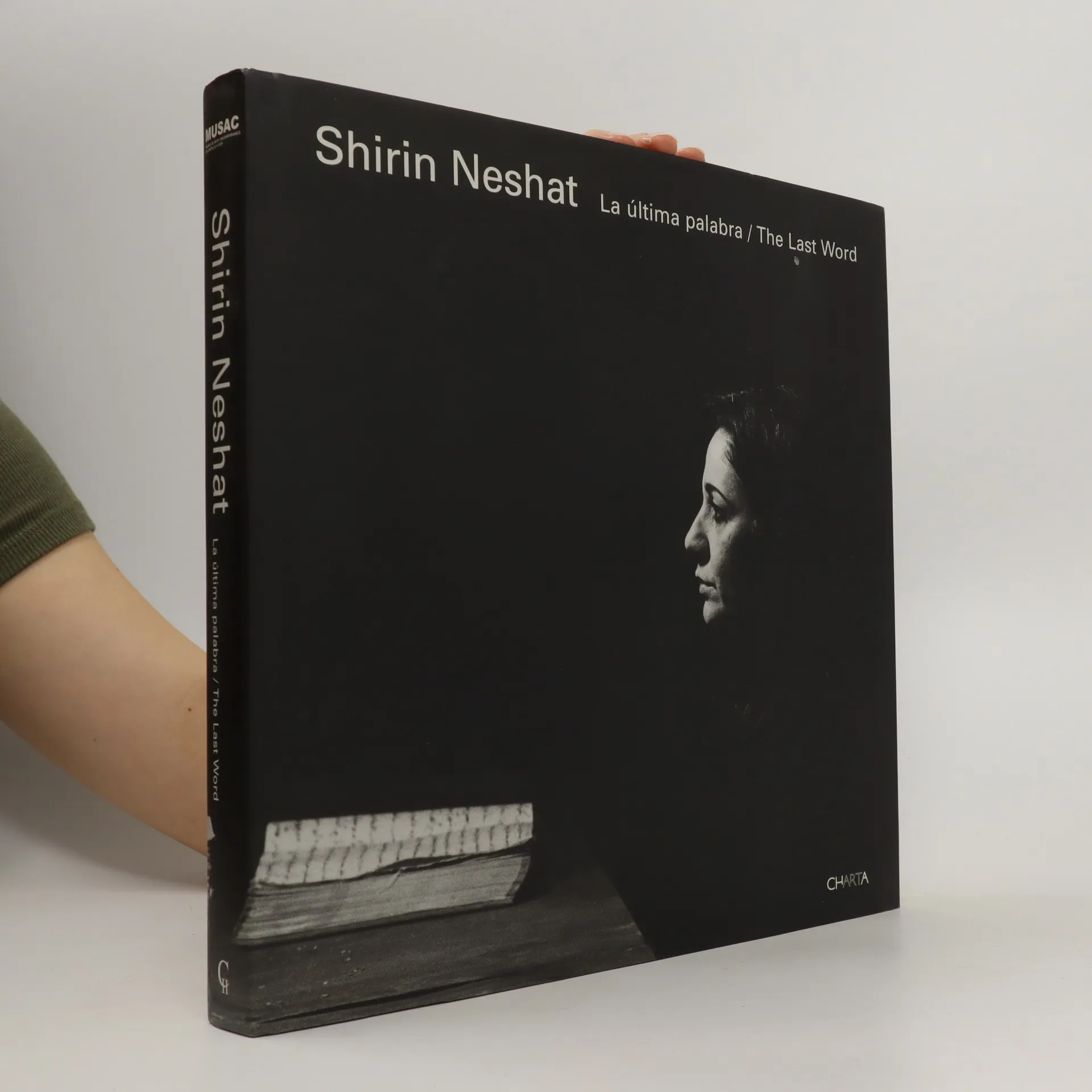
    Shirin Neshat la Ultima Palabra / The Last Word
    • The first monograph to thoroughly document Shirin Neshat's video production, The Last Word provides both a beautiful reminder of her work's color and intensity and a crucial tool for her increasing number of fans and scholars. Neshat, who studied in the United States and has lived in New York for many years, found international success following the explosive release of her images of Muslim women wrapped in chadors with verses by rebel Persian poetesses traced on their faces, hands and feet. She became renowned when her short film Turbulent was awarded the Leone d'Oro at the 1999 Venice Biennale. With her camera persistently focused on the veiled women of the Muslim world, Neshat has continued to make striking and courageous work of rare beauty and intensity, and has presented it to continuing acclaim. She goes fearlessly into the widening gulf between conformism and revolt, submission and compliance, that characterizes the women of the Muslim world, seeking out images from the far sides of the divide that will both narrow the distance and help viewers sound its depths. The Last Word is a necessity for those who would approach, informed, the poetic works and the fierce commitment of an extraordinary artist.

      Shirin Neshat la Ultima Palabra / The Last Word
    • Moving beyond the Eurocentric approach to travel narratives, this comprehensive and transformative account of the adventures of more than a dozen Persian travelers in the nineteenth century re-discovers and reclaims the world as seen through their rich travelogues, removing the colonial borders within which their narratives had been placed.

      Reversing the Colonial Gaze
    • The Emperor is Naked

      • 240bladzijden
      • 9 uur lezen
      3,4(3)Tarief

      Declares the end of the nation state as a political proposition predicting the dissolution of the state as an organizing framer of politics.

      The Emperor is Naked
    • Focusing on twelve influential Iranian filmmakers, this book delves into the remarkable rise of Iranian cinema over the past fifty years. It highlights the challenges posed by censorship yet showcases how filmmakers like Abbas Kiarostami and Jafar Panahi have transcended cultural boundaries. The narrative connects Iranian cinema to broader themes in Persian poetry, fiction, and art, while examining its global acclaim and the pivotal role of international film festivals. This exploration appeals to scholars, film enthusiasts, and those intrigued by modern Iranian cultural history.

      Masters and Masterpieces of Iranian Cinema
    • Iran in Revolt

      Revolutionary Aspirations in a Post-Democratic World

      • 256bladzijden
      • 9 uur lezen

      Exploring the Zhina uprising in Iran, Hamid Dabashi delves into the complexities of revolutionary success and failure. He examines the bold actions and tragic outcomes of the movement, prompting readers to reconsider how revolutions are evaluated. Through this retelling, the book challenges conventional narratives and encourages a deeper understanding of the dynamics at play in social upheaval.

      Iran in Revolt
    • Where Is Abbas Kiarostami?

      Toward a Postcolonial Film-Philosophy

      • 348bladzijden
      • 13 uur lezen

      The book highlights the unique contributions of Dabashi, a distinguished scholar in Iranian cinema and Persian literature. It emphasizes his singular perspective and the depth of his analysis, distinguishing him from other academics in the field. Through his work, readers gain insights into the intricate relationship between culture and film in Iran, showcasing Dabashi's exceptional role in shaping the discourse around these subjects.

      Where Is Abbas Kiarostami?
    • On Edward Said

      • 250bladzijden
      • 9 uur lezen

      An intimate intellectual, political and personal portrait of Edward Said, one of the 20th centuries' leading public intellectuals.

      On Edward Said
    • Exploring the intersection of history and memory, Hamid Dabashi offers a vibrant, unique and personal examination of Iranian childhood. Combining vivid memories with careful critical reflection, Dabashi considers what it means to be a Muslim and an Iranian, and reasserts the power and place of... číst celé

      An Iranian Childhood
    • Dabashi demonstrates how "the West" was an ideological commodity and civilizational mantra invented during the European Enlightenment, serving as an epicenter for the rise of globalized capitalist modernity. In turn, Orientalist ideologues went around the world manufacturing equally illusory abstractions in the form of inferior civilizations in India, China, Africa, Latin America, and the Islamic world. The result was the projection of "Islam and the West" as the prototype of a civilizational hostility that has given false explanations and flawed prognoses of our contemporary history, with weaponized Islamophobia on one side and militant Islamism on the other as its most palpable manifestations. Dabashi argues it is long past time to dismantle this dangerous liaison, expose and overcome its perilous delusions, and reimagine the world beyond its shimmering mirage. .

      The End of Two Illusions