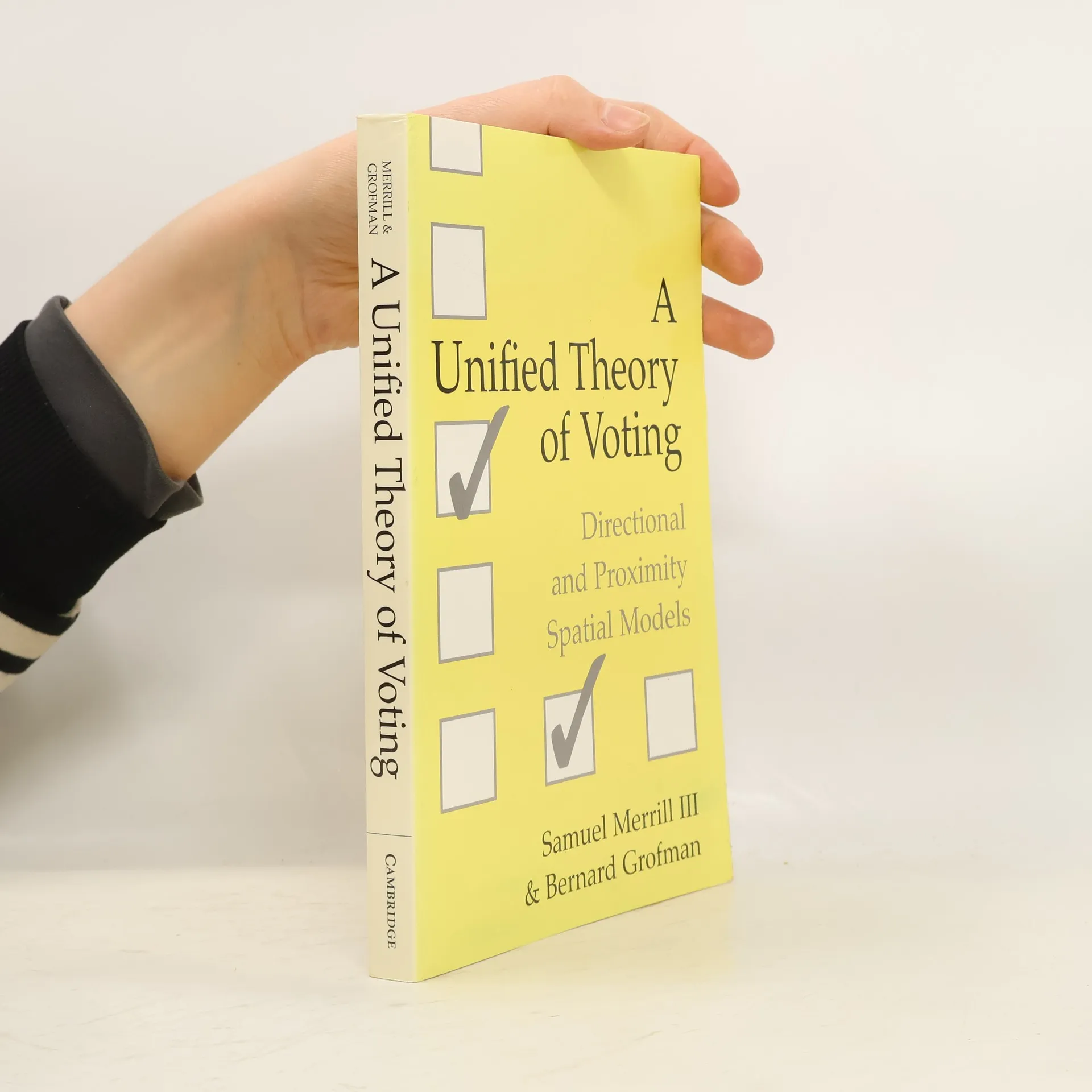
Professors Merrill and Grofman develop a unified model that incorporates voter motivations and assesses its empirical predictions--for both voter choice and candidate strategy--in the United States, Norway, and France. The analyses show that a combination of proximity, direction, discounting, and party ID are compatible with the mildly but not extremely divergent policies that are characteristic of many two-party and multiparty electorates. All of these motivations are necessary to understand the linkage between candidate issue positions and voter preferences.
Samuel Merrill, III Volgorde van de boeken (chronologisch)