

From acclaimed author Kate Murray-Browne, this is an immersive, transporting and moving novel about three women connected by the same building across three very different moments in time
Kate Murray-Browne Volgorde van de boeken (chronologisch)
Het schrijven van Kate Murray-Browne duikt in de ingewikkelde dynamiek van menselijke relaties en de innerlijke levens van haar personages. Haar literaire stijl kenmerkt zich door scherp psychologisch inzicht en een lyrische proza. De auteur verkent vakkundig thema's als herinnering, verlies en de zoektocht naar identiteit, waarbij ze vaak verborgen motivaties en onuitgesproken verlangens binnen haar verhalen onthult. Haar werk nodigt lezers uit om na te denken over de stillere complexiteiten van de menselijke psyche en de ambiguïteiten van de geleefde ervaring.


The Upstairs Room
- 320bladzijden
- 12 uur lezen
Eleanor, Richard and their two young daughters recently stretched themselves to the limit to buy their dream home, a four-bedroom Victorian townhouse in East London. But the cracks are already starting to show. Eleanor is unnerved by the eerie atmosphere in the house and becomes convinced it is making her ill. Whilst Richard remains preoccupied with Zoe, their mercurial twenty-seven year-old lodger, Eleanor becomes determined to unravel the mystery of the house's previous owners - including Emily, whose name is written hundreds of times on the walls of the upstairs room.
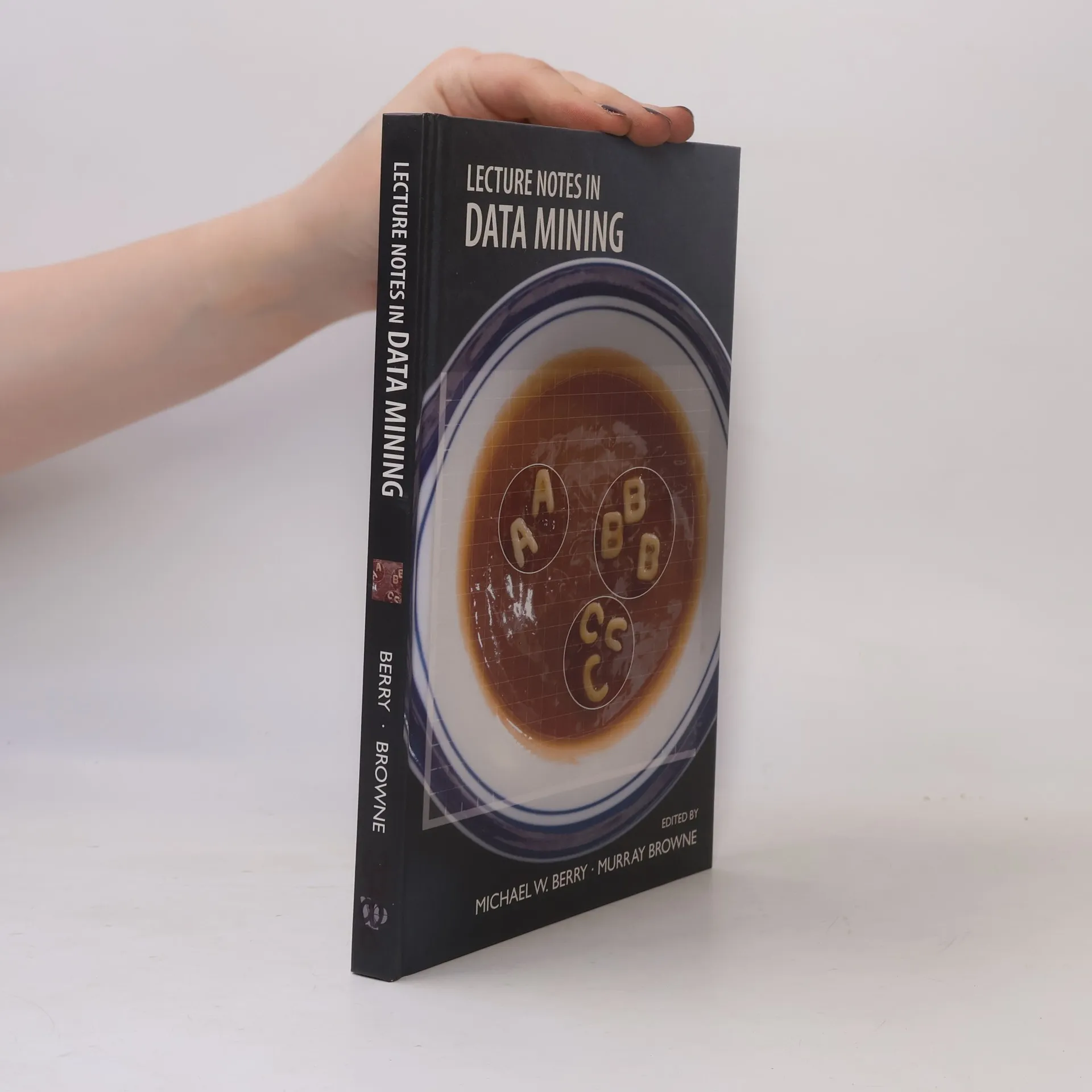
Lecture Notes in Data Mining
- 222bladzijden
- 8 uur lezen
The continual explosion of information technology and the need for better data collection and management methods has made data mining an even more relevant topic of study. Books on data mining tend to be either broad and introductory or focus on some very specific technical aspect of the field. This book is a series of seventeen edited "student-authored lectures" which explore in depth the core of data mining (classification, clustering and association rules) by offering overviews that include both analysis and insight. The initial chapters lay a framework of data mining techniques by explaining some of the basics such as applications of Bayes Theorem, similarity measures, and decision trees. Before focusing on the pillars of classification, clustering and association rules, the book also considers alternative candidates such as point estimation and genetic algorithms.