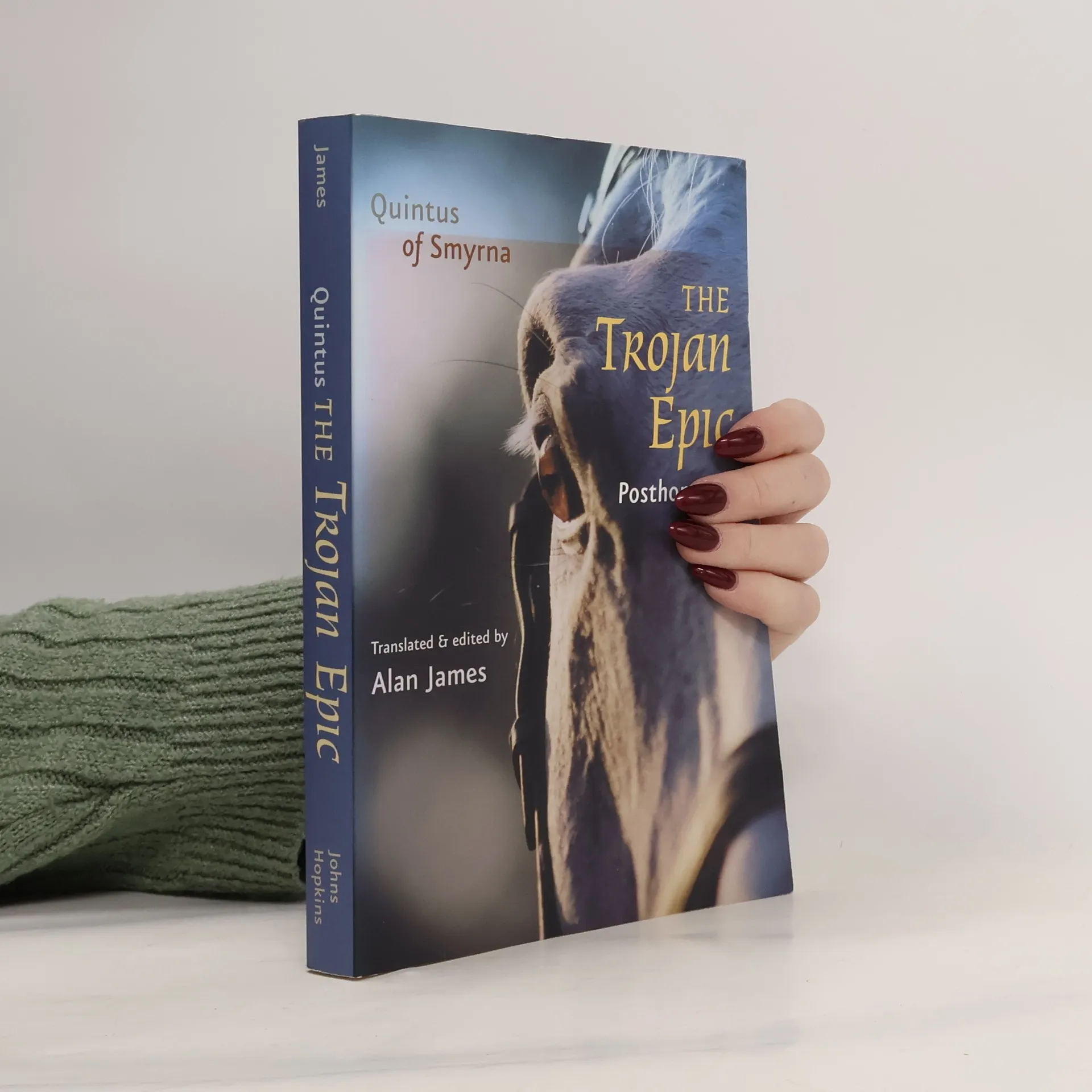
Composed in the third century A.D., the Trojan Epic is the earliest surviving literary evidence of many traditions surrounding the Trojan War from ancient Greece. Known as the Posthomerica, it chronicles the war's events following the burial of Hektor, Troy's greatest hero. Written by Quintus, an educated Greek in Roman Asia Minor, the epic features legendary moments such as Achilles' death, the Trojan Horse, and Troy's destruction. Despite its richness, Quintus's imitation of Homer's style has led some scholars to view it as mere pastiche. However, the Trojan Epic is significant for its insights into older, now-lost Greek epics of the Trojan War, collectively known as the Epic Cycle, which recount events absent from the Iliad and the Odyssey. Alan James's vibrant new translation highlights the work's literary-historical importance and narrative strength. His line-by-line English verse captures the tale's excitement and eloquence, focusing on themes of gods, heroes, bravery, cunning, hubris, and brutality. The edition includes a substantial introduction, a detailed annotated summary, commentary on sources, and an index of proper names. Revitalized by James, this epic will attract readers interested in Greek mythology and the legend of Troy.
Quintus of Smyrna Volgorde van de boeken (chronologisch)
Quintus Smyrnaeus was een Griekse epische dichter wiens werk de grote traditie van Homerisch verhalen voortzet. Zijn Posthomerica pakt de verhaallijn van de Trojaanse Oorlog op na de gebeurtenissen die in Homerus' epossen zijn beschreven, en duikt dieper in de vaak onvertelde aspecten van het conflict. Smyrnaeus trachtte oude epische stijlen nieuw leven in te blazen, met een focus op levendige weergaven van heroïsche daden en dramatische wendingen van het lot in de laatste fasen van de oorlog. Zijn poëzie biedt lezers een rijke uitbreiding van de mythe van de Trojaanse Oorlog, en toont een meesterlijke voortzetting van de klassieke epiek.