Bookbot

Ramsay MacMullen Boeken

    Ramsay MacMullen was een vooraanstaand hoogleraar geschiedenis wiens werk zich verdiept in de sociale geschiedenis van het oude Rome. Hij was bijzonder geïnteresseerd in de diepgaande maatschappelijke verschuiving die de vervanging van het heidendom door het christendom markeerde. Zijn onderzoek belicht de complexe dynamiek van culturele transformatie en de evolutie van geloofssystemen in de Romeinse wereld.

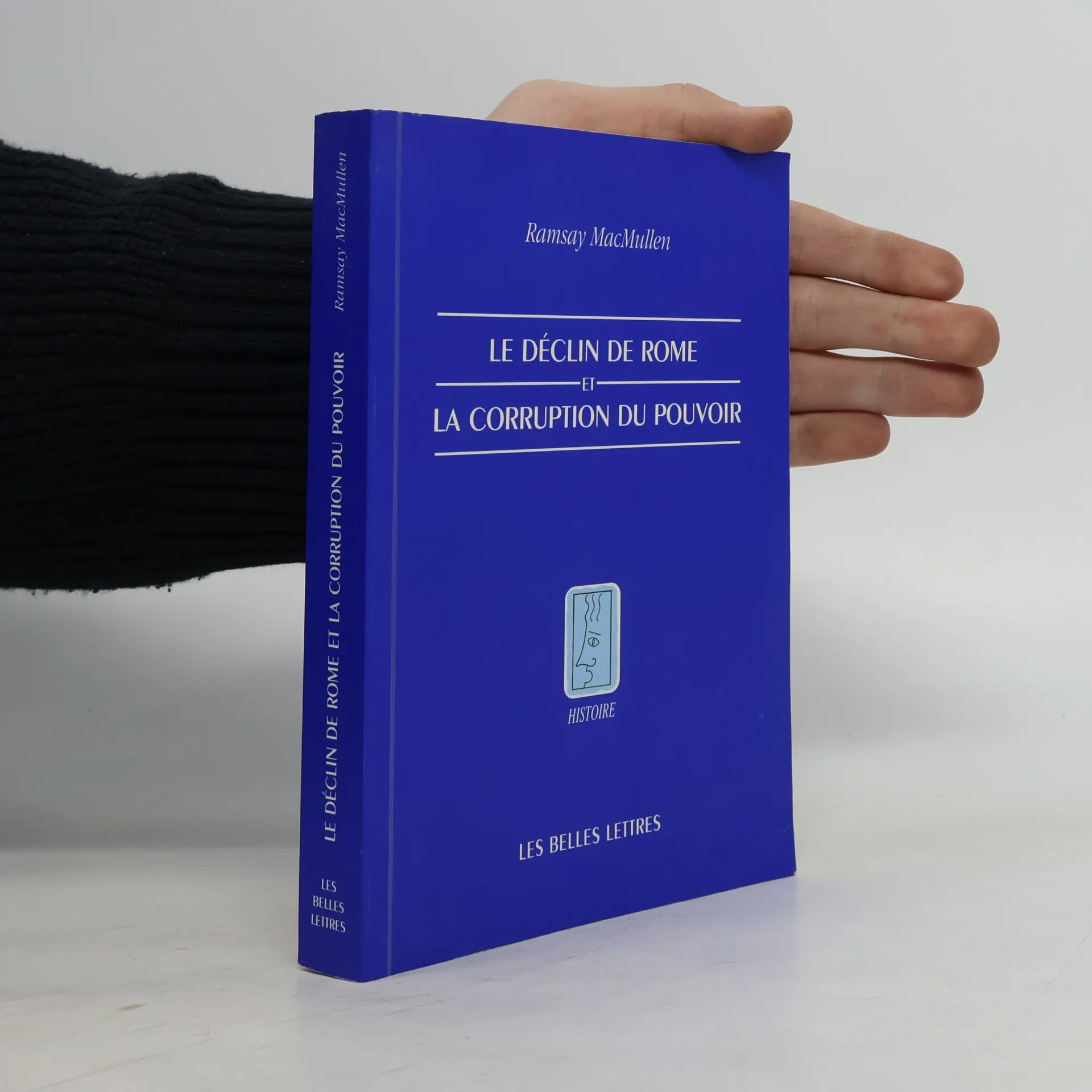
    Histoire - 14: Le déclin de Rome et la corruption du pouvoir
    Christianizing the Roman Empire. A.D. 100-400
    Paganism in the Roman Empire
    Paganism and Christianity, 100-425 C.E.
    • This book is a collection of nearly 175 documentsfrom saints, emperors, philosophers, satirists, inscriptions, graffiti, and other interesting typesthat sheds light on the complex fabric of religious belief as it changed from a variety of non-Judeo-Christian movements to Christian in late antiquity. These texts illuminate and bring to life the bizarre and the banal of the social world of the Roman Empire, the world in which Christianity ultimately gained preeminence.This treasury of texts leads the reader through the matrix of beliefs among which Christianity grew. It includes both Christian and non-Christian sources, avoiding a common but obscuring division between the two. The material is presented as one single flow that satisfies natural curiosity and whets the reader's appetite for more. Brief explanatory introductions to the documents are included.

      Paganism and Christianity, 100-425 C.E.
      3,5
    • How did the early Christian church manage to win its dominant place in the Roman world? In his newest book, an eminent historian of ancient Rome examines this question from a secular―rather than an ecclesiastical―viewpoint. MacMullen’s provocative conclusion is that mass conversions to Christianity were based more on the appeal of miracle or the opportunity for worldly advantages than simply on a “rising tide of Christian piety.”“Provocative to the Christian religious scholar and the nonreligious historian alike. . . . MacMullen’s style is lucid, and the story of a period with its own innate interest is narrated with compelling feeling. . . . It is an important book, and highly recommended for the general reader of history as well as the Christian who wonders how the ‘Jesus movement’ came, by Constantine’s time, to be the church we know― Choice“Written in a fresh and vigorous style, . . . [this book] offers an admirable survey of some major aspects of the history [of the early Christian church].”―Robert M. Grant, New York Times Book Review“Gently provocative. . . . MacMullen has written an instructive and enjoyable book on a great theme.”―Henry Chadwick, Times Literary Supplement“A carefully argued and well-written study.”―Jackson P. Hershbell, Library Journal

      Christianizing the Roman Empire. A.D. 100-400
      3,4
    • Quelles sont les raisons du déclin et de la chute de l'Empire romain ? Depuis des siècles, philosophes et historiens ont proposé des explications souvent contradictoires. Ramsay MacMullen aborde cette question en se demandant si le déclin de Rome a réellement eu lieu ou s'il s'agit d'une construction historique influencée par notre perception de la chute. En s'appuyant sur des faits concrets plutôt que sur des interprétations, il examine l'empire province par province, utilisant des sources littéraires, épigraphiques et archéologiques. Son analyse offre un tableau surprenant qui remet en question de nombreuses idées reçues. MacMullen se penche également sur le fonctionnement des institutions et des structures de pouvoir, révélant comment la corruption — à travers pots-de-vin et extorsions — a sapé la notion même de pouvoir. Cette perversion du droit, l'augmentation des fonctionnaires et l'isolement de l'empereur ont contribué à préparer la destruction inévitable de l'Empire. L'ouvrage ne se limite pas à expliquer la mort de Rome, mais propose également une réflexion sur le destin de toute civilisation. Professeur émérite à Yale, MacMullen est reconnu comme l'un des meilleurs historiens contemporains de la fin de l'Empire romain, ayant publié plusieurs travaux sur les dynamiques sociales et religieuses de cette époque.

      Histoire - 14: Le déclin de Rome et la corruption du pouvoir