Pochodzenie kobiety
- 336bladzijden
- 12 uur lezen


Een Welshe auteur verkent feministische thema's en de evolutietheorie van de aquatische aap, en stelt dat de mensheid is geëvolueerd uit apen die in zee leefden. Haar schrijven gaat vaak in op het concept van de oorsprong van de mensheid bij zee-primaten. Haar bijdragen aan literatuur en onderwijs zijn erkend.


The Most Credible Theory of Human Evolution
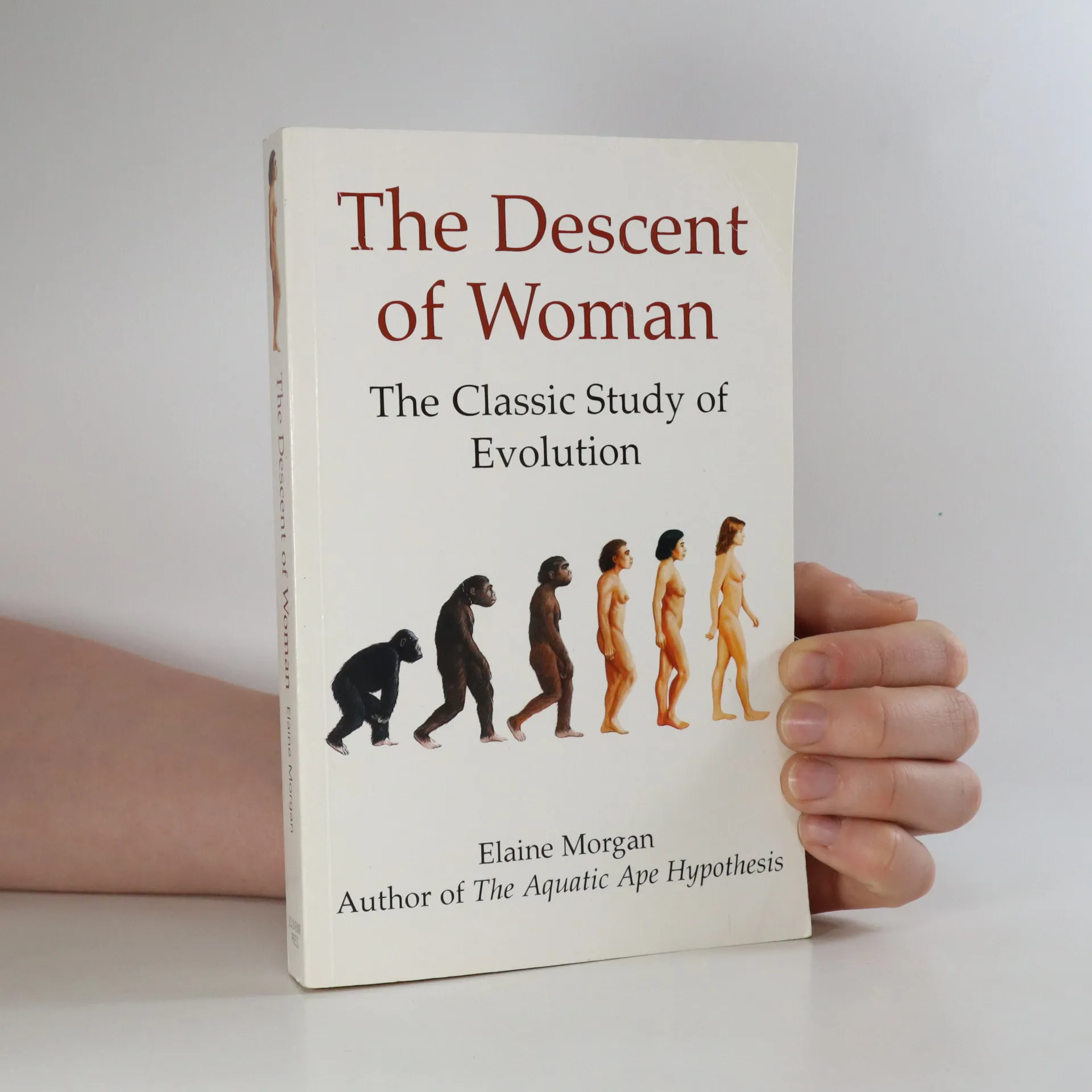
Why do humans differ from other primates? What do those differences tell us about human evolution? Elaine Morgan gives a revolutionary hypothesis that explains our anatomic anomalies--why we walk on two legs, why we are covered in fat, why we can control our rate of breathing? The answers point to one millions of years ago our ancestors were trapped in a semi-aquatic environment. In presenting her case Elaine Morgan forces scientists to question accepted theories of human evolution.
"In 1972 Elaine Morgan's first book, 'The Descent of Woman, ' ... came as a reminder - much needed at the time - that no account of the 'Emergence of Man, ' could afford to confine its attentions to one sex without falling into serious errors. This ... points out the dangers of focusing too much attention of single age group - adults. Infants, like women, have been there throughout our evolutionary history, their well-being equally vital to species survival. Yet, in the five million years in which the growing power of 'Homo sapiens' has enabled us to dominate the planet, our babies have become increasingly helpless, immature and vulnerable. What is the relationship between these two facts? As Jean Piaget wrote: 'The child explains the adult far more than the reverse.' "The Descent of Child" looks at evolution from the child's point of view - from conception and the development of the foetus to birth, child rearing and parental roles. It not only throws new light on where we may have come from, adding new evidence to support the Aquatic Ape Theory of evolution against the Savannah Theory, but it enables us to make a better informed assessments of urgent contemporary problems, such as the break-up of the family, abortion, infertility, over-population and woman's place in society."--Publisher description
