

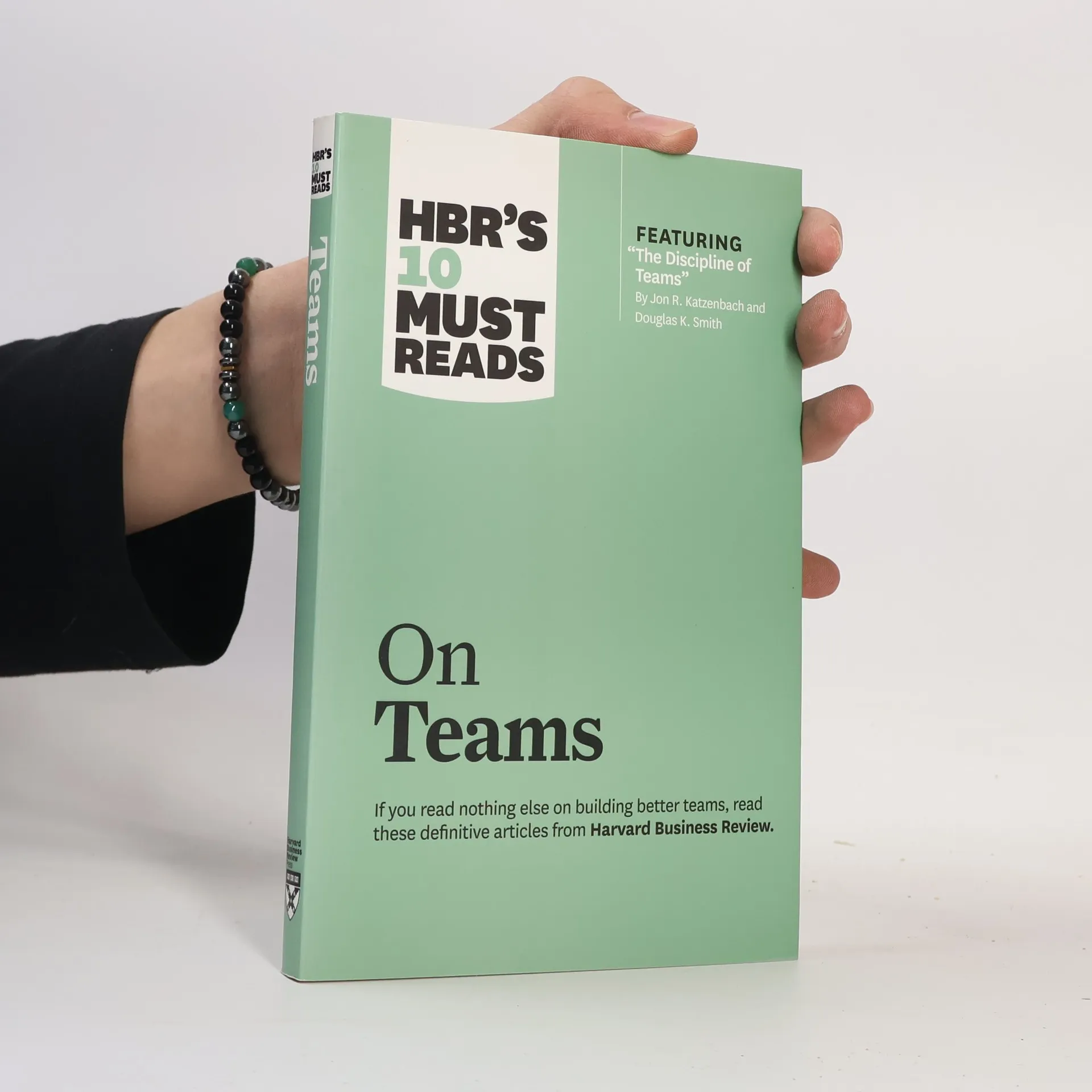
Assemble and steer teams that get results. These ten essential Harvard Business Review articles will help you ramp up your team's performance, rally the troops and keep them accountable, fight constructively, and set goals everyone can agree on.
Kathleen M. Eisenhardt Volgorde van de boeken (chronologisch)
Kathleen Eisenhardt onderzoekt hoe eenvoudige regels complexiteit kunnen temmen in leven, zaken en natuur. Haar werk onderzoekt waarom en hoe eenvoud eenvoudige uitdagingen beheerst, waarbij inzichten worden ontleend aan nieuwe ondernemingen en markten tot de rijken van kunst en natuur. Eisenhardts onderzoek wordt vaak aangewakkerd door raadsels die velen verbijsteren, benaderd met analytische nauwgezetheid samen met studenten en collega's. Haar methode richt zich op het begrijpen van de opkomst van effectieve strategieën voor het navigeren in veeleisende omgevingen.

Unstable markets, fierce competition, and relentless change are the only certainties in today's chaotic business world. In their startling new book, authors Brown and Eisenhardt contend that to prosper in such volatile conditions, standard survival strategies must be tossed aside in favor of a revolutionary new paradigm—competing on the edge. To compete on the edge is to relentlessly reinvent, and it's the only way to navigate the treacherous waters of tumultuous markets. Competing on the edge is an unpredictable, sometimes even inefficient strategy, yet a singularly effective one in an era driven by change. It requires charting a course along the edge of chaos, where a delicate compromise is struck between anarchy and order, to the edge of time, where current business is the primary focus, but actions are shaped by past legacies and future opportunities. By adroitly maneuvering through chaos and time, managers can avoid constantly reacting to nonstop change and instead set a rhythmic pace that others must follow, thereby shaping the competitive landscape—and their own destiny. In the first book to translate leading edge concepts from complexity theory into management practice, each chapter focuses on a specific management dilemma and illustrates a solution. Linking where do you want to go? With how will you get there? Here's a bold and surprising strategy that works—when the name of the game is change.