

What if a major earthquake struck the west coast of North America, resulting in thousands of deaths, widespread destruction, and a fractured economy? How would the Canadian government respond when many forces are already deployed abroad? Or consider a terrorist attack on the Toronto subway during a major convention—would our military have the necessary resources to protect citizens and visitors? Granatstein argues that the military is ill-equipped to handle both current and potential crises, lacking the well-trained and properly deployed troops needed. He critiques the changing nature of peacekeeping in a post-9/11 world, emphasizing that recent missions resemble warfare rather than traditional peacekeeping. Furthermore, he challenges Canadian attitudes towards military involvement, particularly in Afghanistan, highlighting a growing reluctance to engage. The book poses critical questions for Canadians: How can we negotiate with the U.S. amid rising anti-American sentiment? Does our immigration policy make us more vulnerable to terrorism? How can we best protect our northern sovereignty? What should we do about a pacifist Quebec? Granatstein’s work serves as a timely call to action, urging Canadians to reassess their national interests and military stance.
Jack Lawrence Granatstein Boeken
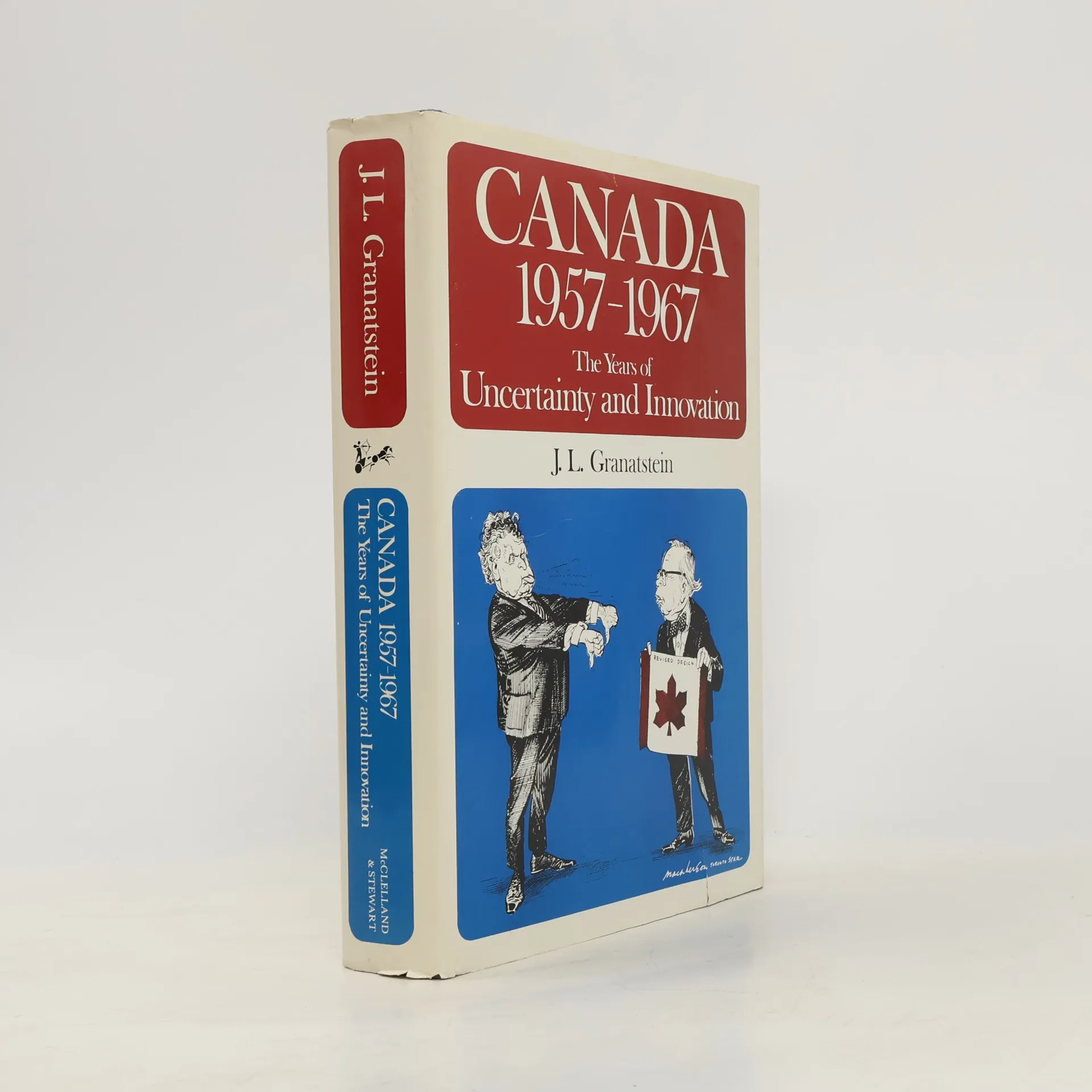

Volume XIX of the Canadian Centenary Series is now available as an e-book, offering a comprehensive history of Canada’s peoples and lands. Each of the nineteen volumes is complete in itself, yet designed to form a unified narrative. In the tenth decade of Canada’s Confederation, the post-war boom led to rapid change and conflicting choices, marked by the leadership of John Diefenbaker and Lester Pearson. J.L. Granatstein analyzes this pivotal decade, beginning with Canada in 1957, ready to embrace Diefenbaker’s grand “Vision.” He details the Progressive Conservative promise, which ultimately could not be fulfilled. This era saw Canada join NORAD and the controversial cancellation of the Avro Arrow jet fighter, alongside internal strife within the Diefenbaker Cabinet over nuclear arms. Cultural growth is highlighted, particularly through the formation of the Canada Council and its influence on the nation’s artistic and intellectual landscape. The mid-1960s reflected public sentiment as governments confronted new challenges, including armed forces unification, medicare, and bilingualism, especially amid rising political and cultural tensions in Quebec. Drawing from government records, private papers, and interviews, Granatstein provides a thoughtful and engaging account of this tumultuous period, crucial to understanding Canada’s journey toward its Centennial. First published in 1986, this significant work is now accessible as a