

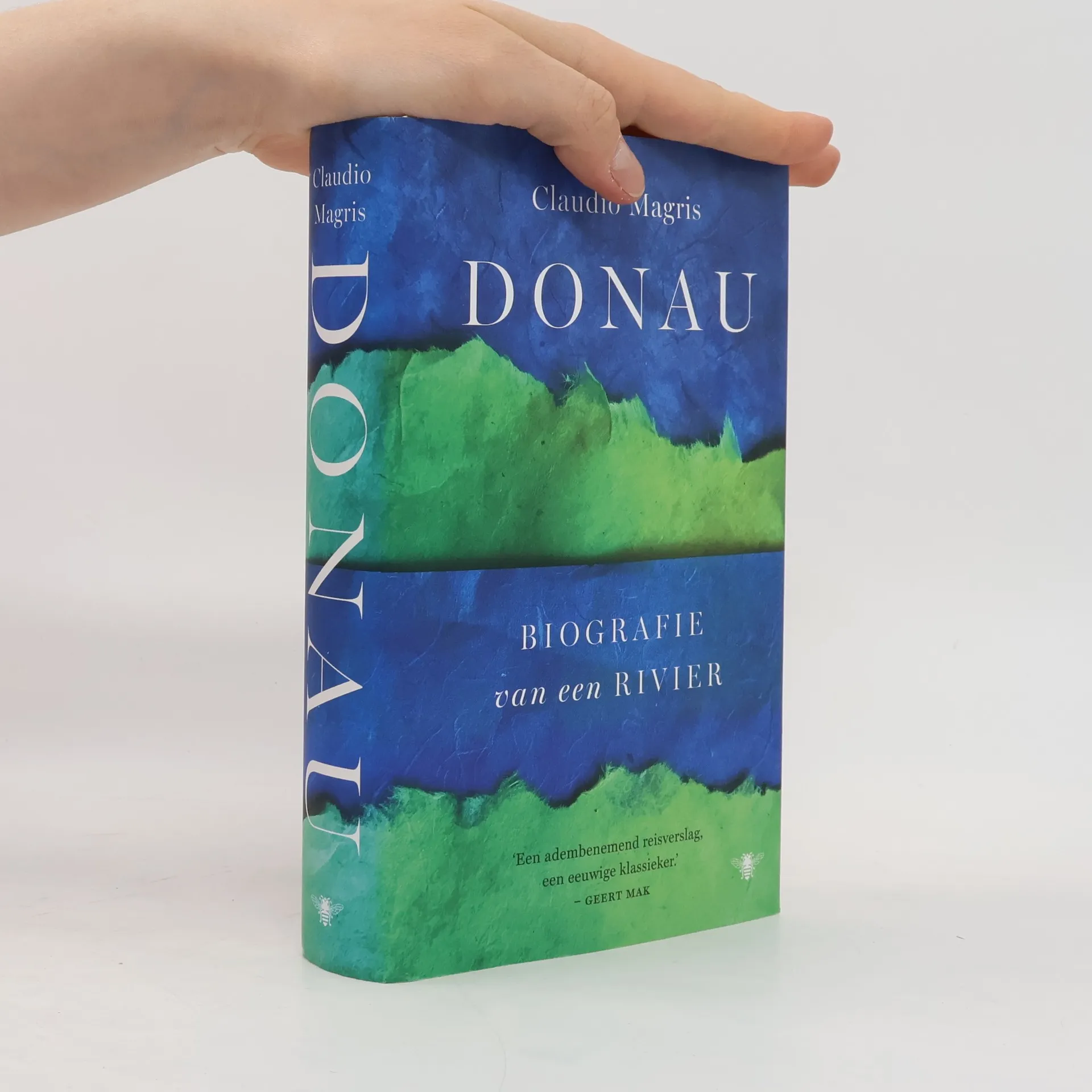
Donau is een moderne odyssee langs het kloppende hart van Centraal-Europa, waar het leven wordt beïnvloed door het Oosten en het Westen, door het christendom en de islam. De loop van de oude rivier volgend, van de oorsprong in de heuvels van Beieren, door Oostenrijk en Hongarije, via de Balkan naar de Zwarte Zee, voert Magris de reiziger langs landschappen waar een grote verscheidenheid aan volken en culturen hun sporen hebben achtergelaten. Magris neemt ons mee op zijn bijzondere tocht, verrijkt door ontmoetingen met de bevolking en geesten uit het verleden, van Ovidius tot Marcus Aurelius, van Kafka tot Canetti. Met zijn loflied op de Donau heeft Claudio Magris een meesterwerk gecreëerd, waarin eruditie en een weergaloze schrijfstijl moeiteloos een verbond zijn aangegaan.
Anton Haakman Volgorde van de boeken (chronologisch)

Langs grenzen
- 365bladzijden
- 13 uur lezen
Van de Italiaanse literatuurwetenschapper Claudio Magris (1939) is sinds zijn veelgeprezen boek 'Donau' uit 1986 vrij veel vertaald. Deze rijke bundel is een bloemlezing uit alle genres die hij beoefent: literaire en cultuurhistorische essays, novellen en toneel. Het boek bevat ook fragmenten uit niet eerder vertaald werk. In de door Magris zelf gemaakte selectie staat de 'grens' centraal, waar hij ook biografisch als bewoner van Triest al vroeg mee te maken had. De rivier van de Geschiedenis sleurt individuele geschiedenissen met zich mee. Magris gaat als schrijver stroomopwaarts om de overblijfselen op te sporen. In boeken als 'Donau' en 'Microcosmi' heeft hij zijn bevindingen vastgelegd. Zeldzaam is het gemak waarmee Magris zijn veelzijdige kennis demonstreert. Met de auteurs die hij bespreekt, onder wie Musil, Svevo en Kafka, gaat hij als een gelijke om, zoals hij ook thuis is in de verschillende landen van Midden-Europa. Het boek, dat gelezen kan worden als een intellectuele autobiografie, is voorzien van een uitstekende introductie door Willem Otterspeer. Kleine druk.(Biblion recensie, J.F. Vogelaar)
Leven als ambacht
- 419bladzijden
- 15 uur lezen
On June 23rd, 1950, Pavese, Italy’s greatest modern writer received the coveted Strega Award for his novel Among Women Only. On August 26th, in a small hotel in his home town of Turin, he took his own life. Shortly before his death, he methodically destroyed all his private papers. His diary is all that remains and for this the contemporary reader can be grateful. Contemporary speculation attributed this tragedy to either an unhappy love affair with the American film star Constance Dawling or his growing disillusionment with the Italian Communist Party. His Diaries, however, reveal a man whose art was his only means of repressing the specter of suicide which had haunted him since childhood: an obsession that finally overwhelmed him. As John Taylor notes, he possessed something much more precious than a political theory: a natural sensitivity to the plight and dignity of common people, be they bums, priests, grape-pickers, gas station attendants, office workers, or anonymous girls picked up on the street (though to women, the author could-as he admitted-be as misogynous as he was affectionate). Bitter and incisive, This Business of Living is both moving and painful to read and stands with James Joyce’s Letters and Andre Gide’s Journals as one of the great literary testaments of the twentieth century.