


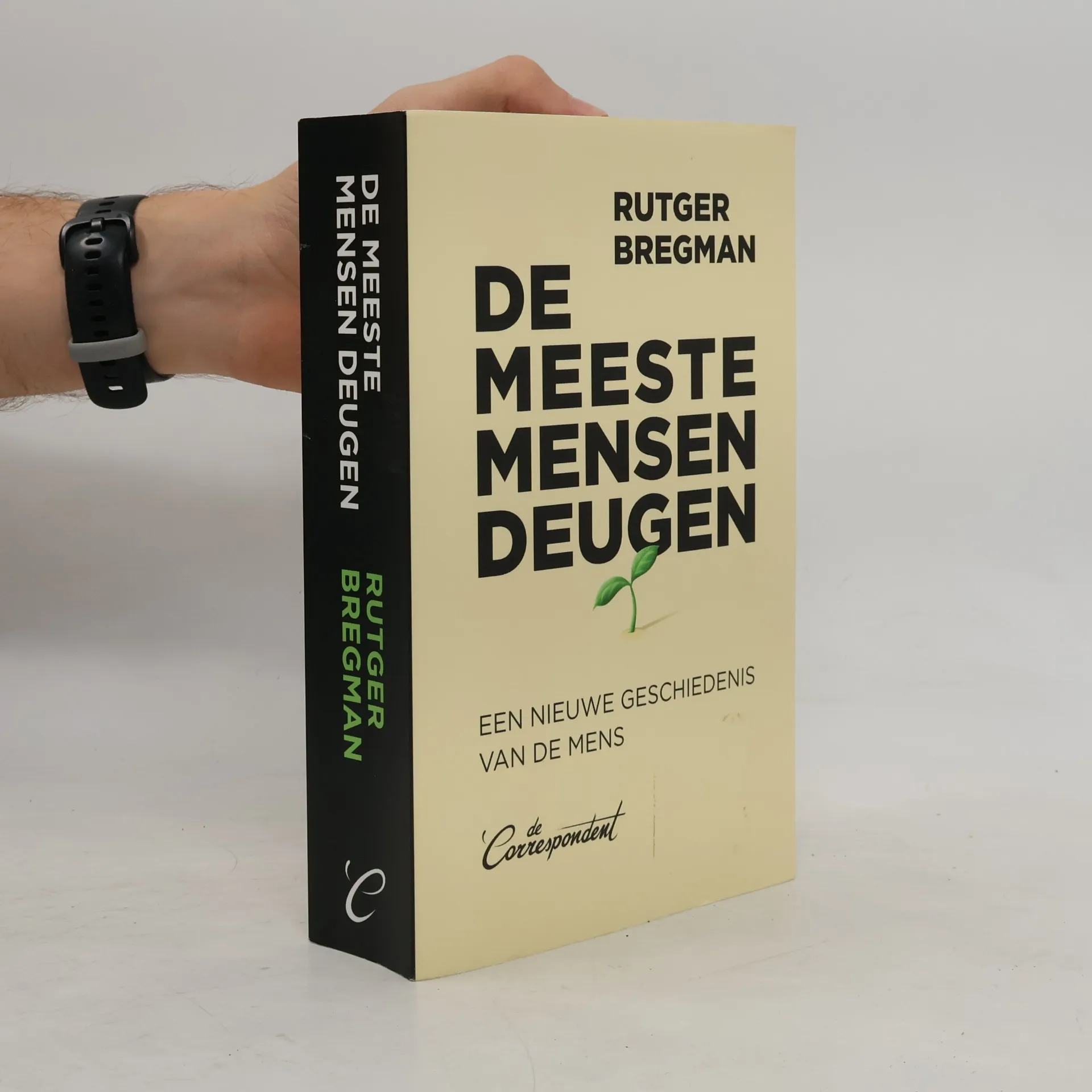

De meeste mensen deugen
- 424bladzijden
- 15 uur lezen
Speurtocht naar een positief mensbeeld aan de hand van historische voorbeelden, met adviezen voor een beter samenleven.
Rutger Bregman is een Nederlandse historicus en journalist, bekend om het populariseren van concepten van sociale en economische innovatie. Hij duikt in de historische context en het potentieel van ideeën zoals een universeel basisinkomen en kortere werkweken. Zijn werk, geworteld in geschiedenis, filosofie en economie, pleit voor vooruitstrevende oplossingen voor maatschappelijke uitdagingen. Bregman heeft zich via zijn geschriften en journalistiek gevestigd als een van Europa's toonaangevende denkers.


Speurtocht naar een positief mensbeeld aan de hand van historische voorbeelden, met adviezen voor een beter samenleven.
De mens is een beest, zeiden de koningen. Een zondaar, zeiden de priesters. Een egoïst, zeiden de boekhouders. Al eeuwen is de westerse cultuur doordrongen van het geloof in de verdorvenheid van de mens. Maar wat als we het al die tijd mis hadden? In dit boek verweeft Rutger Bregman de jongste inzichten uit de psychologie, de economie, de biologie en de archeologie. Hij neemt ons mee op een reis door de geschiedenis en geeft nieuwe antwoorden op oude vragen. Waarom veroverde juist onze soort de aarde? Hoe verklaren we onze grootste misdaden? En zijn we diep vanbinnen geneigd tot het goede of het kwade? Adembenemend, weids en revolutionair – De meeste mensen deugen herschrijft niet alleen de geschiedenis, maar werpt ook nieuw licht op onze toekomst. ‘Een indrukwekkend boek.’ – Jan Terlouw ‘Rutger Bregman sleept je mee.’ – Geert Mak ‘Of je het nou eens of oneens bent met Rutger Bregman, hij is een belangrijke stem binnen onze generatie. Fascinerend boek, lees het.’ – Tim Hofman ‘Cynici en zwartkijkers kunnen inpakken. Een heerlijk boek voor iedereen die echt realistisch wil zijn.’ – Beatrice de Graaf
Essay over de vraag waarom werk dat waarde toevoegt aan de welvaart vaak veel slechter wordt beloond dan werk dat slechts welvaart verplaatst of zelfs schadelijk is.
Takes some of the world's most famous studies and events and reframes them, providing a new perspective on the last 200,000 years of human history. Bregman shows how believing in human kindness and altruism can be a new way to think - and act as the foundation for achieving true change in our society. It is time for a new view of human nature
It's a belief that unites the left and right, psychologists and philosophers, writers and historians. It drives the headlines that surround us and the laws that touch our lives. From Machiavelli to Hobbes, Freud to Dawkins, the roots of this belief have sunk deep into Western thought. Human beings, we're taught, are by nature selfish and governed by self-interest. Humankind makes a new argument: that it is realistic, as well as revolutionary, to assume that people are good. The instinct to cooperate rather than compete, trust rather than distrust, has an evolutionary basis going right back to the beginning of Homo sapiens. By thinking the worst of others, we bring out the worst in our politics and economics too. In this major book, internationally bestselling author Rutger Bregman takes some of the world's most famous studies and events and reframes them, providing a new perspective on the last 200,000 years of human history. From the real-life Lord of the Flies to the Blitz, a Siberian fox farm to an infamous New York murder, Stanley Milgram's Yale shock machine to the Stanford prison experiment, Bregman shows how believing in human kindness and altruism can be a new way to think - and act as the foundation for achieving true change in our society. It is time for a new view of human nature
A noted Dutch journalist and economist proposes an outline for a new worldwide Utopia, with central tenets including a shortened work week, a guaranteed basic income for all, wealth redistribution, and open borders everywhere