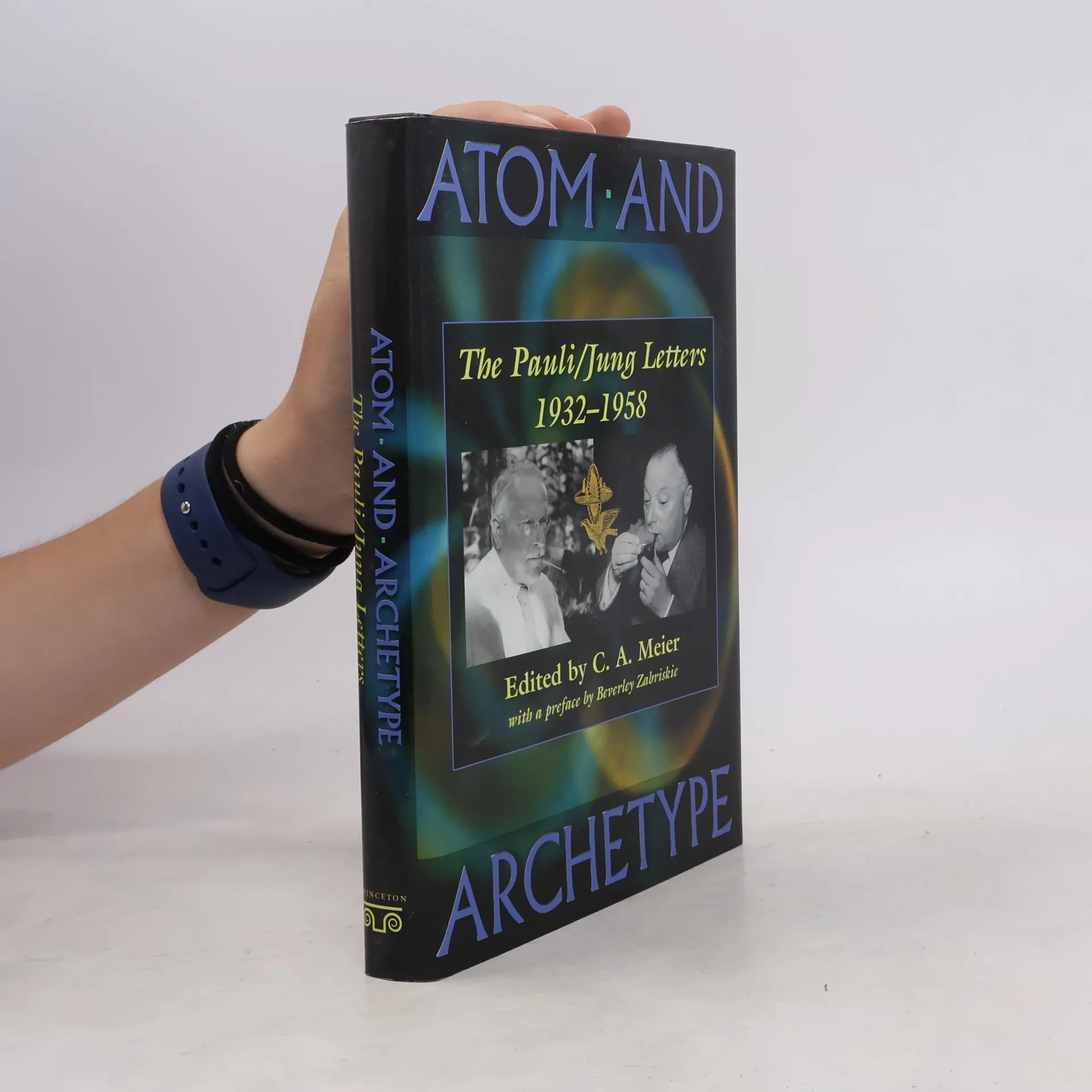
In 1932, Wolfgang Pauli, a renowned physicist on the brink of winning the Nobel Prize, faced personal turmoil following his mother's suicide and a troubled marriage. His heavy drinking and public quarrels were compounded by unsettling dreams, prompting him to seek help from C. G. Jung, with whom he established a regular meeting. This led to a remarkable intellectual partnership that bridged physics and psychology, documented in eighty letters exchanged over twenty-six years. Although Jung never formally analyzed Pauli, he interpreted over 400 of his dreams, contributing to his later works, including "Psychology and Alchemy" and "The Analysis of Dreams." Their discussions explored the connections between dreams and reality, revealing unexpected parallels between depth psychology and quantum physics. Their collaboration culminated in the joint publication of Jung's treatise on synchronicity and Pauli's essay on archetypal ideas in Kepler's writings. This correspondence not only refined their understanding of synchronicity—a term Jung had proposed—but also influenced the development of Jungian psychology through insights from physics. This portrait of their extraordinary friendship appeals to historians of science and those interested in human creativity, showcasing the profound impact of their meeting of great minds.
Wolfgang Pauli Boeken
Wolfgang Ernst Pauli was een theoretisch natuurkundige en een sleutelfiguur in de ontwikkeling van de kwantummechanica. Zijn wetenschappelijke bijdragen, waaronder het uitsluitingsprincipe, waren revolutionair, en zijn werk blijft een standaardreferentie. Pauli verdiepte zich ook in diepgaande filosofische vraagstukken, waarbij hij de interactie tussen wetenschap en archetypische dromen onderzocht, wat leidde tot een fascinerende dialoog tussen kwantumfysica en psychologie.


Focuses on wave functions of force-free particles, description of a particle in a box and in free space, particle in a field of force, multiple particles, eigenvalue problems, more.
In the 1950s, the distinguished theoretical physicist Wolfgang Pauli delivered a landmark series of lectures at the Swiss Federal Institute of Technology in Zurich. His comprehensive coverage of the fundamentals of classical and modern physics was painstakingly recorded not only by his students but also by a number of collaborators whose carefully edited transcriptions resulted in a remarkable six-volume work.This volume, the fourth in the series, represents a concise course on statistical mechanics, centering on the historic development of the basic ideas and on the logical structure of the theory. Major chapter headings include General Statistical Mechanics, Brownian Motion, and Quantum Statistics.Originally published in 1973, the text remains an important resource thanks to Pauli's manner of presentation. As Victor F. Weisskopf notes in the Foreword to the series, Pauli's style is "commensurate to the greatness of its subject in its clarity and impact. . . . Pauli's lectures show how physical ideas can be presented clearly and in good mathematical form, without being hidden in formalistic expertise." Alone or as part of the complete set, this volume represents a solid introduction to statistical mechanics that will be invaluable to individuals, as well as to libraries and other institutions.
Selected topics in field quantization
Volume 6, Selected Topics in Field Quantization
- 208bladzijden
- 8 uur lezen
In the 1950s the distinguished theoretical physicist Wolfgang Pauli delivered a landmark series of lectures at the Swiss Federal Institute of Technology in Zurich. His comprehensive coverage of the fundamentals of classical and modern physics was painstakingly recorded not only by his students, but also by a number of collaborators whose carefully edited transcriptions resulted in a remarkable six-volume work. This volume, the sixth in the series, focuses on selected topics in field quantization and considers such subjects as quantization of the electron-positron field, response to an external field, quantization of free fields, quantum electrodynamics, interacting fields, the Heisenberg representation, the S-matrix, and Feynman's approach to quantum electrodynamics. As does each book in the series, Volume 6 includes an index and a wealth of helpful figures. Originally published in 1973, the text remains entirely relevant thanks to Pauli's manner of presentation. As Victor F. Weisskopf notes in the Foreword to the series, Pauli's style is "commensurate to the greatness of its subject in its clarity and impact…. Pauli's lectures show how physical ideas can be presented clearly
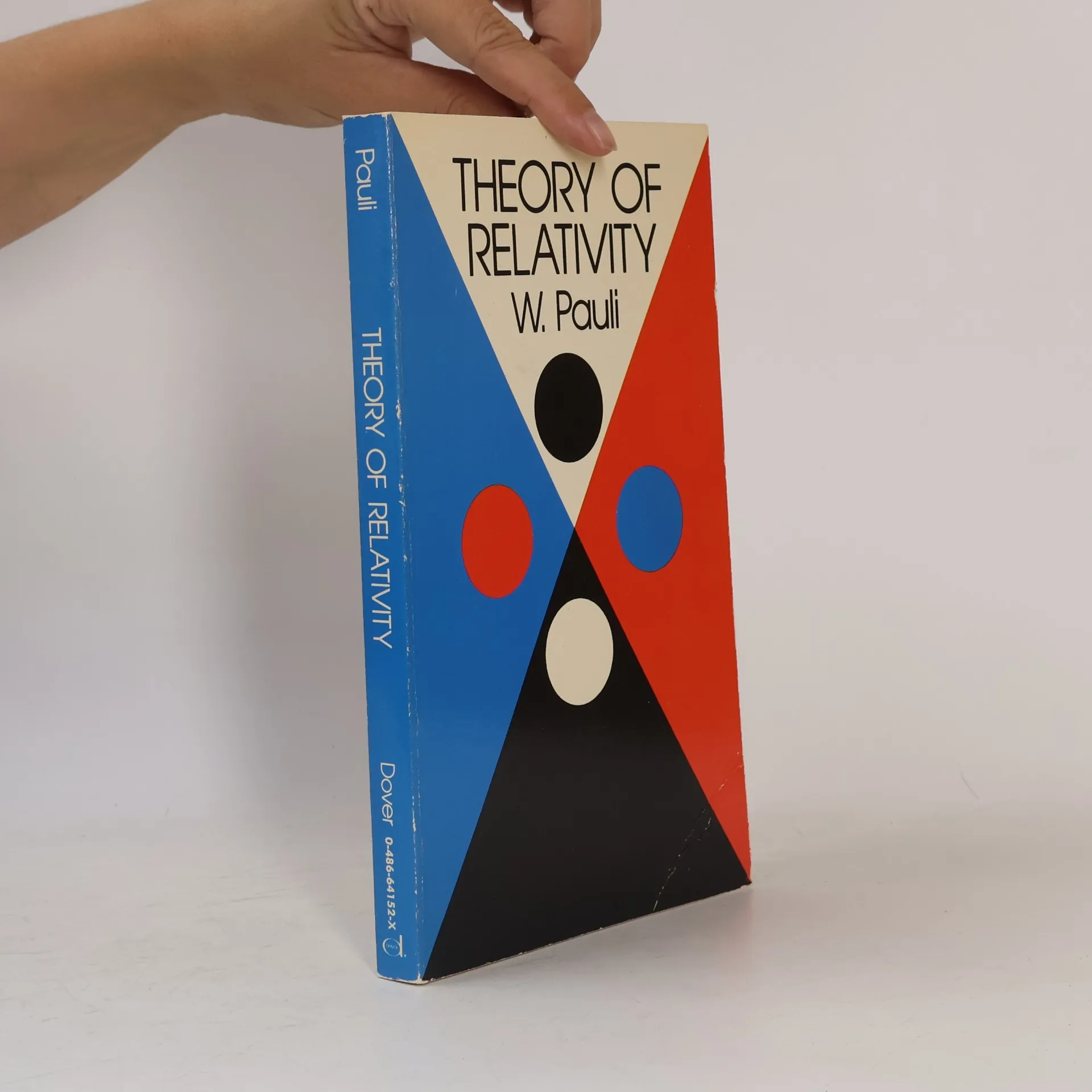
Theory of Relativity
- 272bladzijden
- 10 uur lezen
Wolfgang Pauli (1900–1958) was a pivotal figure in 20th-century physics, awarded the 1945 Nobel Prize for his exclusion principle. A brilliant theoretician, he first proposed the neutrino and grasped the significance of Einstein's theory of relativity. His early work, Theory of Relativity, aimed to comprehensively review the literature on relativity, a task now deemed impossible due to the vast amount of subsequent research and the increasing complexity of physics and quantum mechanics. To preserve the historical context of Pauli's contributions, the original text is reprinted alongside his insightful retrospective on later developments in relativity theory and the controversies it raises. Pauli delves into the challenging issue of unified field theories, examining its ties to the classical field concept and its implications for atomic nature. Initially skeptical of classical solutions, he later found support in the newer epistemological frameworks of quantum mechanics. The unresolved aspects of relativity continue to fuel debates on its relationship with quantum theory, presenting one of science's enduring challenges. Pauli also discusses issues beyond the scope of special and general relativity, the clash between classical and quantum physics, the significance of Einstein's work in physics evolution, and the epistemological implications of the quantum of action, moving away from simplistic visualizations.
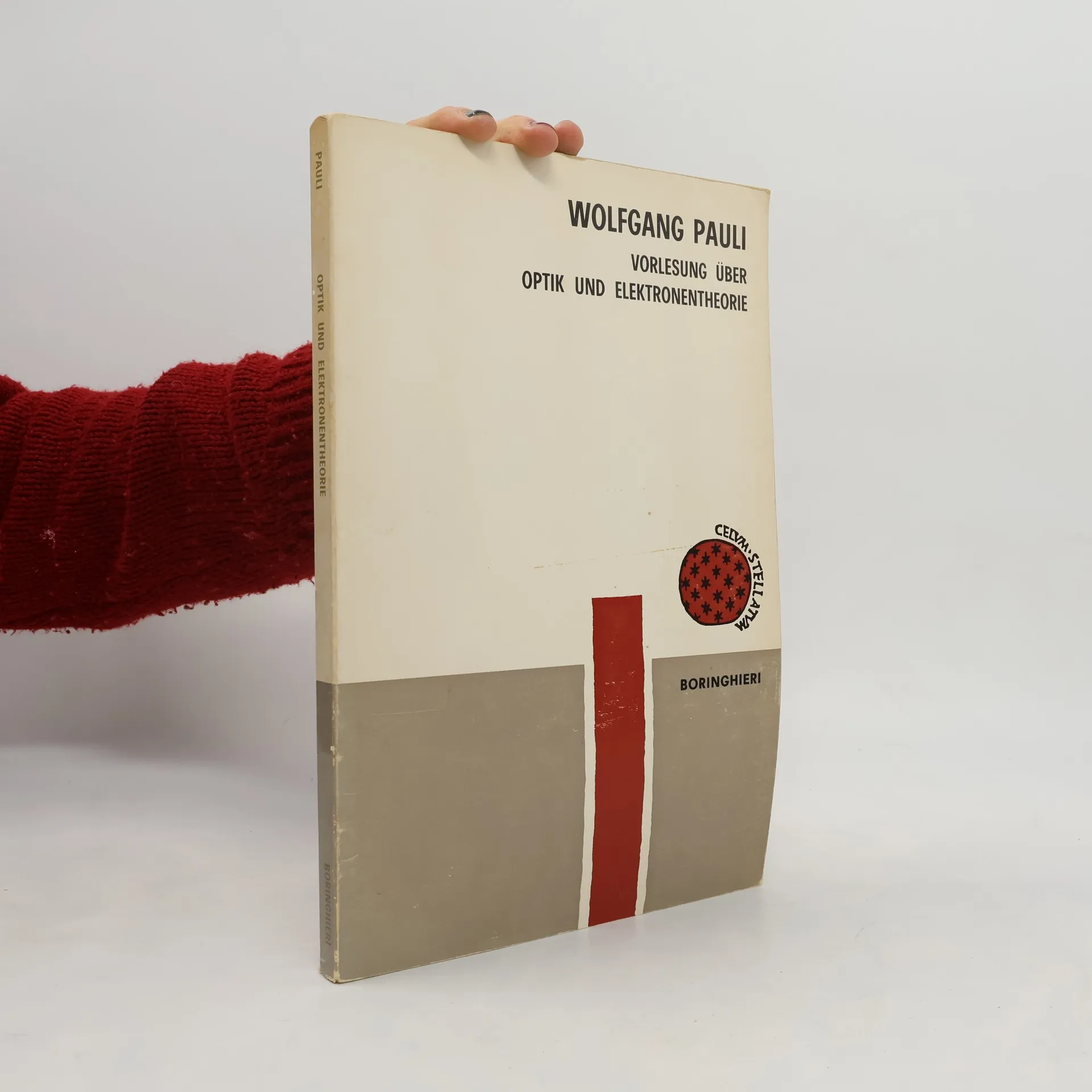
Optics and the theory of electrons
Volume 2, Optics and the Theory of Electrons
- 176bladzijden
- 7 uur lezen
Lectures by distinguished physicist examine geometrical optics, theory of interference and diffraction, Maxwell's Theory, crystal optics, and molecular optics. Peerless resource for students and professionals. Numerous helpful figures.
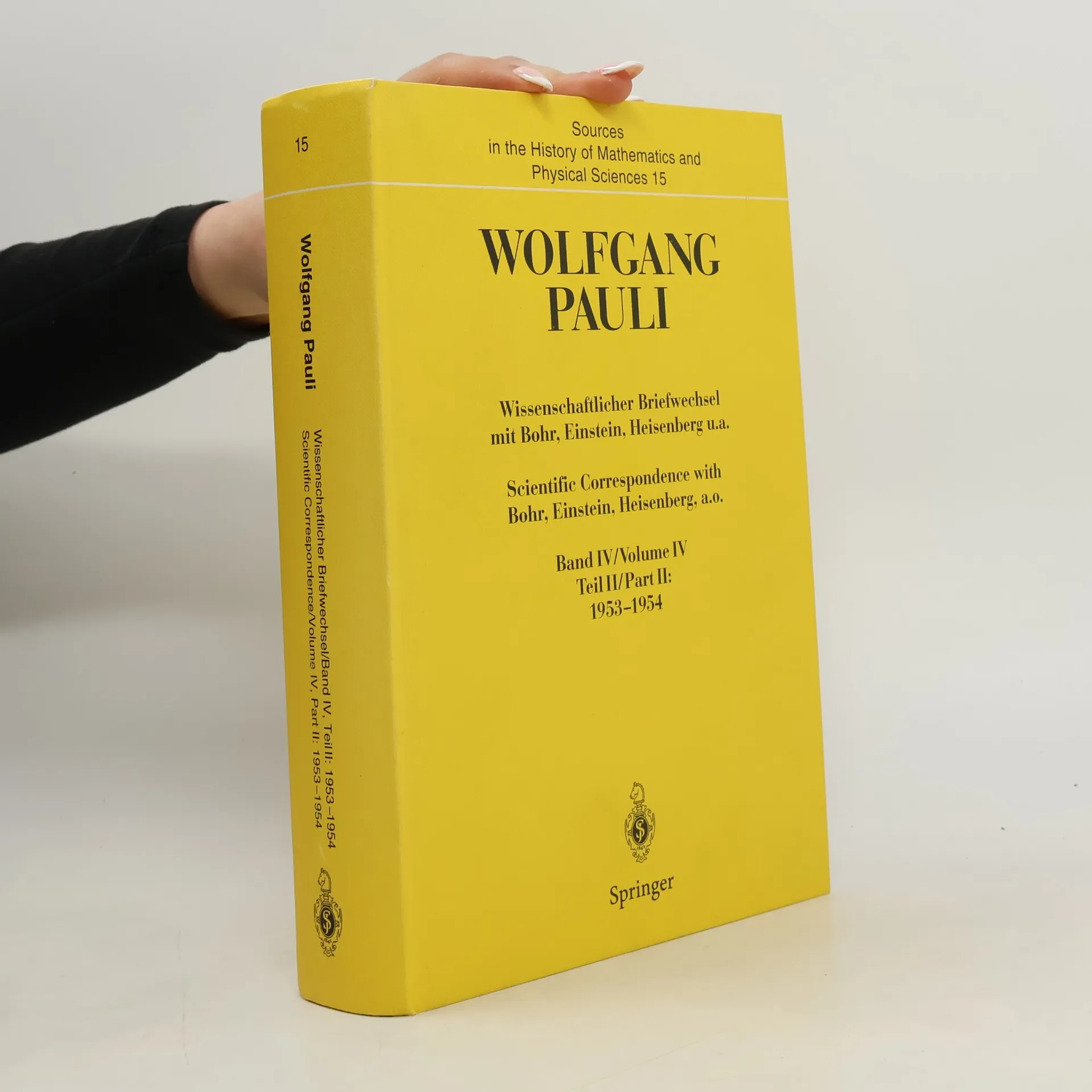
Aus Paulis letztem Lebensjahrzehnt sind über 2000 Briefe erhalten und in diesem grundlegenden Werk zur Physikgeschichte der Nachkriegszeit zusammengefaßt. Neben der Physik wird hier auch der allgemeinere geistesgeschichtliche Hintergrund unserer Naturwissenschaft beleuchtet. Dieser Teilband enthält wissenschaftliche Korrespondez über grundlegende und andere allgemeine Fragen der Physik der 50er Jahre: Elementarteilchen, Erkenntnistheorie und Quantenfeldtheorie. Im besonderen wird hier die Geschichte der frühen Quantenfeldtheorie beleuchtet. Die reich annotierten und kommentierten Briefe sind chronologisch angeordnet und durch Verzeichnisse und Register erschlossen. From the last decade of Paulis life, more than 2000 of his letters have survived. Together they represent a remarkable contribution to the history of post-war physics. In addition to discussing questions of physics they provide illuminating insights into debates on the philosophical and human components of the history of science. This part of Volume IV contains scientific correspondence on foundational and other general problems of physics in the 1950s: elementary particles, epistemology, and quantum field theory. In particular, one can clearly trace the development of the early quantum field theory. Generous annotations and commentary accompany the letters, which are ordered chronologically and listed in registers and an index for easy access.
Wolfgang Pauli und C. G. Jung. Ein Briefwechsel 1932 1958
- 283bladzijden
- 10 uur lezen
Příroda a duše
- 200bladzijden
- 7 uur lezen
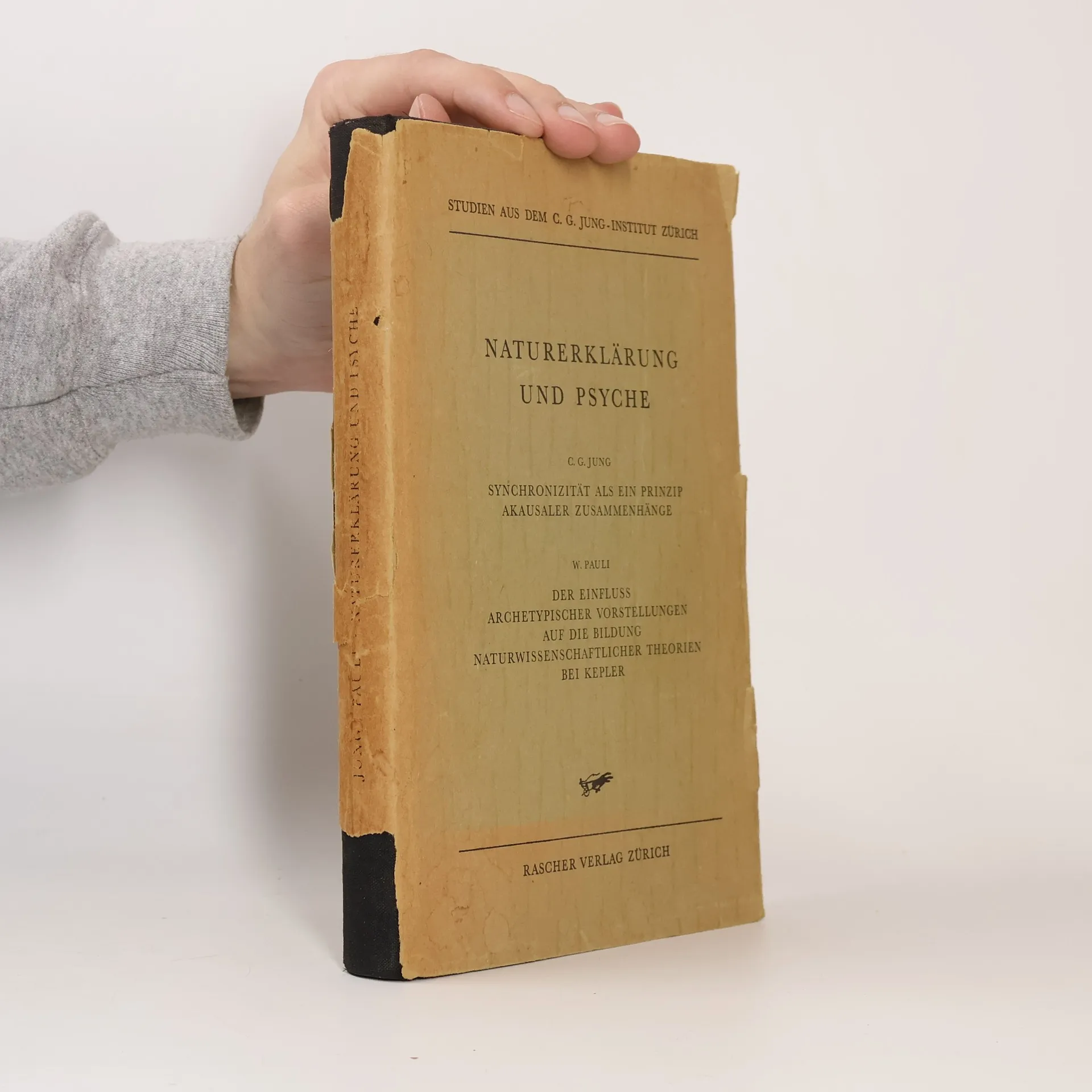
Carl Gustav Jung (1875–1961) a Wolfgang Ernst Pauli (1900–1958) jsou dvě významné postavy dvacátého století, jejichž spolupráce inspirovala řadu knih a studií. Výsledkem jejich paralelního a společného bádání je tato kniha z roku 1952, která se zaměřuje na propojení přírody a duše. Jungův příspěvek se věnuje konceptu synchronicity, kterou definuje jako časovou koincidenci dvou nebo více příčinně nespojených událostí s obdobným významem. Tímto tématem se zabýval od 30. let, přičemž jeho výzkum byl ovlivněn diskuzemi a korespondencí s Pauliem. Pauliho studie se zaměřuje na vliv archetypických představ na tvorbu přírodovědeckých teorií u Keplera, a zkoumá komplementaritu duše a přírody v jeho a Fluddově díle. V širším kontextu se zabývá spojením poznání s náboženským prožitkem prostřednictvím symbolů, které vyjadřují emoční stránku prožitku a jsou v živém vztahu s tehdejším souhrnem vědění. Pauli zdůrazňuje, že návrat k historickým obdobím, kdy byly vědecké pojmy cizí, může přinést důkaz o existenci symbolů, které mají jak náboženskou, tak přírodovědeckou funkci. Kniha je doplněna Pauliho esejí o vědě a myšlení západu.
Mein Vaterland
- 319bladzijden
- 12 uur lezen
Vierpoltheorie und ihre Anwendung auf elektronische Schaltungen
- 234bladzijden
- 9 uur lezen
Lehr- und Übungsbuch Mathematik
- 382bladzijden
- 14 uur lezen
Ein Briefwechsel 1932 - 1958
- 275bladzijden
- 10 uur lezen
Der hier erstmals ver]ffentlichte Briefwechsel zwischen dem Psychiater C.G. Jung und dem Nobelpreistr{ger der Physik Wolfgang Pauli ist ein geistesgeschichtliches Dokument ersten Ranges. Ein privates Schicksal hat sie zusammengef}hrt, und daraus ist ein vorwissenschaftlicher Dialog erwachsen, in dem versucht wird, naturwissenschaftliches und psychologischesDenken zu vereinheitlichen. Die Briefe verdeutlichen, da~ es weder f}r den Psychologen zul{ssig ist, die methodischen Einsichten der Physik, noch f}r den Physiker, die Erfahrungen im Umgang mit dem Psychischenzu vernachl{ssigen.
Facetten der Physik: Physik und Erkenntnistheorie
- 224bladzijden
- 8 uur lezen