

Accomplished in his career but unaccomplished in love, a middle-aged architect is torn apart by his obsession with an enigmatic young woman in this delicately told story of desire and abjection by a titan of Italian literature. Antonio Dorigo is a successful architect in Milan, nearing fifty, who has always been afraid of women. A regular at an upscale brothel for years, he mourns the lack of close female companionship in his life. One afternoon, the madam at the brothel introduces Tonio to “a new girl,” Laide. Tonio sees nothing especially remarkable about her, though it intrigues him that she dances at La Scala and also at a strip club, and yet in a very short time he becomes completely obsessed with her. Laide leads Antonio on, confounds him, uses and humiliates him, treats him tenderly from time to time, lies to him, makes no apologies to him, and he loves her ever more. This helpless and hopeless love, he feels, is what he is, even as it prevents him from ever seeing Laide for who she is. Because Who is she? is the question at the heart of Buzzati’s clear-eyed and darkly comic tale of infatuation. Is A Love Affair a love story or is it a story of anything but love? Buzzati’s novel, with its psychological subtleties, vivid cityscapes, unsettling comedy, and compassion, keeps the reader guessing till the end.
Alberico Sala Boeken
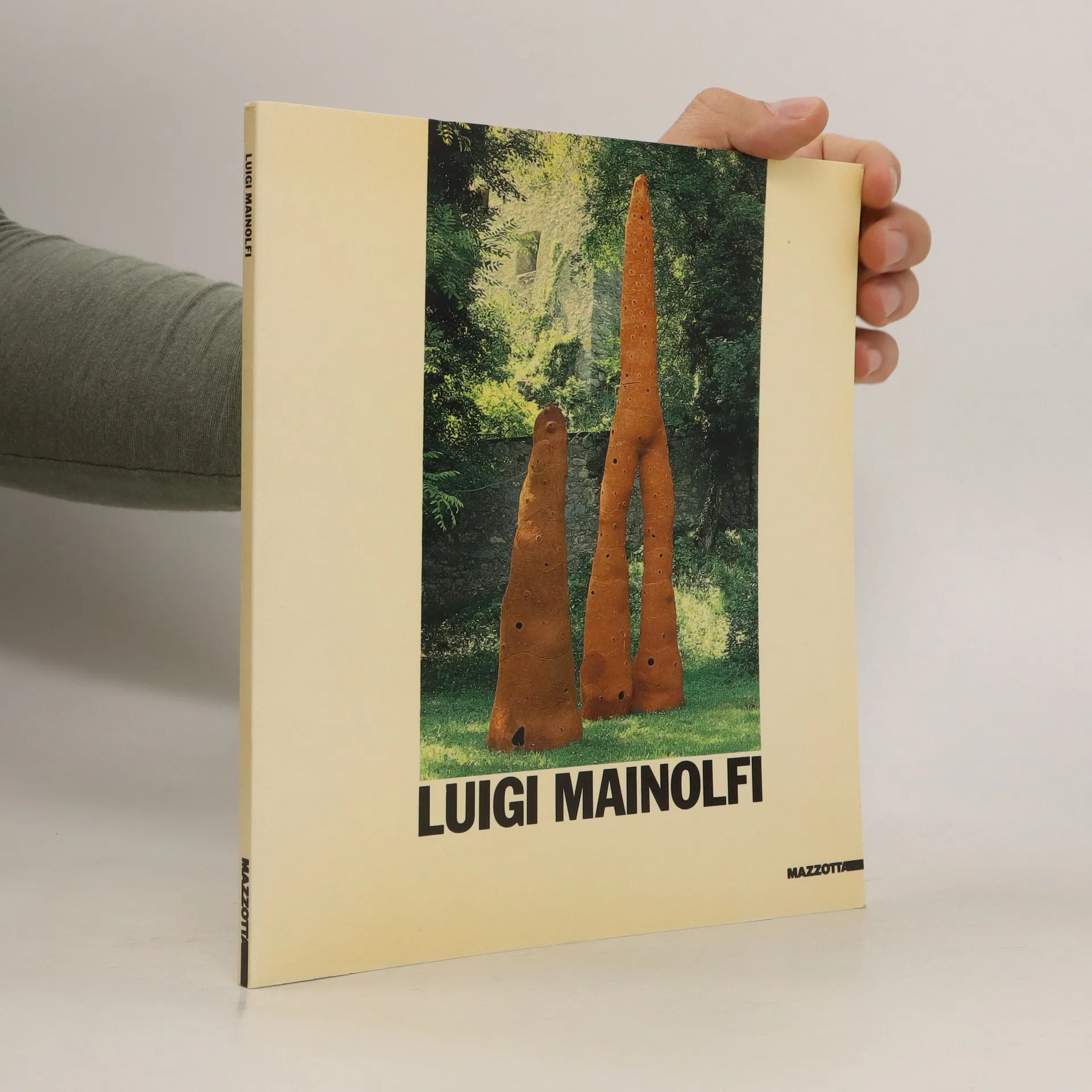

Catalogo della mostra di Trento, Castel Ivano, 28 Giu.-30 Ago. 1987. A cura di Gillo Dorfles e Alberico Sala. Presentazione di Vittorio Staudacher. Notizie biografiche, elenco delle opere. 53 ill. in nero e a colori . 8vo pp. 58 Brossura (wrappers) Perfetto (Mint) Luigi Mainolfi, nato a Rotondi (AV) nel 1948, artista, inizia il suo percorso con alcune performances. Le prime sculture sono del 1977. Negli anni Ottanta affronta temi diversi con continui richiami le Basi del cielo, la Piana degli occhi, il Fauno, l'Elefantessa, l'Orco, Cittadòr, il Sole. Le sculture sono realizzate in gesso, terracotta e bronzo. Una parte significativa del suo lavoro è dedicato al rapporto tra forma e suono. Nel ‘79 espone la Campana e negli anni successivi lavora ai Battacchi, e dal 1988 realizza semplici forme sonore in Fuscelli, Anelli, Sonagli.Con Alle forche Caudine 1981, partecipa alla XL Biennale di Venezia e a Documenta 7 Kassel, nel 1982. Con Le Bbasi del cielo 1981-82, partecipa alla XII Biennale de Paris, 1982. Con il bronzo Trionfo (Elefantessa) 1982, alla Biennale di Venezia 1986. Nel 1987 vince il Superior Prixe al 5th Henry Moore G.P. in Giappone con il bronzo Città Gigante 1986. Nel 1990 ha una sala personale alla Biennale di Venezia con Sole Nero, 1988-89.
Alberto Sughi
Il gioco dell'apparenza. 5 cicli pittorici dal 1960 al 1986