

When the Communists took power in Russia in October 1917, the country had virtually no truck industry, relying instead on a few small assembly plants that merely bolted together imported parts. By the end of 1991, however, the Soviet Union had developed one of the world's largest truck industries, overcoming significant challenges along the way. The communist system represented an unprecedented effort to create a new society that rejected the chaotic nature of capitalism. For over seventy years, trucks were designed and manufactured as integral components of a vast, planned transport system, working in harmony with trains and waterways rather than in competition. Each factory specialized in producing specific trucks tailored to the needs of the planned economy, with political considerations often influencing design and production. The expansive and varied natural environment also impacted truck design, as drivers navigated extreme climates across a vast landscape that stretched from Europe to Asia, including the Arctic Circle and the Caucasus. With limited service stations and motorways, reliability became crucial, often overshadowing driver comfort. The narrative explores how the truck industry contributed to Soviet industrial strength, the turmoil faced after the fall of communism, and the resurgence of the truck industry in a revitalized Russia.
Andy Thompson Volgorde van de boeken (chronologisch)
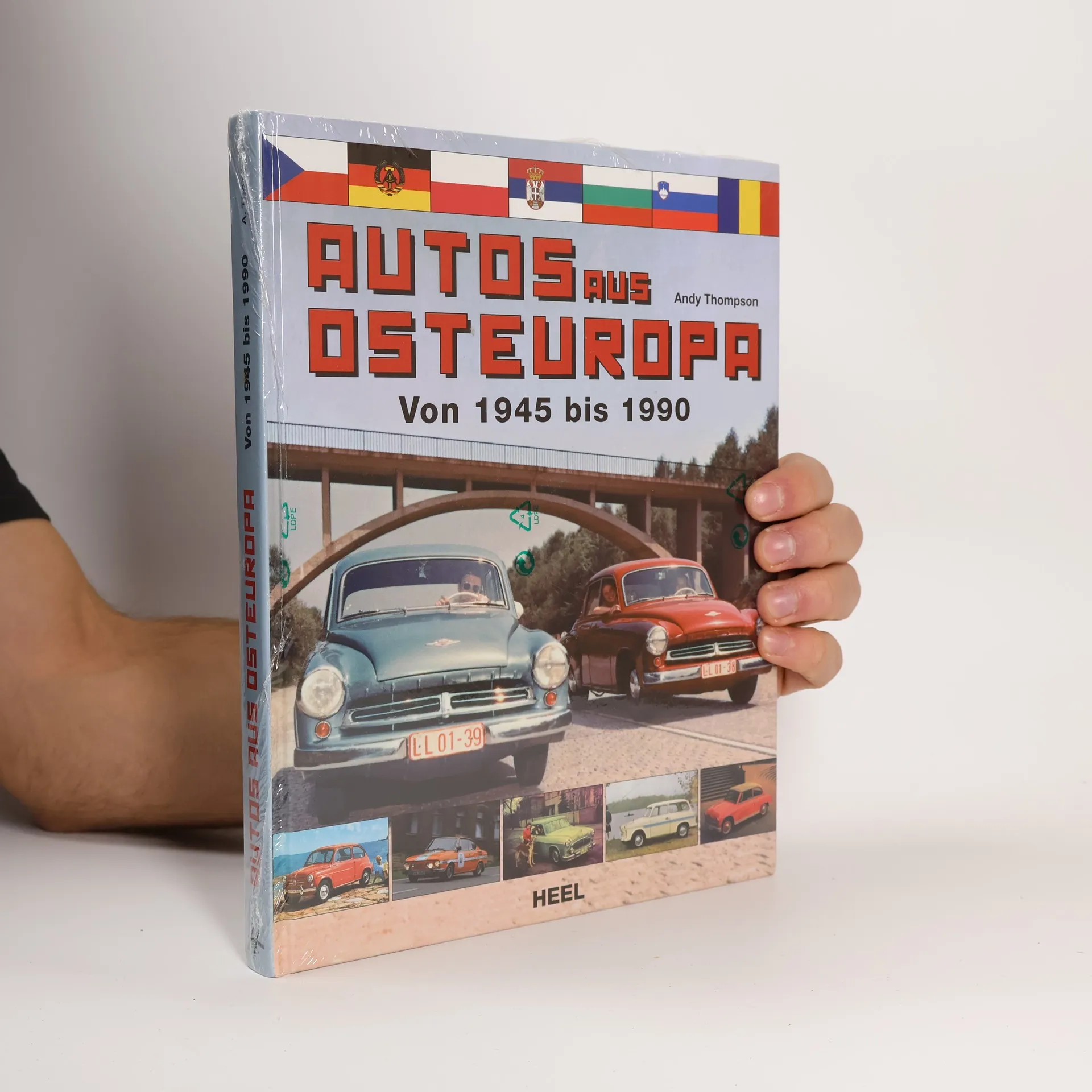


Autos aus Osteuropa
- 256bladzijden
- 9 uur lezen
Eine wahre Fundgrube für Fans - viele zeitgenössische Fotos - Überblick über fast unbekannte Modelle - zum Schmökern und Schwelgen Von 1945 bis 1990 arbeiteten die Automobilkonstrukteure hinter dem „Eisernen Vorhang“ nicht, um - wie im Westen - mit ihren Produkten die Wünsche einer immer anspruchsvoller werdenden Käuferschaft zu befriedigen, sondern primär um die Planvorgaben sozialistischer Wirtschaftsbürokratien zu erfüllen. In einer Region, die vom Schwarzen Meer bis ins Baltikum reicht, waren die Automobile so unterschiedlich wie die Länder, aus denen sie kamen. „Autos aus Osteuropa“ gibt einen umfassenden Überblick der im ehemaligen Jugoslawien, Tschechoslowakei, Bulgarien, Polen, Rumänien und natürlich der ehemaligen DDR von den Bändern gelaufenen Autos. Die Fülle an zeitgenössischen Fotos geben der Dokumentation eine Authentizität, durch die sich der Leser auf eine faszinierende, ungewöhnliche Zeitreise begibt. Neben zahlreichen im Westen sehr bekannten Marken gibt das Buch aber auch einen Überblick über diejenigen Modelle, die bei uns fast gänzlich unbekannt waren. Von Dacia bis Oltcit, von FSO bis FSM, von Skoda bis Tatra, und von Zastava bis Moskwitsch - dieses Buch lädt ein zum Schmökern und Schwelgen und ist eine wahre Fundgrube für Fans!
Day skipper. Poznámky k praktickému kurzu
- 75bladzijden
- 3 uur lezen
The story of the Soviet Union’s cars has to be seen in the context of a planned society in a vast, relatively undeveloped territory in which everything was planned well in advance, in which consumer items were not a priority until well after the Second World War when the country had developed the necessary heavy industry to be in a position to develop consumer products. This extraordinarily detailed study charts the history of Soviet cars from the birth of the Soviet Union in 1917 until its demise in 1990, with a conclusion about the post-Soviet era. It is the story of an insular, state-run car industry in which the carefully thought-out ideas of ministerial planners, rather than fickle customers in a free market, determined what cars were made in a country where the open road was often a 300-mile track across a windswept steppe. This is a fascinating book, full of rarely seen photographs and illustrations, largely in color, that will interest all car enthusiasts.