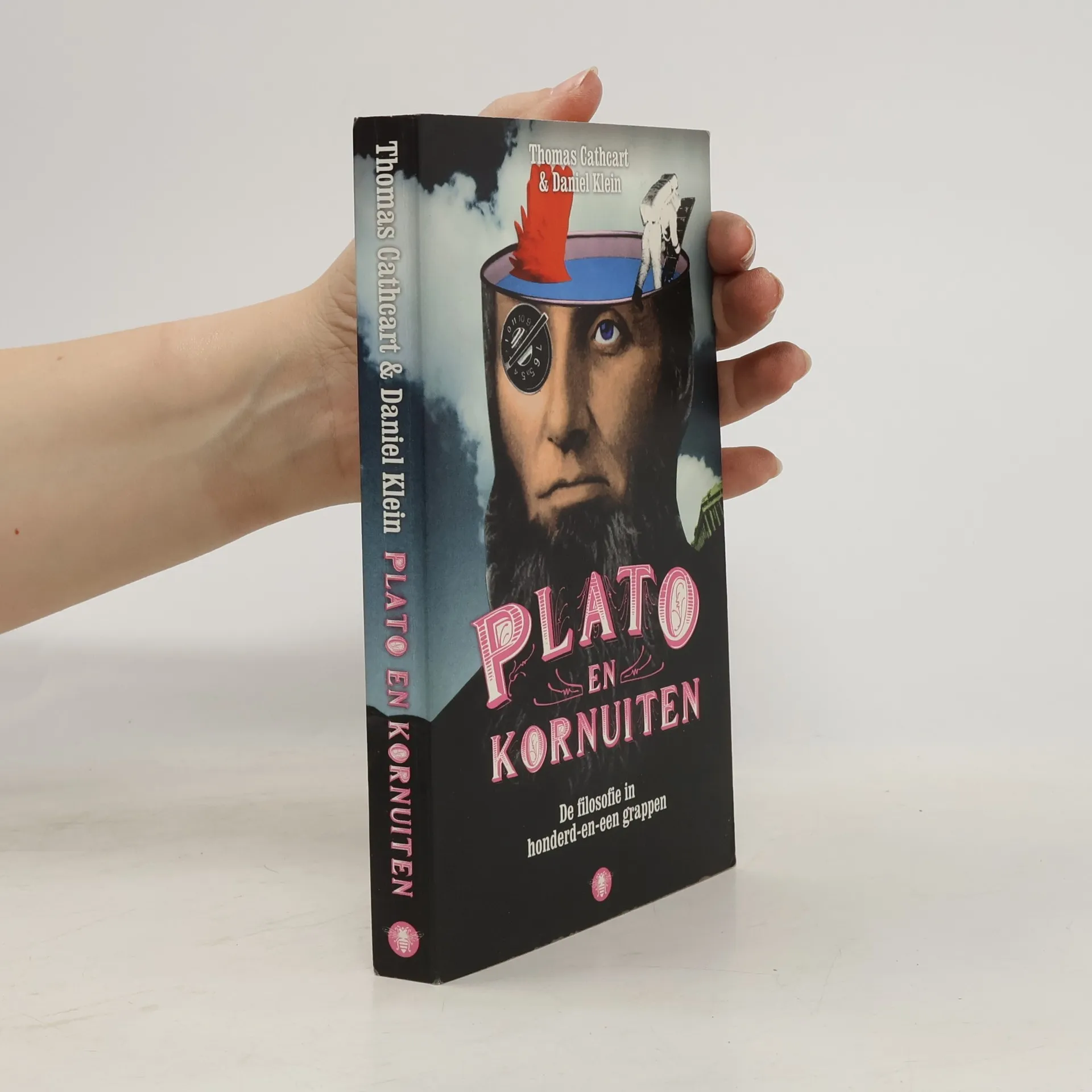
Heres a lively, hilarious, not-so-reverent crash course through the great philosophical traditions, schools, concepts, and thinkers. Its Philosophy 101 for everyone who knows not to take all this heavy stuff too seriously. Some of the Big Ideas are Existentialism (what do Hegel and Bette Midler have in common?), Philosophy of Language (how to express what its like being stranded on a desert island with Halle Berry), Feminist Philosophy (why, in the end, a man is always a man), and much more. Finallyit all makes sense!
Daniel Klein Boeken
1 januari 1939
Daniel Klein is een gevierd schrijver, geroemd om zijn vermogen om filosofische concepten te belichten met humor en toegankelijke proza. Zijn werk verbindt meesterlijk diepe ideeën met herkenbare, vaak humoristische observaties uit het dagelijks leven. Kleins kenmerkende stijl is speels en bedreven in het ontmystificeren van complexe gedachten, waardoor het aantrekkelijk is voor een breed publiek. Door zijn schrijven nodigt hij lezers uit om fundamentele levensvragen te onderzoeken met een lichte toets en intellectuele nieuwsgierigheid.



History of Glass
- 288bladzijden
- 11 uur lezen
Libro usado en buenas condiciones, por su antiguedad podria contener señales normales de uso
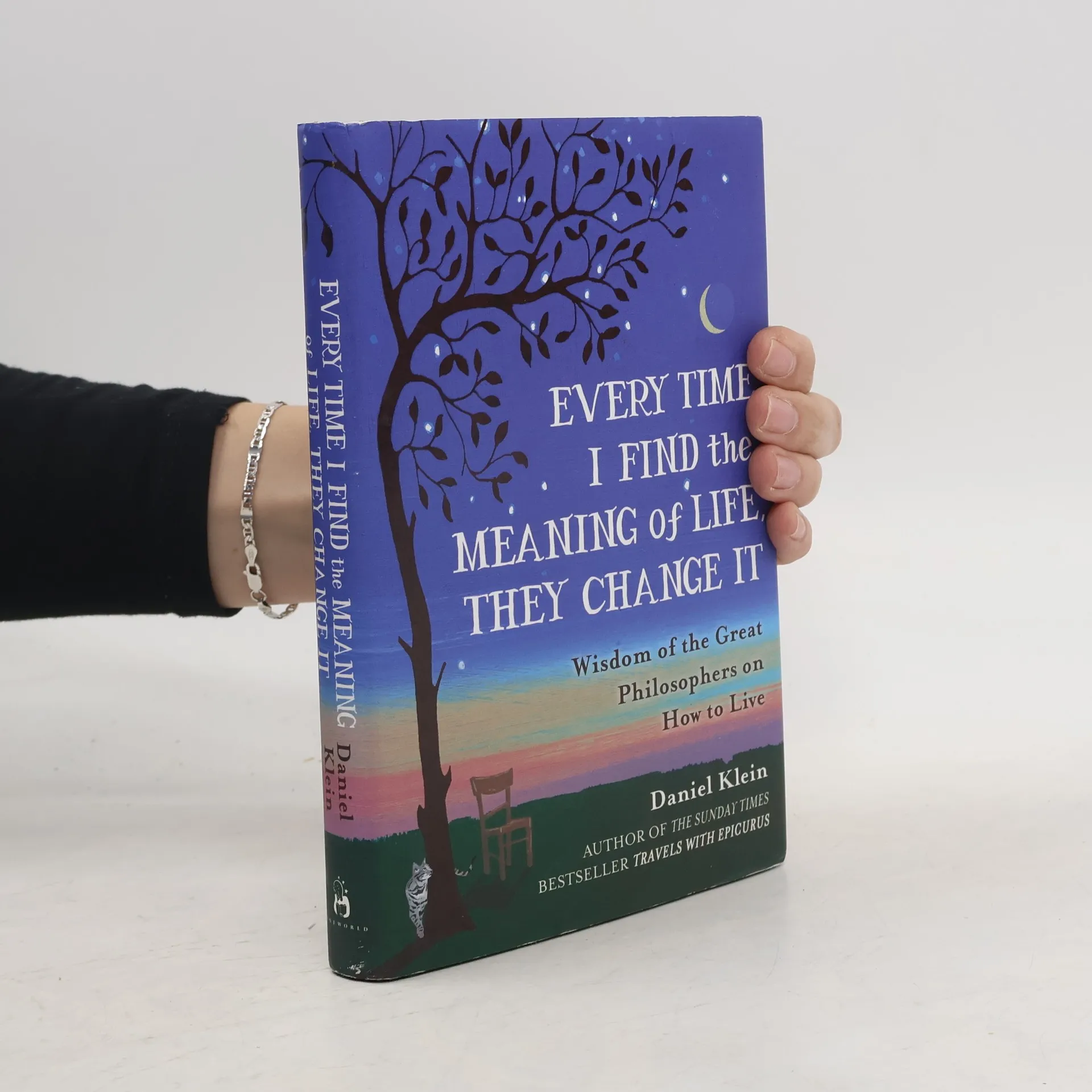
Every Time I Find the Meaning of Life, They Change It
- 224bladzijden
- 8 uur lezen
A humorous and philosophical trip through life, from the New York Times-bestselling author of Travels with Epicurus. As a young college student studying philosophy, Klein filled a notebook with short quotes from the world's greatest thinkers, hoping to find some guidance on how to live the best life he could. Now, from the vantage point of his eighth decade, Klein revisits the wisdom he relished in his youth with this collection of philosophical gems, adding new ones that strike a chord. From Epicurus to Emerson and Camus to Reinhold Nieburh-whose words provide the title of this book-each pithy extract is annotated with Klein's inimitable charm and insights. He tackles life's biggest questions, leaving us entertained and enlightened.
Magic Time
- 254bladzijden
- 9 uur lezen
In Daniel M. Klein's third novel, the lives of five Harvard graduates who participated in Timothy Leary's first LSD experiment in 1961 are explored with narrative vigor. While the events and characters feel real, they often come across as overly familiar and abstract, lacking specific resonance. Klein's thorough research ensures historical accuracy in their actions, but this approach results in characters that feel more like archetypes than individuals. The most compelling figure is the enigmatic Timothy Leary, who, despite appearing mainly in the background, leaves a lasting impression on the friends. As they gather for a 40th birthday celebration in 1979, they encounter Leary performing in a nightclub, viewing him as if he has materialized from their memories. The men navigate the rituals of the 1960s—Peace Corps service, radicalization, drugs, and sexual exploration—yet Klein's portrayal lacks the magic of the era, presenting it from a weary distance. Four of the friends find success in the 70s, while the fifth becomes entangled in the radical underground and meets a tragic end. Although the novel showcases careful craftsmanship and detail, it suffers from formulaic characters and a predictable plot. Only Leary escapes this schematic treatment, emerging as a believable figure amid the narrative.
Q. Why are there almost as many jokes about death as there are about sex? A. Because they both scare the pants off us. Thomas Cathcart and Daniel Klein first made a name for themselves with the outrageously funny New York Times bestseller Plato and a Platypus Walk into a Bar.... Now they turn their attention to the Big D and share the timeless wisdom of the great philosophers, theologians, psychotherapists, and wiseguys. From angels to zombies and everything in between, Cathcart and Klein offer a fearless and irreverent history of how we approach death, why we embrace life, and whether there really is a hereafter. As hilarious as it is enlightening, Heidegger and a Hippo Walk Through Those Pearly Gates is a must-read for anyone and everyone who ever expects to die. And now, you can read Daniel Klein's further musings on life and philosophy in Travels with Epicurus and Every Time I Find the Meaning of Life, They Change it.
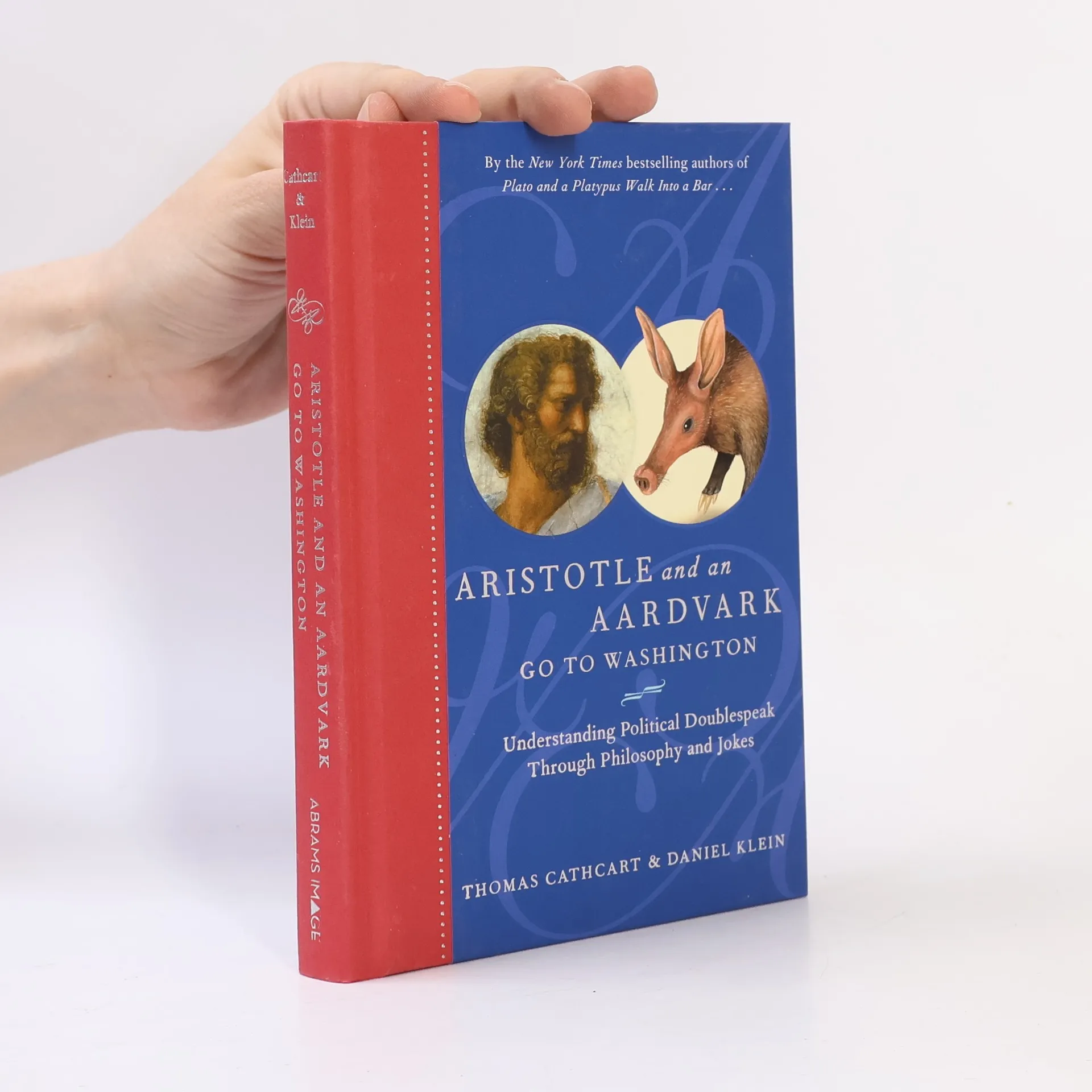
Aristotle and an Aardvark Go to Washington
Understanding Political Doublespeak Through Philosophy and Jokes
- 196bladzijden
- 7 uur lezen
Thomas Cathcart and Daniel Klein, authors of the national bestseller Plato and a Platypus Walk into a Bar, aren’t falling for any election year claptrap—and they don’t want their readers to either! In Aristotle and an Aardvark Go to Washington, our two favorite philosopher-comedians return just in time to save us from the double-speak, flim-flam, and alternate reality of politics in America.Deploying jokes and cartoon as well as the occasional insight from Aristotle and his peers, Cathcart and Klein explain what politicos are up to when they state: “The absence of evidence is not the evidence of absence.” (Donald Rumsfeld), “It depends on what the meaning of the word ‘is’ is.” (Bill Clinton), or even, “We hold these truths to be self-evident…” (Thomas Jefferson, et al).Drawing from the pronouncements of everyone from Caesar to Condoleeza Rice, Genghis Kahn to Hillary Clinton, and Adolf Hitler to Al Sharpton. Cathcart and Klein help us learn to identify tricks such as “The Texas Sharpshooter Fallacy” (non causa pro causa) and the “The Fallacy Fallacy” (argumentum and logicam). Aristotle and an Aardvark is for anyone who ever felt like the politicos and pundits were speaking Greek. At least Cathcart and Klein provide the Latin name for it (raudatio publica)!
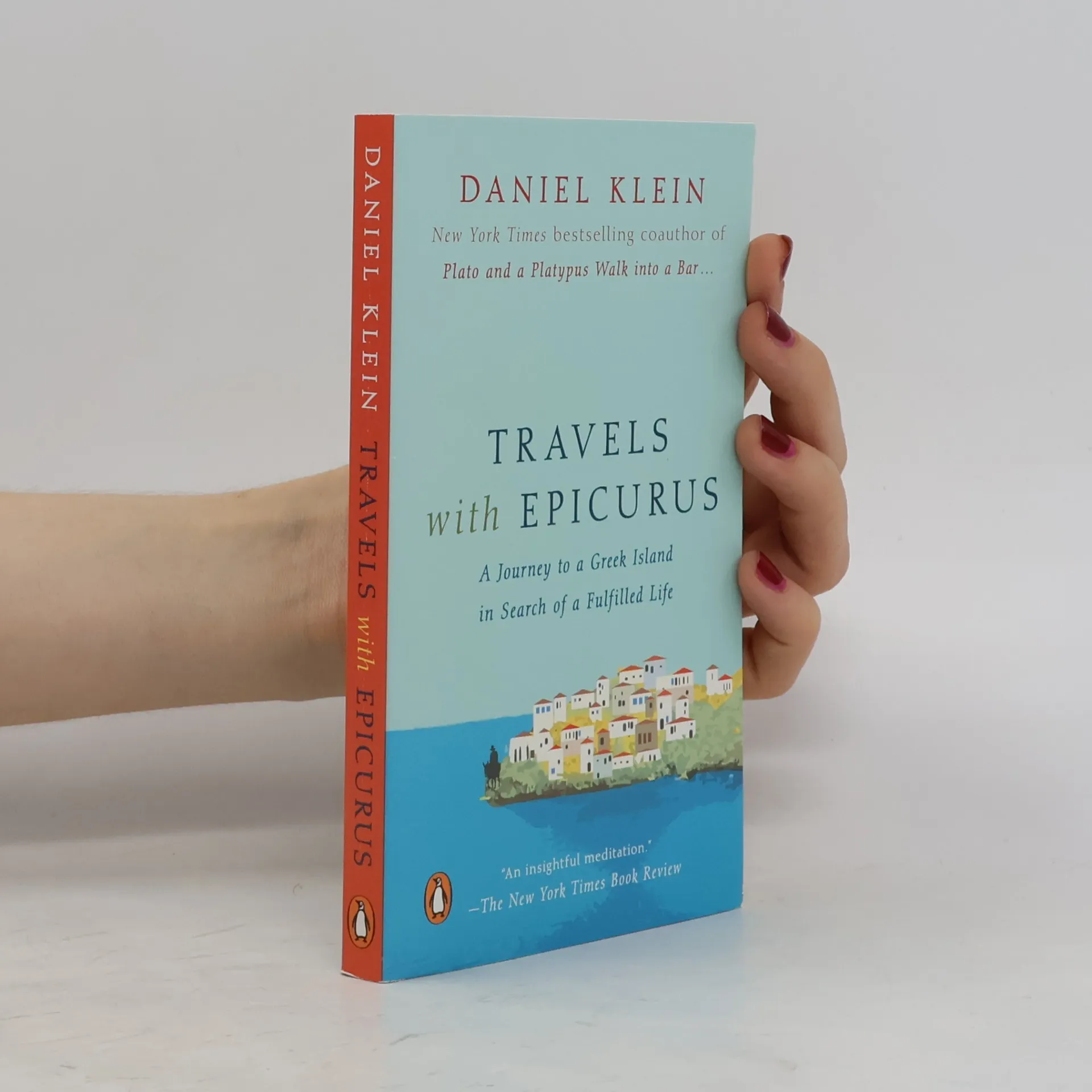
Travels with Epicurus
A Journey to a Greek Island in Search of a Fulfilled Life
- 164bladzijden
- 6 uur lezen
A visit to the dentist prompts a late-life turning point and a pilgrimage to the land of sun and sea. Daniel Klein was in his seventies when his dentist told him he'd need tooth implants if he wanted to avoid wearing old-fashioned and old-looking denture plates. But instead of going under the drill, he headed to Greece to see if one of his favorite philosophers, the sage Epicurus, could teach him something about the pleasures available only later in life. A travel book, a witty and accessible meditation, and an optimistic guide to living well, Travels with Epicurus is a delightful jaunt to the Aegean and through the terrain of old age that only Klein could lead. (from back cover)
Die Erzählung beleuchtet das mutige Streben von James Cook und seine entscheidende Rolle bei der Entdeckung des Südpols. Sie vermittelt nicht nur spannende Einblicke in die Herausforderungen der Entdeckungsreisen, sondern beleuchtet auch die historischen Auswirkungen dieser Expeditionen auf die Erforschung der Erde. Leser werden auf eine unvergessliche Reise durch die Geschichte der Seefahrt mitgenommen, die sowohl inspirierend als auch lehrreich ist.
Das Buch untersucht die Einführung einer Vier-Tage-Woche in der Schweiz und deren potenzielle Vorteile für die Arbeitsbedingungen im Gesundheitswesen sowie die Patientenversorgung. Es zeigt, wie diese Neuerung die Work-Life-Balance verbessert, die berufliche Effizienz steigert und zu mehr Zufriedenheit im Alltag führt.
Abenteuer im Wald der Wunder. Begleitet von mystischen Endeckern
- 146bladzijden
- 6 uur lezen
Der Sonnenaufgang erleuchtet den Wald in sanften Orangetönen, während das Morgenlicht durch das Blattwerk schimmert. In diesem magischen Wald, wo Bäume, Tiere und Bäche Geschichten erzählen, liegt das Reich von Bäribär.
In Rosenheim wird die Opernsängerin Elise Martens ermordet aufgefunden, neben ihr eine zerbrochene Tonfigur in Form eines singenden Vogels. Als eine zweite Sängerin stirbt, ermitteln Hauptkommissar Lukas Braun und Forensikerin Lena Schmidt und entdecken dunkle Geheimnisse der Opfer, die mit einer verbotenen Oper verknüpft sind.
Das Geheimnis der ewigen Stadt. Viktors Vermächtnis
- 330bladzijden
- 12 uur lezen
Nach den dramatischen Ereignissen in Berlin, bei denen Lena Viktor schwer verwundet, beginnt in "Mord in Rom: Viktors Vermächtnis" ein neues Kapitel. Viktor überlebt den Anschlag und nimmt eine neue Identität an, um als Chef eines internationalen Ermittlerteams in Rom nach Gerechtigkeit zu streben.
Im Bäribär Wald lebte der außergewöhnliche silberne Wolf Lyrian, dessen glänzendes Fell im Mondlicht strahlte. Er war weise und eng mit dem Wald verbunden. Eines Tages beobachtete er am Ufer eines Sees eine Gruppe von Seepferdchen und Delphinen, die ernsthaft miteinander sprachen.
Kairo und Mika, die Hüter der Botschaft des Ozeans, suchen jemanden, der ihre Mission zum Schutz der Meere im Weltraum übernehmen kann. Sie treffen die abenteuerlustige Raumschifffahrerin Anna, die von ihren Erlebnissen gehört hat. Gemeinsam wollen sie den gefährdeten Sternenwald bewahren, wo Sterne lebendig werden.
Beauty Sleep. Der Schönheitsschlaf, aus dem man nicht erwacht. Roman
- 316bladzijden
- 12 uur lezen
Regenwald als Lebensraum
Wie sich Flora und Fauna im Regenwald anpassen und miteinander interagieren
Dieses faszinierende Buch „Regenwald als Lebensraum“ enthüllt die Geheimnisse des Regenwaldes, einem der größten und komplexesten Ökosysteme unseres Planeten. Der Autor nimmt den Leser mit auf eine Reise durch den Regenwald und enthüllt die verblüffenden Anpassungen und Interaktionen von Flora und Fauna. Sie werden erstaunt sein, wie bestimmte Pflanzenarten Insekten und Tiere anziehen und wie sie sich gegen Fressfeinde verteidigen. Sie werden auch erfahren, wie Tiere wie Affen, Vögel und Reptilien den Regenwald durchstreifen und wie sie sich an die Umgebung anpassen, um zu überleben. Sie werden verstehen, wie wichtig dieses Ökosystem für den Planeten ist und welche Bedrohungen es derzeit bedrohen. „Regenwald als Lebensraum“ ist ein Muss für jeden, der die Natur liebt und die Schönheit und Komplexität des Regenwaldes verstehen möchte.
Kill Me Tender
- 349bladzijden
- 13 uur lezen
Le King comme vous ne l'avez jamais vu ! Le grand Elvis Presley est retourné à la vie civile dans le Tennessee après son service militaire en Allemagne. Dans un sud ségrégationniste du début des années soixante, il peine à regagner son ancienne audience, encombré d'un manager machiavélique, de parasites et de copains d'enfance, quand les présidentes de ses fan-clubs, toutes des teenagers, commencent à tomber comme des mouches, tuées dans de mystérieuses conditions. Il décide d'enquêter lui-même, un vrai tour de force avec une telle célébrité. Il découvre bientôt que les victimes ont été empoisonnées selon une méthode ingénieuse, diaboliquement adaptée à chacune. Malgré les risques qu'il prend dans une enquête de plus en plus dangereuse, il continue à se goinfrer de beurre de cacahuète frit et de sandwiches à la banane et il doit même passer pour une doublure de lui-même ! Mais il trouve aussi de l'aide : celle de Billy, médecin autodidacte d'une petite communauté noire, celle de Selma, une infirmière douce et séduisante, sans oublier Rufus, un de ses premiers imitateurs. Va-t-il parvenir à sauver la prochaine victime ? Une intrigue habilement construite, de fausses pistes, une ambiance survoltée : de quoi emballer tous les amateurs de suspense trépidant !