

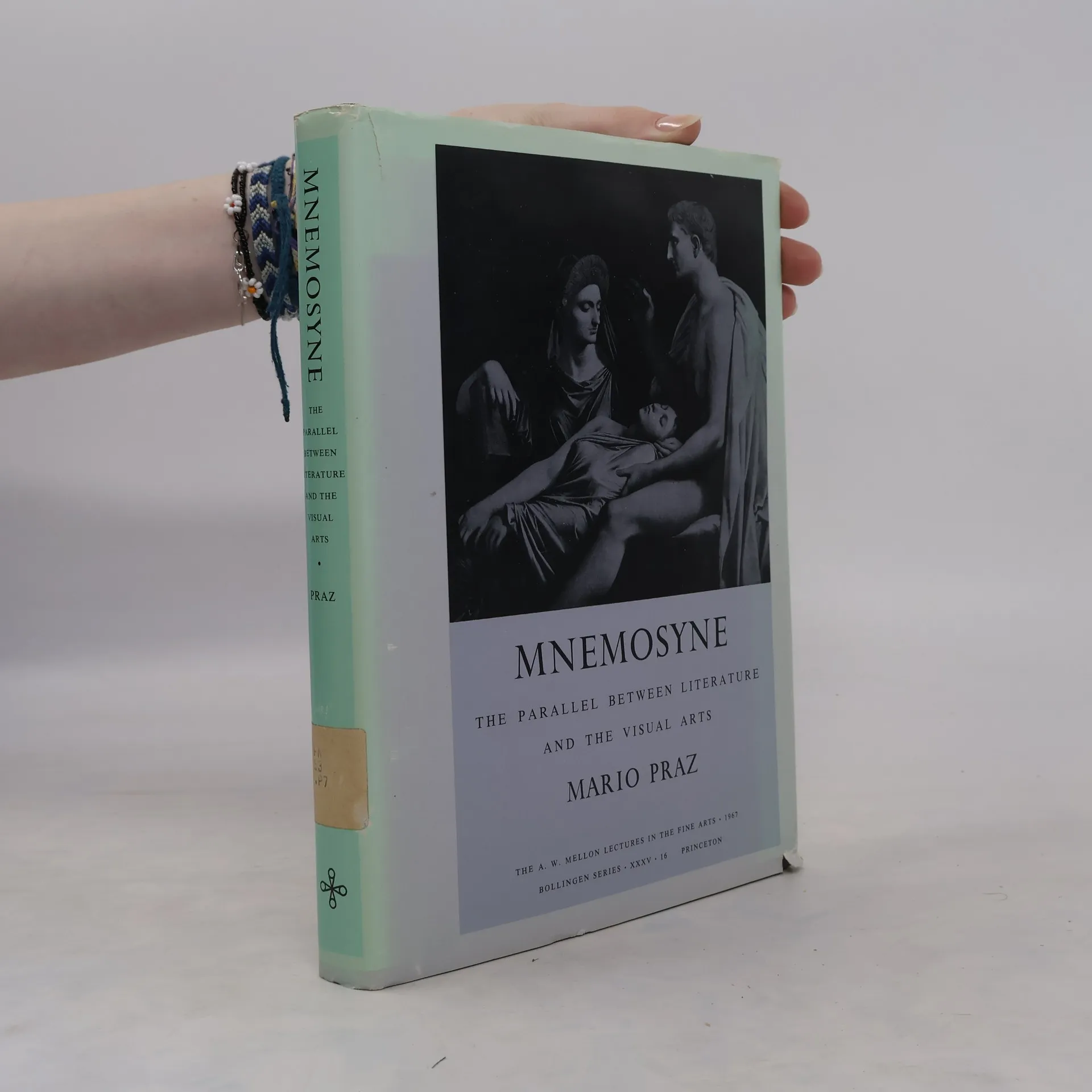
Mnemosyne
The Parallel between Literature and the Visual Arts
Auteurs
Parameters
Meer over het boek
The classic study of the timeless relationship between literature and the visual arts In his search for a common link between literature and the visual arts, Mario Praz draws on the abundant evidence of mutual understanding and correspondence they have long shared. Praz explains that within literature, each epoch has “its peculiar handwriting or handwritings, which, if one could interpret them, would reveal a character, even a physical appearance,” and while these characteristics belong to the general style of a given period, the personality of the writer does not fail to pierce through. Praz contends that something similar occurs in art. He shows how the likeness between the arts within various periods of history can ultimately be traced to structural similarities that arise out of the characteristic way in which the people of a certain epoch see and memorize facts aesthetically. Mnemosyne, at once the goddess of memory and the mother of the muses, presides over this view of the arts. In illustrating her influence, Praz ranges widely through Western sources, providing an incomparable tour of the literary and pictorial arts.


Een boek kopen
Mnemosyne, Mario Praz
- Taal

- Jaar van publicatie
- 1970
- Bindwijze
- (Hardcover)
Betaalmethoden
Nog niemand heeft beoordeeld.
- Titel
- Mnemosyne
- Ondertitel
- The Parallel between Literature and the Visual Arts
- Taal
- Engels
- Auteurs
- Mario Praz
- Uitgever
- Princeton University Press
- Jaar van publicatie
- 1970
- Formaat
- Hardcover
- Reeks
- Categorieën
- Tags
- Kunst
- Aantekening
- The classic study of the timeless relationship between literature and the visual arts In his search for a common link between literature and the visual arts, Mario Praz draws on the abundant evidence of mutual understanding and correspondence they have long shared. Praz explains that within literature, each epoch has “its peculiar handwriting or handwritings, which, if one could interpret them, would reveal a character, even a physical appearance,” and while these characteristics belong to the general style of a given period, the personality of the writer does not fail to pierce through. Praz contends that something similar occurs in art. He shows how the likeness between the arts within various periods of history can ultimately be traced to structural similarities that arise out of the characteristic way in which the people of a certain epoch see and memorize facts aesthetically. Mnemosyne, at once the goddess of memory and the mother of the muses, presides over this view of the arts. In illustrating her influence, Praz ranges widely through Western sources, providing an incomparable tour of the literary and pictorial arts.