

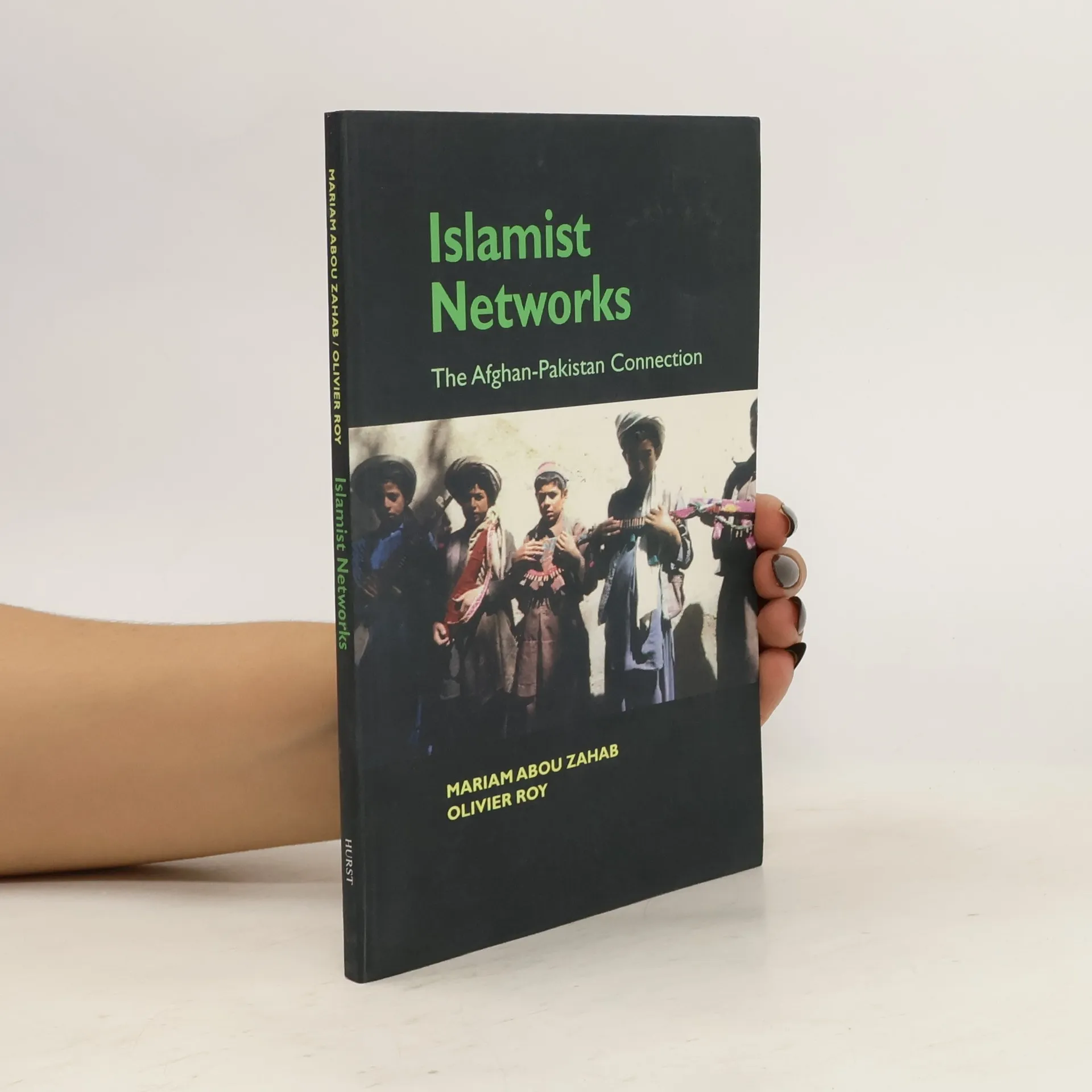


Islamist Networks
The Afghan-Pakistan Connection
Auteurs
Boekbeoordeling
Meer over het boek
"Al Qaida was unable to realize its lethal potential until it found sanctuary in Afghanistan, where Osama bin Laden fled after being expelled from Sudan. But why was the network's sanctuary not attacked before September 2001, especially after the bombing of the U.S. embassies in Kenya and Tanzania in 1998? Abou Zahab and Roy argue that the Taliban was part of a much wider radical Islamist network in the region, whose true center was Pakistan, not Afghanistan. Al Qaida, the Taliban, the Pakistani Deobandis - all of these groups are based in Pakistan, which continues to serve as the regional hub for Islamist movements and their terrorist offshoots." "This book investigates and explains the almost twenty-five-year gestation of these interlinked radical Islamist networks of Pakistan, Central Asia, and Afghanistan, out of which Al Qaida emerged. Taking into account the networks' divergent histories and doctrinal rifts, the authors lay bare the political contingencies that enabled these disparate Islamist movements to coordinate with the aim of attacking what became their common adversary: the United States."--BOOK JACKET
Een boek kopen
Islamist Networks, Olivier Roy, Mariam Abou Zahab
- Taal

- Jaar van publicatie
- 2004
- Bindwijze
- (Paperback)
Betaalmethoden
We missen je recensie hier.
- Titel
- Islamist Networks
- Ondertitel
- The Afghan-Pakistan Connection
- Taal
- Engels
- Auteurs
- Olivier Roy, Mariam Abou Zahab
- Uitgever
- C Hurst & Co Publishers Ltd
- Jaar van publicatie
- 2004
- Formaat
- Paperback
- ISBN10
- 1850657041
- ISBN13
- 9781850657040
- Reeks
- Categorieën
- Beoordeling
- 4 van 5
- Aantekening
- "Al Qaida was unable to realize its lethal potential until it found sanctuary in Afghanistan, where Osama bin Laden fled after being expelled from Sudan. But why was the network's sanctuary not attacked before September 2001, especially after the bombing of the U.S. embassies in Kenya and Tanzania in 1998? Abou Zahab and Roy argue that the Taliban was part of a much wider radical Islamist network in the region, whose true center was Pakistan, not Afghanistan. Al Qaida, the Taliban, the Pakistani Deobandis - all of these groups are based in Pakistan, which continues to serve as the regional hub for Islamist movements and their terrorist offshoots." "This book investigates and explains the almost twenty-five-year gestation of these interlinked radical Islamist networks of Pakistan, Central Asia, and Afghanistan, out of which Al Qaida emerged. Taking into account the networks' divergent histories and doctrinal rifts, the authors lay bare the political contingencies that enabled these disparate Islamist movements to coordinate with the aim of attacking what became their common adversary: the United States."--BOOK JACKET