

De favoriet van de lezers is momenteel uitverkocht.

Parameters
- 462bladzijden
- 17 uur lezen
Meer over het boek
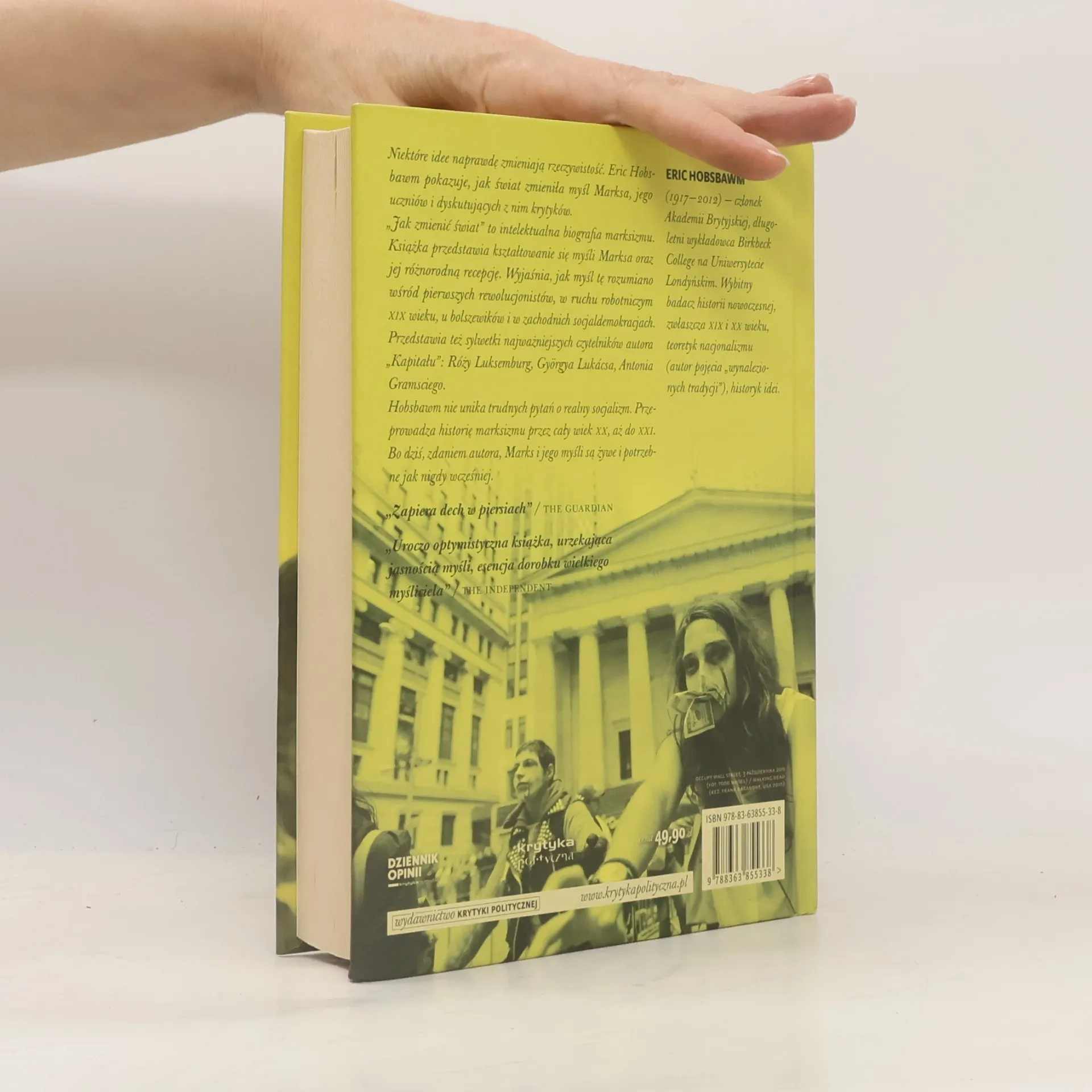
In the 144 years since Karl Marx's Das Kapital was published, the doctrine that bears his name has been embraced by millions in the name of equality, and just as dramatically has fallen from grace with the retreat of communism from the western world. But as the free market reaches its extreme limits in the economic and environmental fallout, a reassessment of capitalism's most vigorous and eloquent enemy has never been more timely. Eric Hobsbawm provides a fascinating and insightful overview of Marxism. He investigates its influences and analyses the spectacular reversal of Marxism's fortunes over the past thirty years.


Een boek kopen
Jak zmienić świat. Marks i marksizm 1840-2011, Eric Hobsbawm, Sebastian Szymański
- Taal

- Jaar van publicatie
- 2013
- Bindwijze
- (Hardcover)
Zodra we het ontdekt hebben, sturen we een e-mail.
Betaalmethoden
We missen je recensie hier.
- Titel
- Jak zmienić świat. Marks i marksizm 1840-2011
- Taal
- Pools
- Auteurs
- Eric Hobsbawm, Sebastian Szymański
- Uitgever
- Wydawnictwo Krytyki Politycznej
- Jaar van publicatie
- 2013
- Formaat
- Hardcover
- Aantal pagina's
- 462
- ISBN10
- 8363855332
- ISBN13
- 9788363855338
- Reeks
- Categorieën
- Tags
- Historisch thema, Handel, Filosofisch thema, Politiek, 20e Eeuw, 19e Eeuw, Marxisme, Socialisme, Anarchisme
- Oorspronkelijke titel
- How to change the world
- Beoordeling
- 3,9 van 5
- Aantekening
- In the 144 years since Karl Marx's Das Kapital was published, the doctrine that bears his name has been embraced by millions in the name of equality, and just as dramatically has fallen from grace with the retreat of communism from the western world. But as the free market reaches its extreme limits in the economic and environmental fallout, a reassessment of capitalism's most vigorous and eloquent enemy has never been more timely. Eric Hobsbawm provides a fascinating and insightful overview of Marxism. He investigates its influences and analyses the spectacular reversal of Marxism's fortunes over the past thirty years.