

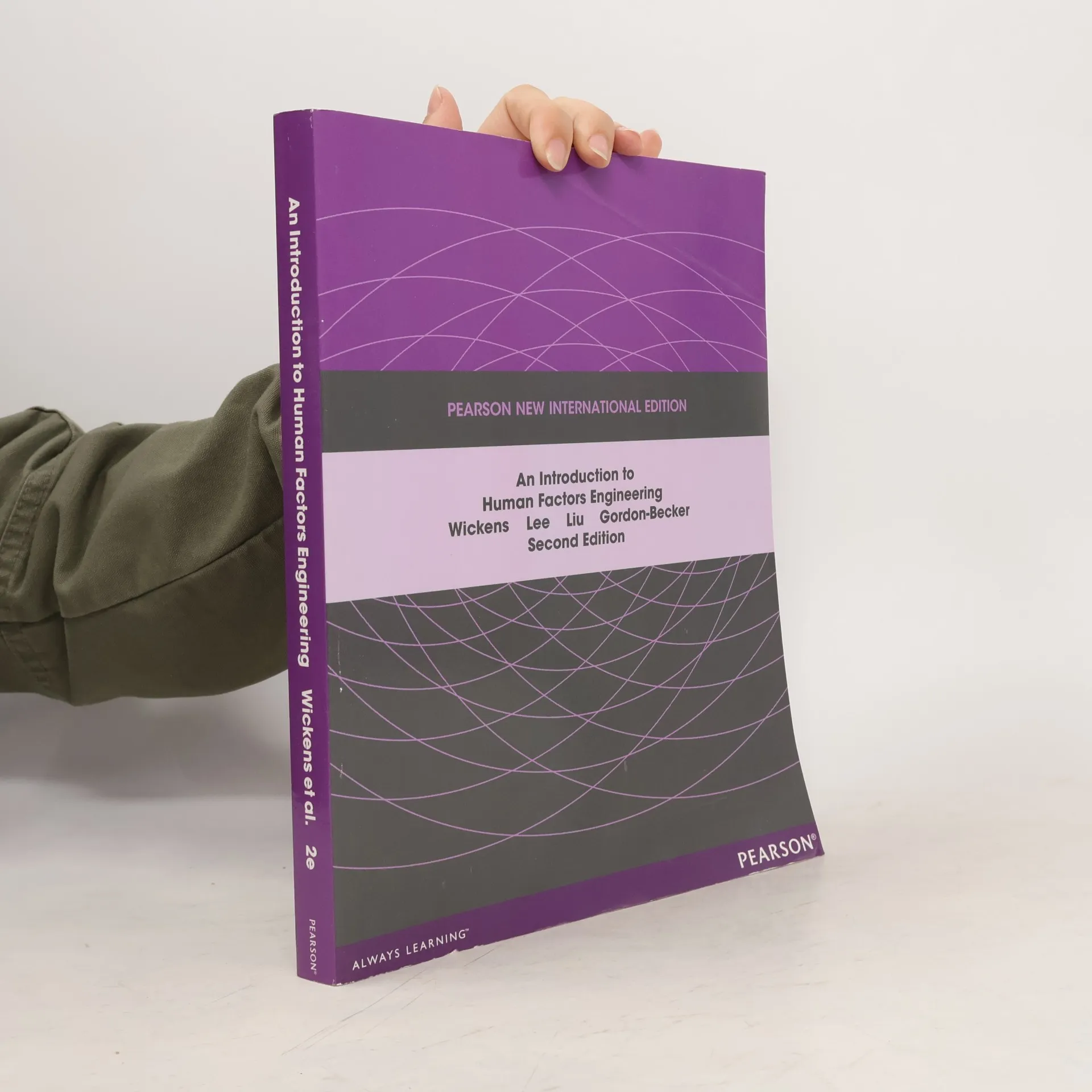



Introduction to Human Factors Engineering
Pearson New International Edition - Second Edition
Boekbeoordeling
Meer over het boek
For undergraduate courses in Human-Factors Engineering, Human-Computer Interaction, Engineering Psychology, or Human-Factors Psychology. Offering a somewhat more psychological perspective than other human factors books on the market, this text describes the capabilities and limitations of the human operator-both physical and mental-and how these should be used to guide the design of systems with which people interact. General principles of human-system interaction and design are presented, and included are specific examples of successful and unsuccessful interactions. It links theories of human performance that underlie the principles with real-world experience, without a heavy engineering-oriented perspective.


Een boek kopen
Introduction to Human Factors Engineering, John Lee, Christopher D. Wickens, Yili D. Liu, Sallie E. Gordon-Becker
- Taal

- Jaar van publicatie
- 2013
- Bindwijze
- (Paperback)
Betaalmethoden
We missen je recensie hier.
- Titel
- Introduction to Human Factors Engineering
- Ondertitel
- Pearson New International Edition - Second Edition
- Taal
- Engels
- Uitgever
- Pearson Education Limited
- Jaar van publicatie
- 2013
- Formaat
- Paperback
- Aantal pagina's
- 586
- ISBN10
- 1292022310
- ISBN13
- 9781292022314
- Reeks
- Beoordeling
- 4 van 5
- Aantekening
- For undergraduate courses in Human-Factors Engineering, Human-Computer Interaction, Engineering Psychology, or Human-Factors Psychology. Offering a somewhat more psychological perspective than other human factors books on the market, this text describes the capabilities and limitations of the human operator-both physical and mental-and how these should be used to guide the design of systems with which people interact. General principles of human-system interaction and design are presented, and included are specific examples of successful and unsuccessful interactions. It links theories of human performance that underlie the principles with real-world experience, without a heavy engineering-oriented perspective.