


Meer over het boek
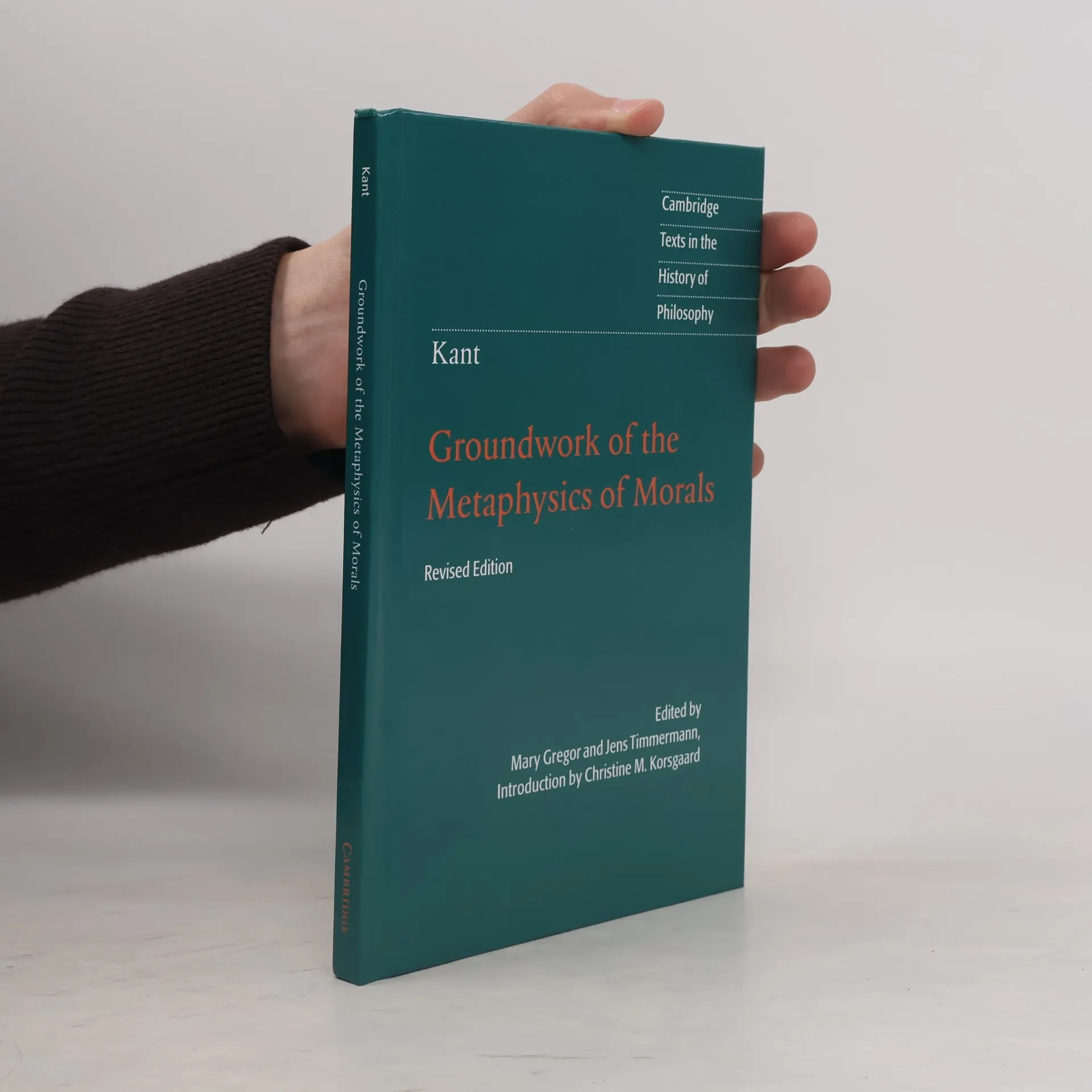
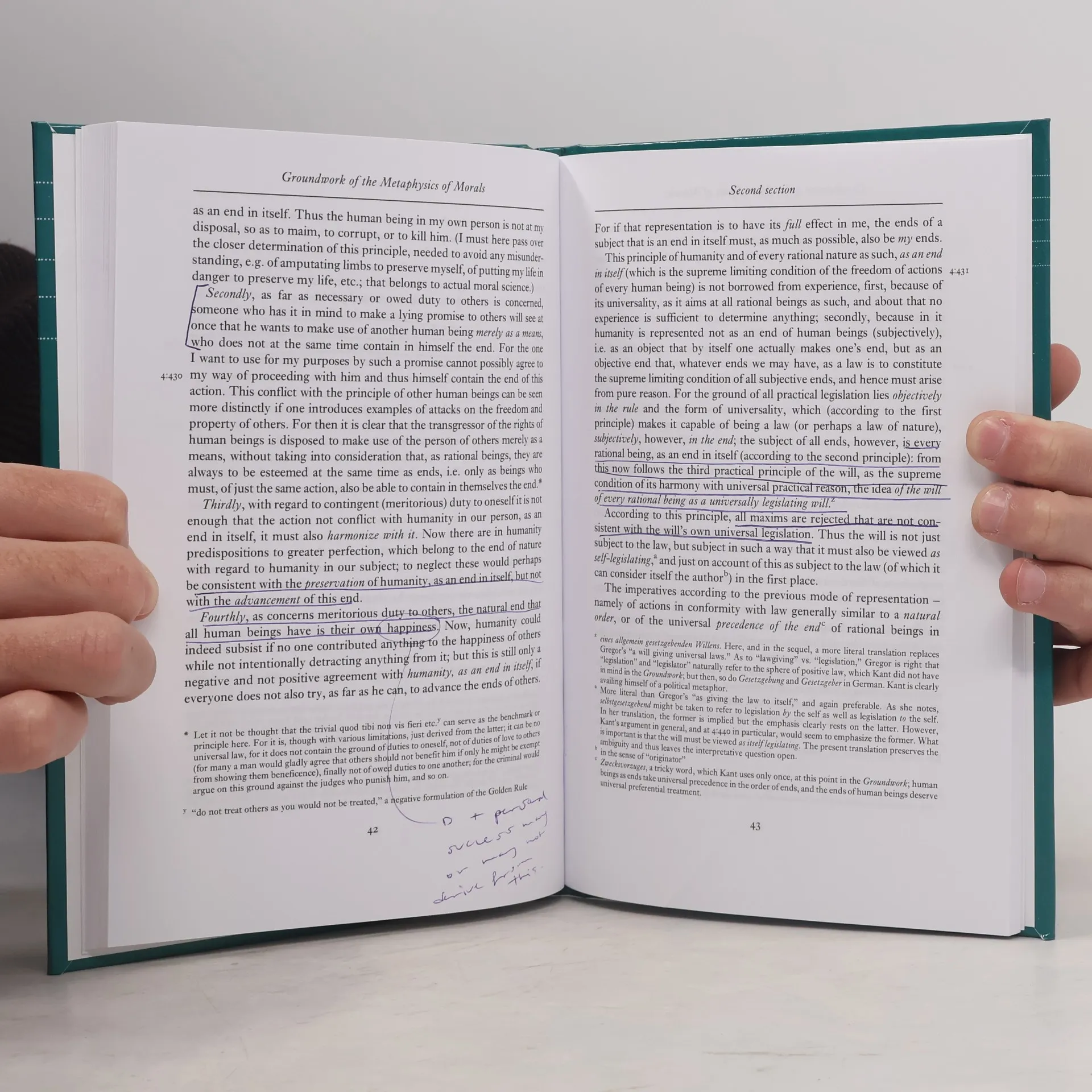
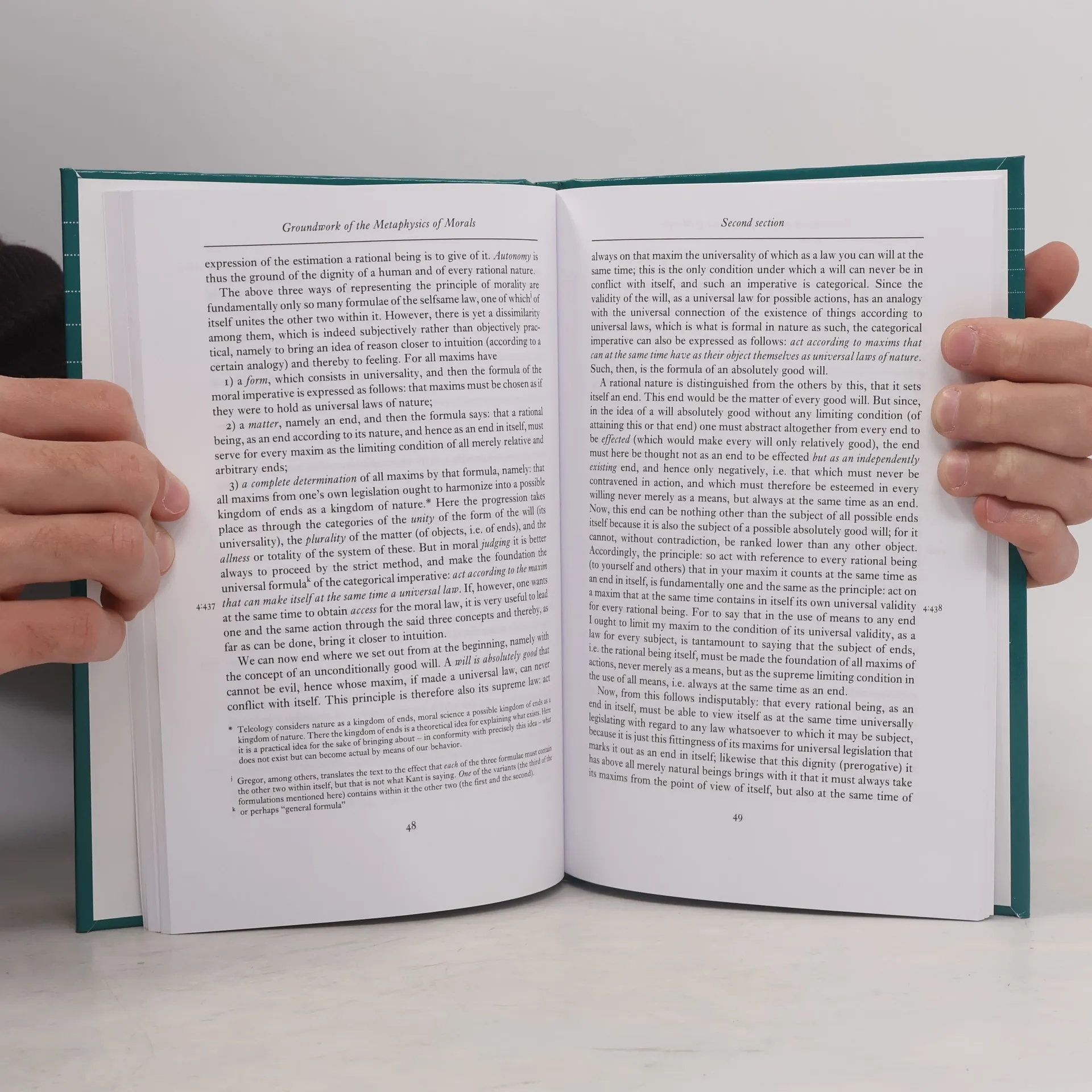
Published in 1785, Immanuel Kant's Groundwork of the Metaphysics of Morals ranks alongside Plato's Republic and Aristotle's Nicomachean Ethics as one of the most profound and influential works in moral philosophy ever written. In Kant's own words, its aim is to identify and corroborate the supreme principle of morality, the categorical imperative. He argues that human beings are ends in themselves, never to be used by anyone merely as a means, and that universal and unconditional obligations must be understood as an expression of the human capacity for autonomy and self-governance. As such, they are laws of freedom. This volume contains Mary Gregor's acclaimed translation of the work, sympathetically revised by Jens Timmermann, and an accessible, updated introduction by Christine Korsgaard.
Een boek kopen
Cambridge Texts in the History of Philosophy: Groundwork of the Metaphysics of Morals, Immanuel Kant, Mary Gregor, Jens Timmermann, Christine M. Korsgaard
- Taal

- Jaar van publicatie
- 2012
- Bindwijze
- (Hardcover),
- Staat van het boek
- Beschadigd
- Prijs
- € 12,79
Betaalmethoden
Nog niemand heeft beoordeeld.
- Titel
- Cambridge Texts in the History of Philosophy: Groundwork of the Metaphysics of Morals
- Ondertitel
- Revised Edition
- Taal
- Engels
- Uitgever
- Cambridge University Press
- Jaar van publicatie
- 2012
- Formaat
- Hardcover
- Aantal pagina's
- 136
- ISBN10
- 1107008514
- ISBN13
- 9781107008519
- Reeks
- Tags
- Historisch thema, Handleidingen en Gidsen, Filosofisch thema, Duitse literatuur, School, 18e Eeuw, Ethiek, Metafysica, Geschiedenis van de filosofie, Politieke filosofie
- Aantekening
- Published in 1785, Immanuel Kant's Groundwork of the Metaphysics of Morals ranks alongside Plato's Republic and Aristotle's Nicomachean Ethics as one of the most profound and influential works in moral philosophy ever written. In Kant's own words, its aim is to identify and corroborate the supreme principle of morality, the categorical imperative. He argues that human beings are ends in themselves, never to be used by anyone merely as a means, and that universal and unconditional obligations must be understood as an expression of the human capacity for autonomy and self-governance. As such, they are laws of freedom. This volume contains Mary Gregor's acclaimed translation of the work, sympathetically revised by Jens Timmermann, and an accessible, updated introduction by Christine Korsgaard.