


Bookbot

Randvraag

Deze serie duikt in de meest diepgaande en uitdagende vragen waarmee de mensheid wordt geconfronteerd. Het verkent de grenzen van ons begrip binnen wetenschap, filosofie en kunst. Door middel van dialogen met vooraanstaande denkers biedt het nieuwe perspectieven en stimuleert het diepe contemplatie. Het is een verkenning van de randen van menselijke kennis.

Is the Internet Changing the Way You Think?
This idea is brilliant: Lost, overlooked and underappreciated scientific concepts everyone should know
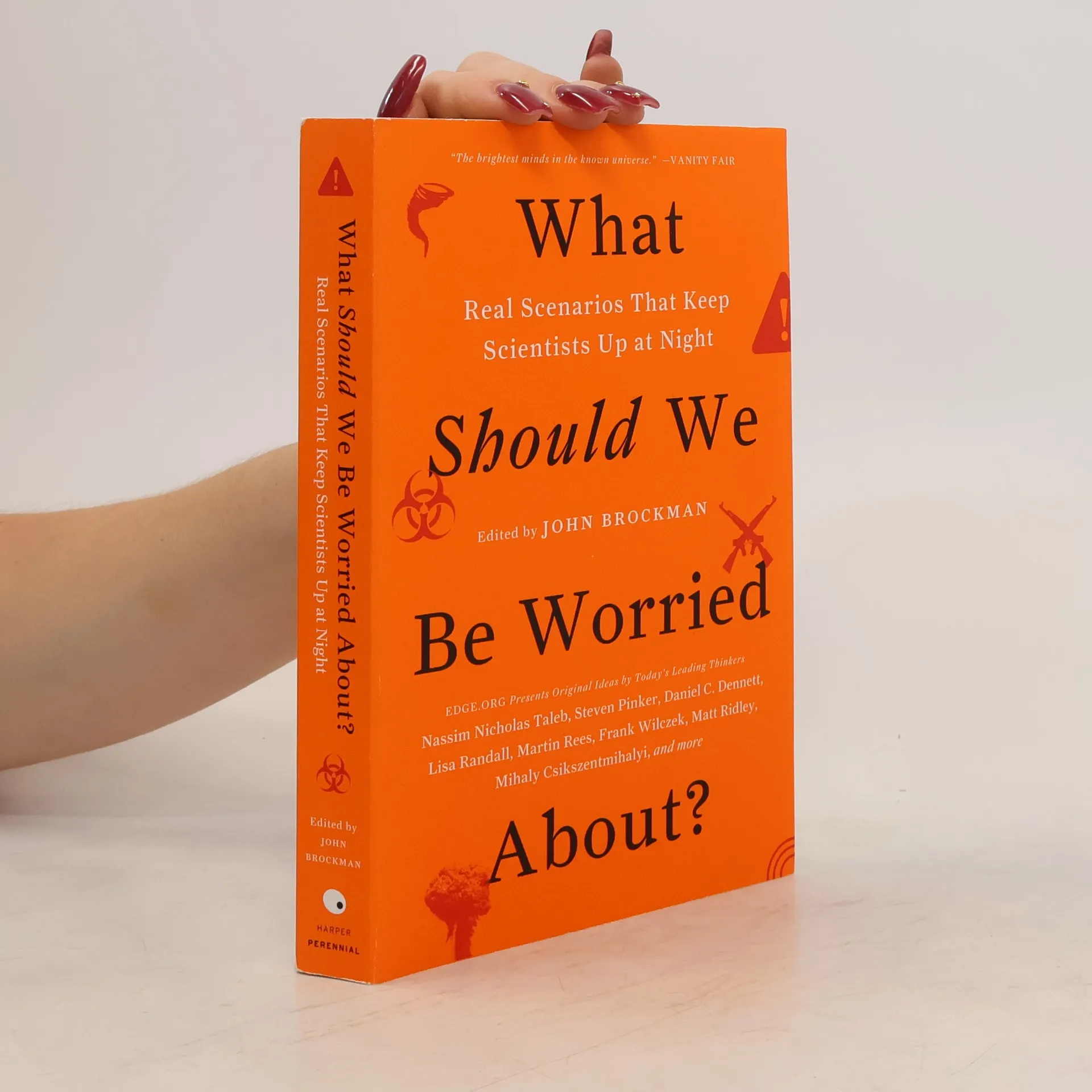
What should we be worried about? : real scenarios that keep scientists up at night
What is your dangerous idea?
Hier word je slimmer van
Edge.org: Dit verklaart alles
  • Edge.org: Dit verklaart alles

    156 denkers over de meest elegante inzichten aller tijden - Druk 3

    • 443bladzijden
    • 16 uur lezen

    ‘Als je het niet simpel kunt uitleggen, dan begrijp je het niet goed genoeg.’ – Einstein wist als geen ander hoe wetenschap kan zijn. Wetenschap is op zijn mooist als ingewikkelde problemen op elegante wijze verklaard kunnen worden. De 156 verklaringen in dit boek zijn zo mooi dat je hart er sneller van gaat kloppen. John Brockman, oprichter van de website edge.org, stelt jaarlijks één vraag aan een selectie van de meest interessante wetenschappers en kunstenaars ter wereld. Dit jaar was de vraag: ‘Wat is je favoriete diepe, elegante of mooie verklaring?’ In Dit verklaart alles delen 156 Nederlandse en internationale toonaangevende denkers hun antwoord op deze vraag. De wetenschappers die aan het woord komen zijn dagelijks bezig met de theorieën en oplossingen van deze tijd, vanuit de filosofie, wiskunde, economie, geschiedenis, linguïstiek en gedragswetenschappen. De bijdragen zijn van Susan Blackmore, Mihaly Csikszentmihalyi, Richard Dawkins, Brian Eno (muzikant en producer van U2), Stine Jensen, Steven Pinker en nog 150 anderen. Op filosofische, intellectuele, humoristische, confronterende en innovatieve wijze worden de meest elegante wetenschappelijke verklaringen uitgelegd. In dit boek staan de antwoorden der antwoorden op de vragen der vragen.


    Edge.org: Dit verklaart alles
    3,0
  • Hier word je slimmer van

    151 delen hun favoriete inzichten

    • 422bladzijden
    • 15 uur lezen

    Featuring a foreword by David Brooks, this collection presents accessible yet brilliant ideas aimed at expanding cognitive abilities. John Brockman, publisher of Edge.org, asked the world's leading thinkers to share scientific concepts that could enhance our cognitive toolkit. Their visionary responses span psychology, philosophy, economics, physics, sociology, and more, offering surprising insights that can transform your understanding of yourself and the world. Contributors include Daniel Kahneman discussing the “focusing illusion,” Jonah Lehrer on controlling attention, and Richard Dawkins on the importance of experimentation. Aubrey De Grey addresses our fear of the unknown, while Martin Seligman explores the ingredients of well-being. Nicholas Carr provides strategies for managing “cognitive load,” and Steven Pinker shares insights on win-win negotiating. Further contributions include Daniel C. Dennett on cycles, Jaron Lanier on resisting delusion, and Frank Wilczek on the brain's hidden layers. Clay Shirky discusses the “80/20 rule,” Daniel Goleman emphasizes our connection to nature, and V. S. Ramachandran highlights paradigm shifts. Additional insights come from Matt Ridley on collective intelligence, John McWhorter on path dependence, and Lisa Randall on effective theorizing. Brian Eno presents “ecological vision,” Richard Thaler tackles false concepts, J. Craig Venter discusses life's origins, Helen Fisher examine

    Hier word je slimmer van
    3,8
  • The history of science is replete with ideas that were considered socially, morally or emotionally dangerous in their time. The Copernican and Darwinian revolutions are obvious examples - radical, brilliant insights that did not so much push the envelope as rip it into shreds. These ideas were dangerous because they challenged our comfort zone. But what are the dangerous ideas of the twenty-first century? Which theories do the world's leading thinkers and scientists regard as too hot to handle - not because the idea might be false, but because it might turn out to be true? Collecting together the very best contributions to the renowned Edge.org question from the most eminent respondents, What is Your Dangerous Idea? is another endlessly fascinating and provocative insight into the bleeding-edge of intellectual endeavour

    What is your dangerous idea?
    3,8
  • Drawing from the horizons of science, today's leading thinkers reveal hidden threats that often go unnoticed, while addressing the false fears that distract us. John Brockman, publisher of Edge.org, posed a critical question to influential minds: What scientific concerns should we truly be worried about? The responses encompass diverse fields such as neuroscience, economics, philosophy, and biology, presenting 150 ideas that can transform our understanding of the world. Contributors include Steven Pinker, who highlights real risk factors for war, and Mihaly Csikszentmihalyi, who warns of a coming virtual abyss. Nobel laureate Frank Wilczek discusses missed opportunities to avert global catastrophe, while Seth Lloyd calculates the potential of a financial black hole. Other thinkers, like Alison Gopnik and Nassim Nicholas Taleb, examine the loss of childhood and the superior risk understanding of firefighters compared to economic experts. Matt Ridley addresses the resurgence of superstition, and Jennifer Jacquet raises concerns about human-induced environmental damage. Douglas Rushkoff and Nicholas Carr reflect on the implications of a homogenized human experience and the "patience deficit," respectively. Additionally, experts like Helen Fisher, Lawrence Krauss, and Susan Blackmore explore the fate of humanity and the universe. This collection invites readers to confront pressing issues that are often overlooked.

    What should we be worried about? : real scenarios that keep scientists up at night
    3,4
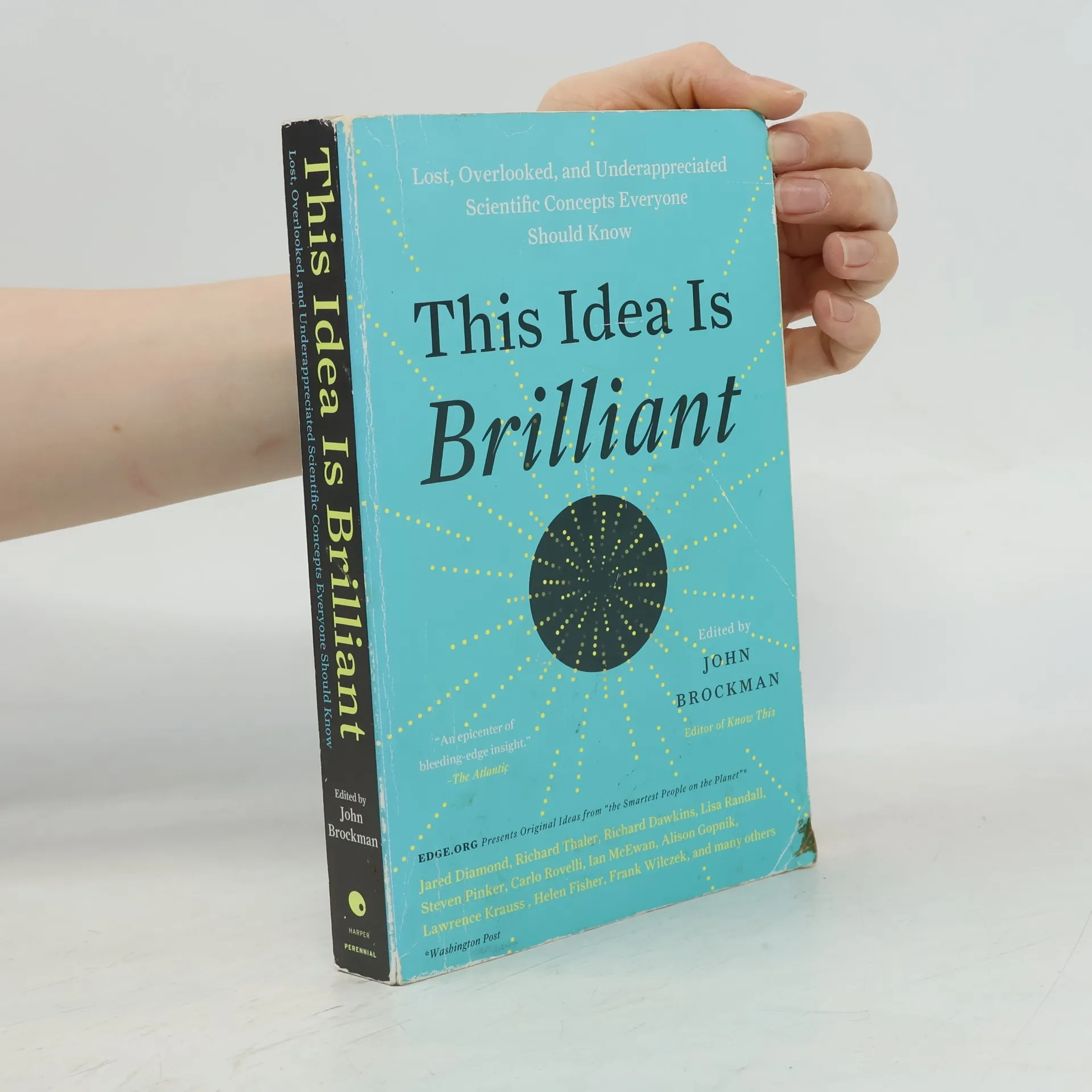
  • Brilliant but overlooked ideas are explored by today’s most innovative thinkers, including Steven Pinker, Jared Diamond, and Richard Dawkins. This collection features insights from 205 influential minds across various fields—physicists, economists, psychologists, and more—prompted by John Brockman’s question: What scientific term or concept should be more widely known? Readers will embark on a journey through bold and underappreciated scientific concepts that enrich understanding. Contributions include Jared Diamond discussing the lost brilliance of common sense, Richard Dawkins on reconstructing ecological history, and Rebecca Newberger Goldstein on expanding reality beyond the tangible. Carlo Rovelli explores the interconnected fabric of information, while Ian McEwan delves into the Navier-Stokes equations that influence weather and design. Other notable voices include Lawrence M. Krauss on uncertainty, Richard Thaler on the "premortem" concept, and Brian Eno on confirmation bias in the digital age. Rory Sutherland highlights the impact of sex appeal, and Lisa Randall emphasizes the power of the obvious. Additionally, Kevin Kelly shares insights on optimizing success, and Frank Wilczek discusses the creative potential of complementarity. This anthology also features thoughts from Sam Harris, Alison Gopnik, and many others, offering a rich tapestry of ideas that challenge conventional thinking.

    This idea is brilliant: Lost, overlooked and underappreciated scientific concepts everyone should know
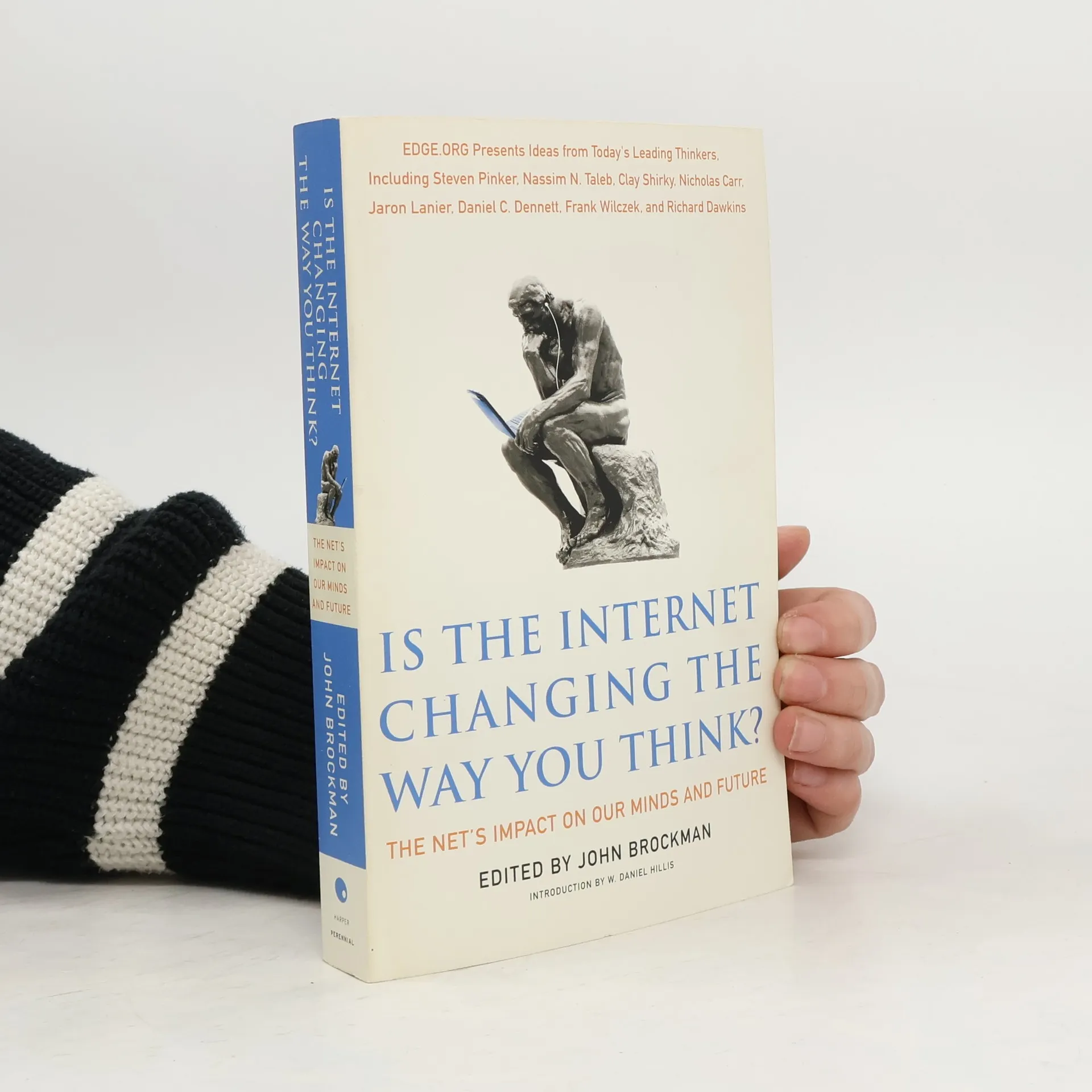
  • How is the internet changing the way you think? That is one of the dominant questions of our time, one which affects almost every aspect of our life and future. And it's exactly what John Brockman, publisher of Edge.org, posed to more than 150 of the world's most influential minds. Brilliant, farsighted, and fascinating, Is the Internet Changing the Way You Think? is an essential guide to the Net-based world.

    Is the Internet Changing the Way You Think?
    3,6
  • This Idea Must Die

    • 592bladzijden
    • 21 uur lezen

    The bestselling editor of This Explains Everything brings together 175 of the world's most brilliant minds to tackle Edge.org's 2014 question: What scientific idea has become a relic blocking human progress? Each year, John Brockman, publisher of Edge.org-The world's smartest website (The Guardian)-challenges some of the world's greatest scientists, artists, and philosophers to answer a provocative question crucial to our time. In 2014 he asked 175 brilliant minds to ponder: What scientific idea needs to be put aside in order to make room for new ideas to advance? The answers are as surprising as they are illuminating.In : Steven Pinker dismantles the working theory of human behavior Richard Dawkins renounces essentialism Sherry Turkle reevaluates our expectations of artificial intelligence Geoffrey West challenges the concept of a Theory of Everything Andrei Linde suggests that our universe and its laws may not be as unique as we think Martin Rees explains why scientific understanding is a limitless goal Nina Jablonski argues to rid ourselves of the concept of race Alan Guth rethinks the origins of the universe Hans Ulrich Obrist warns against glorifying unlimited economic growth and much more. Profound, engaging, thoughtful, and groundbreaking, This Idea Must Die will change your perceptions and understanding of our world today ...and tomorrow.

    This Idea Must Die
    3,5
  • Der bekannte Visionär und Herausgeber der Internetzeitschrift »Edge« John Brockman fragt die führenden Wissenschaftler, Philosophen und Künstler unserer Zeit, was sie von denkenden Maschinen halten. Stephen Hawking warnt davor, dass die Weiterentwicklung der Künstlichen Intelligenz das Ende der Menschheit bedeute. Andere hingegen feiern das neue Zeitalter der Superintelligenz, da menschliche Kapazitäten mittels intelligenter Maschinen enorm ausgeweitet würden. Sicher ist, dass KI aus dem Bereich der Science-Fiction Einzug in die Realität, ja in unseren Alltag gefunden hat. Mit Beiträgen u. a. von Steven Pinker, Martin Rees, Rolf Dobelli, George Dyson, Hans Ulrich Obrist, Gerd Gigerenzer, Andrian Kreye und Haim Harari. »Eine äußerst anregende Lektüre.« Brain Pickings

    Was sollen wir von künstlicher Intelligenz halten?
    3,4
  • Today's most visionary thinkers reveal cutting-edge scientific ideas and breakthroughs essential for understanding our world. Scientific advancements transform our comprehension across various fields, including technology, medical research, neuroscience, psychology, physics, economics, anthropology, climatology, and genetics. However, amidst the overwhelming information, identifying truly revolutionary concepts can be challenging. To highlight significant new theories and discoveries, John Brockman, publisher of Edge.org, posed a crucial question to 198 leading minds: What recent scientific news do you find most interesting, and why is it important? Insights include Pulitzer Prize-winning author Jared Diamond discussing complex problems, Carlo Rovelli on black holes, and Steven Pinker on human progress quantification. TED curator Chris J. Anderson reflects on the global brain's growth, while Lisa Randall emphasizes the true measure of breakthroughs. Nobel laureate Frank Wilczek explains how mastery of matter will shape the century, and philosopher Rebecca Goldstein addresses the underestimation of female genius. Music legend Peter Gabriel advocates for bridging imagination and reality, and Freeman Dyson highlights how small upstarts can rival billion-dollar projects. Additional contributions come from Nobel laureate John C. Mather, Bill Joy, Kevin Kelly, Alison Gopnik, Matt Ridley, George Church, Jim Holt, and anthropologist H

    Know this. Today's most interesting and important scientific ideas, discoveries, and developments
    3,8
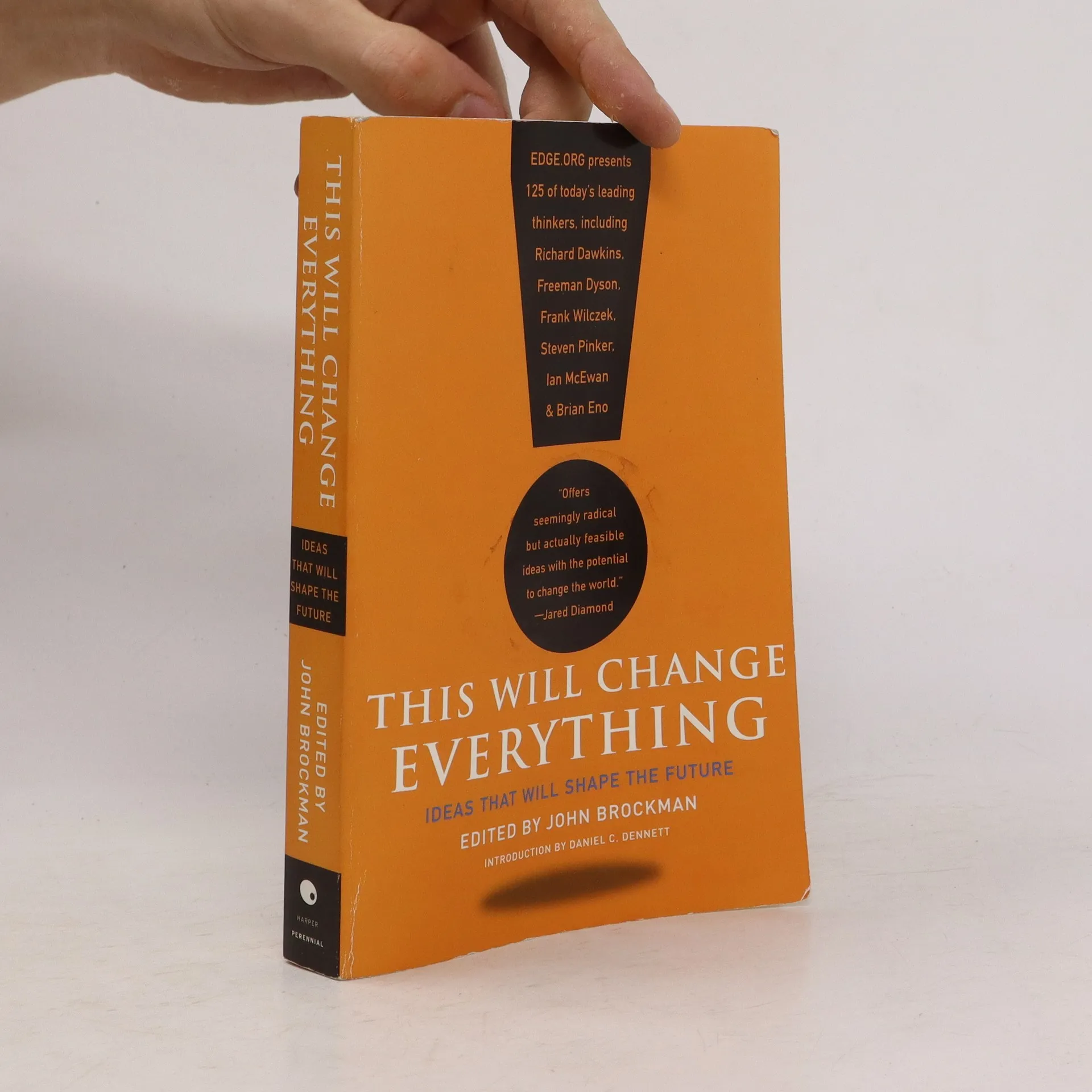
  • “ This Will Change Everything offers seemingly radical but actually feasible ideas with the potential to change the world.”—Jared Diamond, Pulitzer Prize-winning author of Guns, Germs, and Steel Editor John Brockman continues in the same vein as his popular compilations What Are You Optimistic About and What Have You Changed Your Mind About with This Will Change Every thing. Brockman asks 150 intellectual superstars “what game-changing scientific ideas and developments do you expect to live to see?” Their fascinating responses are collected here, from bestselling author of Atonement Ian McEwan to Nobel Prize-winning physicist Frank Wilczek to electronic music pioneer Brian Eno to writer, actor, director, and activist Alan Alda.

    This Will Change Everything
    3,8
  • In an age too often marked by anxiety and pessimism, the worlds leading scientific thinkers offer their hopeful visions for the future.

    What are You Optimistic About?
    3,7
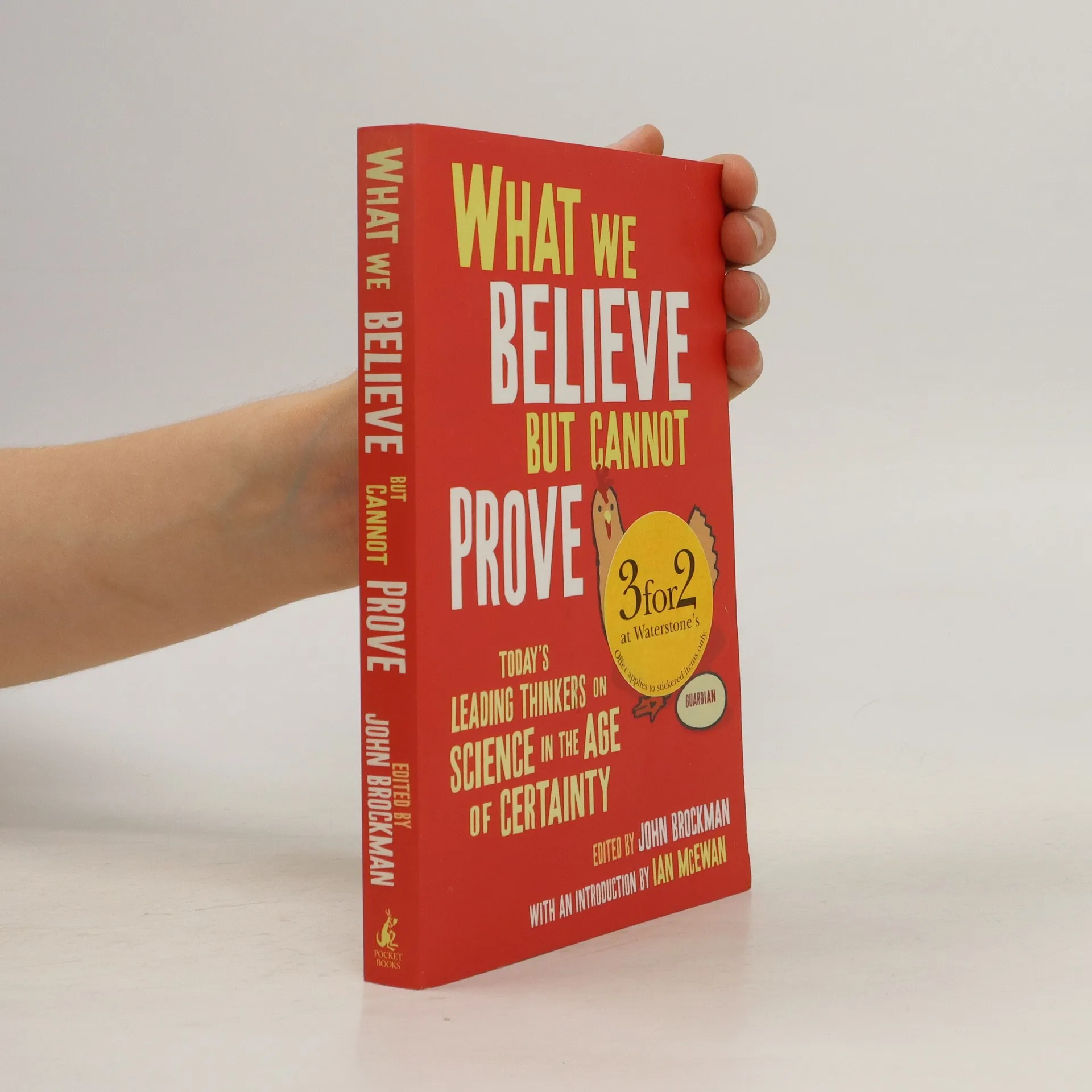
  • ""What do you believe is true even though you cannot prove it?"" This was the question posed by John Brockman to a group of leading scientists and thinkers via his Edge.org website. The subsequent answers created a media storm and prompted a fiery debate about all aspects of science, technology and even the nature of ""proof"". WHAT WE BELIEVE BUT CANNOT PROVE brings together the very best answers from the most eminent contributors. Here is Ian McEwan on the absence of an afterlife; Richard Dawkins on the relationship between design and evolution; and Jared Diamond on when humans first reached the Americas. Other contributions from luminaries like Steven Pinker, John Horgan and Martin Rees span the whole range of scientific endeavour and human experience, from the future of computing to the origins of intelligence; from insights into childhood behaviour to cutting-edge cosmology. Thought-provoking and hugely compelling, this collection is both a fascinating insight into the instinctive beliefs of some of the most brilliant minds alive today -- and an invitation to answer the question yourself . . .

    What We Believe But Cannot Prove
    3,4