
Bookbot

Josef Kohlbacher

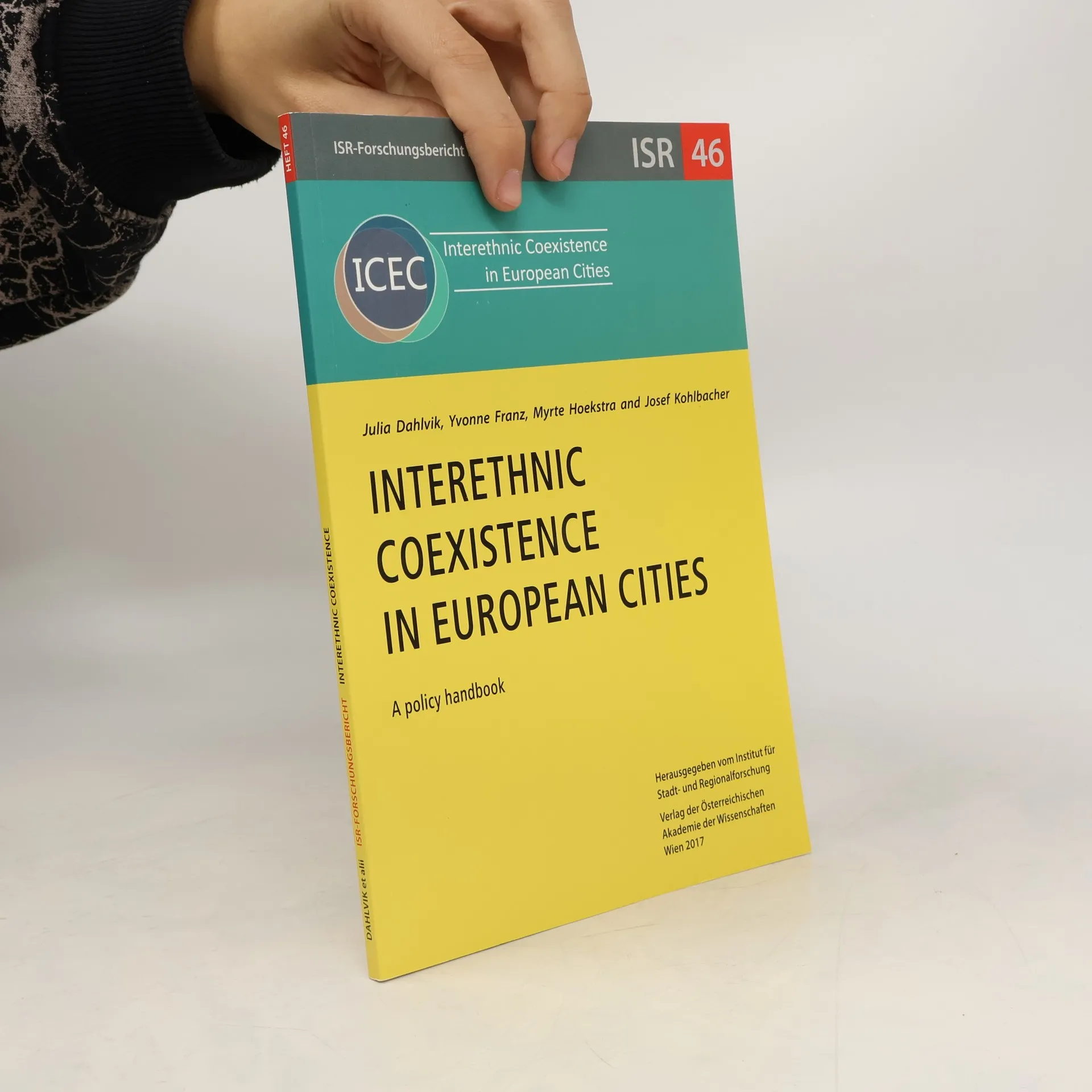
    ISR-Forschungsbericht - 46: Interethnic Coexistence in European Cities
    COVID-19 im Flucht- und Integrationskontext
    Afghan/inn/en in Österreich
    Vulnerabilität in Fluchtkontexten
    Kritische Analyse der sozialen Integration einer sogenannten "Problemgruppe" im Wiener Stadtraum
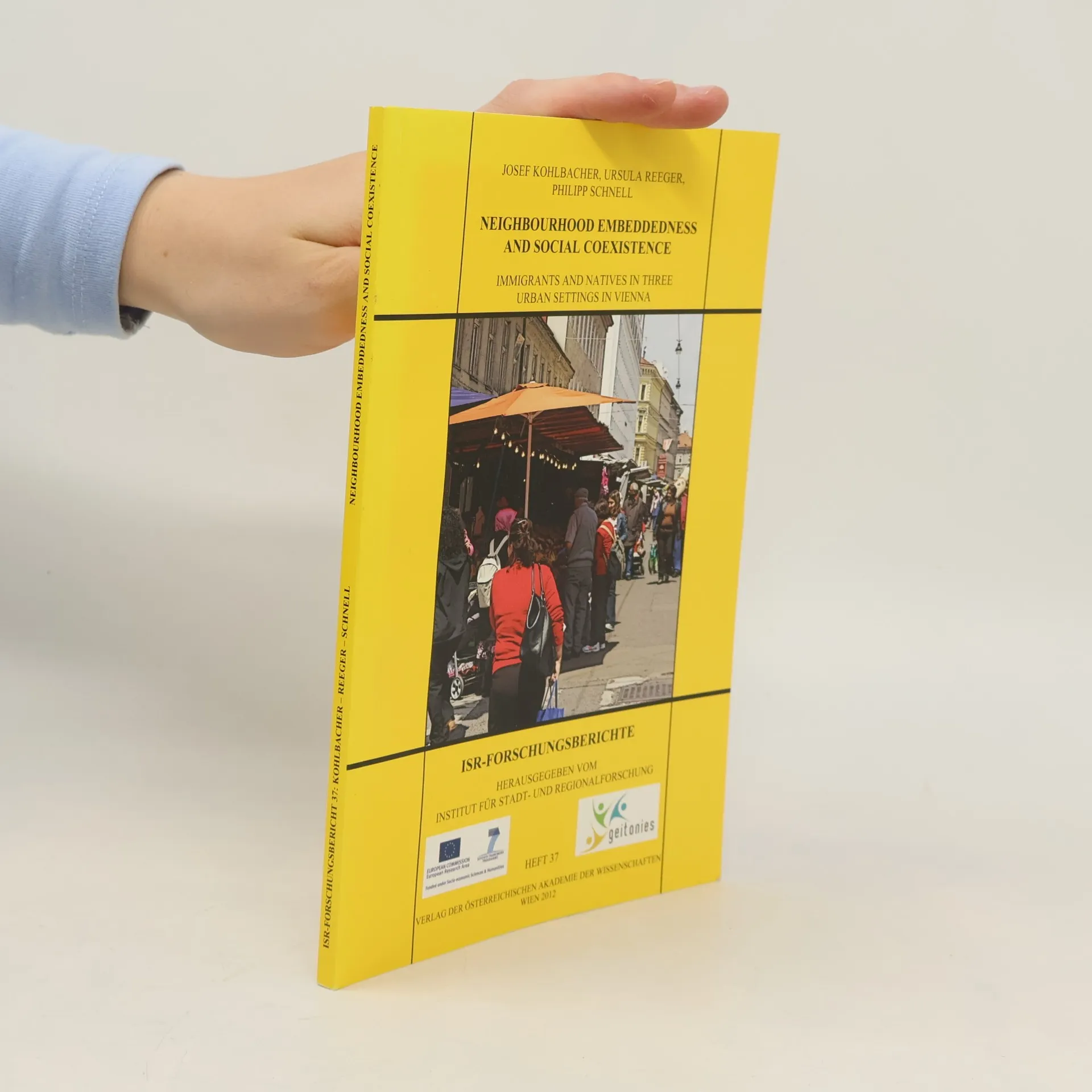
    ISR-Forschungsberichte - 37: Neighbourhood Embeddedness And Social Coexistence
    • ISR-Forschungsberichte - 37: Neighbourhood Embeddedness And Social Coexistence

      Immigrants And Natives In Three Urban Settings In Vienna

      • 106bladzijden
      • 4 uur lezen

      This research report is an outcome of the contribution of the Austrian Academy of Sciences team within the EU-funded project GEITONIES. It is thematically focused on the connections between social contacts and neighbourhood embeddedness in three Viennese neighbourhoods. The research was innovative by focusing not only on the immigrant population but on the whole population. A general result was that the differences between the three research areas are often much more accentuated than the differences between immigrants and natives who inhabit the same neighbourhood. This can be evaluated as an indicator of a specific local atmosphere, which shapes neighbourhood embeddedness. As a conclusion one can say that neighbourhoods are still important places for local residents and that social networks within the neighbourhood are the major explanatory determinant for differences in the levels of embeddedness. Thus, creating opportunities for meeting in public space may be a successful strategy on the way to a more cohesive urban society.
      ISR-Forschungsberichte - 37: Neighbourhood Embeddedness And Social Coexistence
    • Der Forschungsbericht untersucht die soziale Integration afghanischer Communities in Wien, beleuchtet deren Nutzung öffentlicher Räume und die damit verbundenen Interaktionen. Er thematisiert Konflikte sowie die sozialen Kontakte afghanischer Frauen im Spannungsfeld zwischen Tradition und Integration und berücksichtigt die Auswirkungen der COVID-19-Pandemie.

      Kritische Analyse der sozialen Integration einer sogenannten "Problemgruppe" im Wiener Stadtraum
    • COVID-19 im Flucht- und Integrationskontext

      Soziale Implikationen der Pandemie für die syrischen und afghanischen Communities sowie NGOs der Flüchtlingsbetreuung in Wien. Unter Mitarbeit von Ass.-Prof. Mag. Dr. Gabriele Rasuly-Paleczek, Sabine Bauer-Amin, Ph.D. und Marie Lehner, BA

      • 204bladzijden
      • 8 uur lezen

      Die COVID-19-Pandemie hat alle sozialen Schichten der Bevölkerung in Österreich in vielfacher, aber doch unterschiedlicher Weise betroffen. Während Untersuchungen zu den Auswirkungen auf Schüler/innen und Student/inn/en sowie auf ältere Personen bereits vorliegen, fand die vulnerable Gruppe der Geflüchteten bislang viel weniger mediale und wissenschaftliche Aufmerksamkeit. Primäres Ziel des nun vorliegenden Forschungsberichts ist es, dieses Forschungsdefizit zu den komplexen Auswirkungen der Pandemie auf die syrischen und afghanischen Communities in Wien zu kompensieren. Darüber hinaus wurde vor allem den Vereinen der Communities und den NGOs besonderes Augenmerk geschenkt. Diese waren in ihren Informations- und Unterstützungsleistungen mit besonderen und noch nie dagewesenen Herausforderungen konfrontiert und haben eng mit den Autor/inn/en der Studie zusammengearbeitet. Der Band beinhaltet neben den Ergebnissen einer Online-Befragung sowie qualitativer Interviews mit Expert/inn/en auch eine Reihe von Good-Practice-Empfehlungen für Praktiker/innen, die auch im Falle künftiger Pandemien situationsadäquates Handeln erleichtern würden.

      COVID-19 im Flucht- und Integrationskontext
    • This policy handbook discusses the policy-relevant results of the JPI Urban Europe project "Interethnic Coexistence in European Cities" (ICEC)...] they have their own communities, where they meet and don't want to have contact with us", but also this statement of an Austrian lady: "With Turkish residents one gets a different kind of contact, as there is immediate understanding and openness [...]". The quality of coexistence and the quantity of interethnic interaction are as heterogeneous as the case study neighbourhoods and individuals with whom we spoke. Patterns of interethnic relations are clearly marked by the social and economic status of the neighbourhoods, but are also influenced to a lesser degree by the proportion of the migrant population and the ethnic mix.

      ISR-Forschungsbericht - 46: Interethnic Coexistence in European Cities