



Parameters
- 89bladzijden
- 4 uur lezen
Meer over het boek
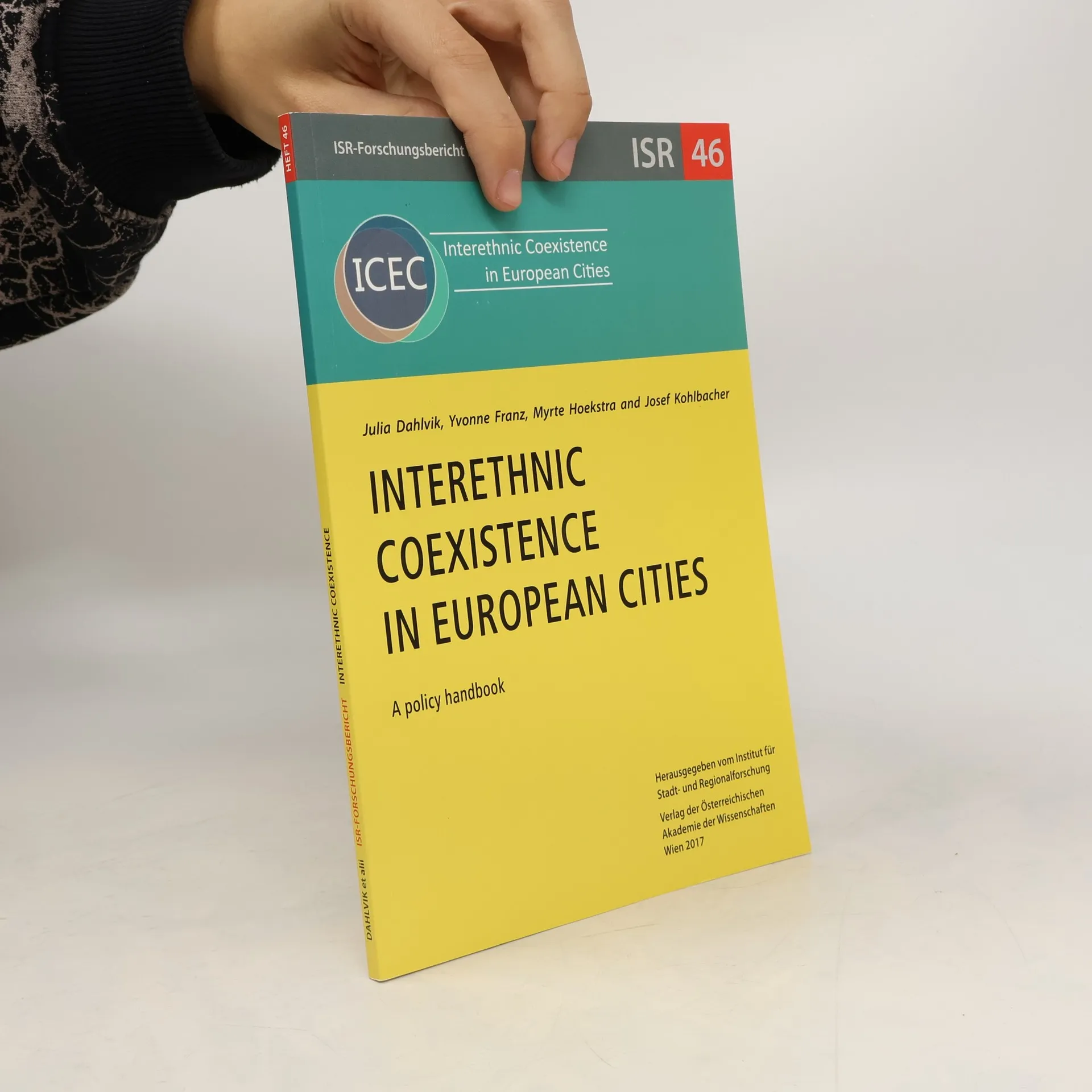
This policy handbook discusses the policy-relevant results of the JPI Urban Europe project "Interethnic Coexistence in European Cities" (ICEC)...] they have their own communities, where they meet and don't want to have contact with us", but also this statement of an Austrian lady: "With Turkish residents one gets a different kind of contact, as there is immediate understanding and openness [...]". The quality of coexistence and the quantity of interethnic interaction are as heterogeneous as the case study neighbourhoods and individuals with whom we spoke. Patterns of interethnic relations are clearly marked by the social and economic status of the neighbourhoods, but are also influenced to a lesser degree by the proportion of the migrant population and the ethnic mix.
Een boek kopen
ISR-Forschungsbericht - 46: Interethnic Coexistence in European Cities, Julia Dahlvik, Yvonne Franz, Myrte Hoekstra, Josef Kohlbacher
- Taal

- Jaar van publicatie
- 2017
- Bindwijze
- (Paperback)
Betaalmethoden
Nog niemand heeft beoordeeld.
- Titel
- ISR-Forschungsbericht - 46: Interethnic Coexistence in European Cities
- Ondertitel
- A Policy Handbook
- Taal
- Duits
- Jaar van publicatie
- 2017
- Formaat
- Paperback
- Aantal pagina's
- 89
- ISBN10
- 3700182007
- ISBN13
- 9783700182009
- Reeks
- Categorieën
- Aantekening
- This policy handbook discusses the policy-relevant results of the JPI Urban Europe project "Interethnic Coexistence in European Cities" (ICEC)...] they have their own communities, where they meet and don't want to have contact with us", but also this statement of an Austrian lady: "With Turkish residents one gets a different kind of contact, as there is immediate understanding and openness [...]". The quality of coexistence and the quantity of interethnic interaction are as heterogeneous as the case study neighbourhoods and individuals with whom we spoke. Patterns of interethnic relations are clearly marked by the social and economic status of the neighbourhoods, but are also influenced to a lesser degree by the proportion of the migrant population and the ethnic mix.