
Bookbot

Libero Sosio

    De wereld van Star Trek
    Are we smart enough to know how smart animals are?
    Scritti
    The Turning Point
    The Origin of Consciousness in the Breakdown of the Bicameral Mind
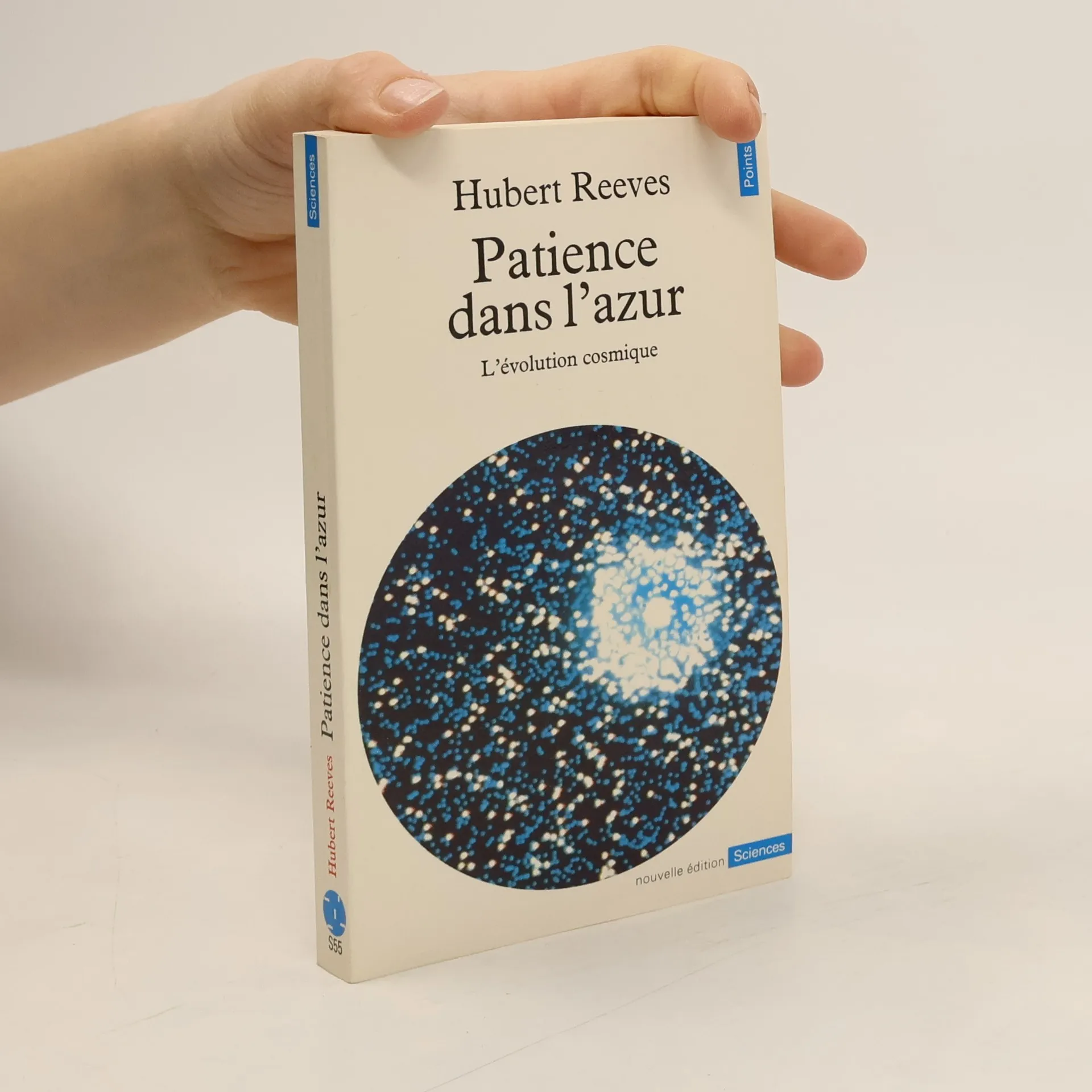
    Patience dans l'azur
    • What separates your mind from that of an animal? Is it the ability to design tools; a sense of self; or the grasp of past and future? In recent decades these claims have eroded, or even been disproven outright, by a revolution in the study of animal cognition. Waal explores both the scope and the depth of animal intelligence, offering a firsthand account of how science has stood traditional behaviorism on its head by revealing how smart animals really are, and how we've underestimated their abilities for too long.

      Are we smart enough to know how smart animals are?2016
      4,0
    • Scritti

      Volume II

      • 437bladzijden
      • 16 uur lezen
      Scritti2005
      3,7
    • De wereld van Star Trek

      • 208bladzijden
      • 8 uur lezen

      Hoe werkt een warp-drive precies? Wat is het verschil tussen een holodek en een hologram? Wat gebeurt er als je wordt 'opgestraald'? Wat is het verschil tussen een wormgat en een zwart gat? Wat is antimaterie en waarom heeft de Enterprise die nodig? Is het mogelijk om te reizen in de tijd, en kan ik mijn vader vermoorden nog voor ik geboren ben? Al deze vragen hebben betrekking op de natuurkundige aspecten van de wereld van Star Trek. Wat behoort in deze wereld tot de (theoretische) mogelijkheden en wat is pure fiction of zelfs volslagen onmogelijk? Op deze vragen wordt ingegaan door de bekende natuurkundige Lawrence M. Krauss en hij geeft een aantal fascinerende antwoorden. Lawrence M. Krauss is hoogleraar natuurkunde en astronomie; hij is hoofd van de Afdeling Fysica van de Case Western Reserve Universiteit.

      De wereld van Star Trek1996
      3,9
    • What is human consciousness, where did it come from, and how does it determine who we are and how we live in the world? At the heart of this book is the theory that human consciousness did not develop over time--that, in fact, ancient peoples from mesopotamia to Peru did not "think" as we do and therefore were not conscious. Drawing on laboratory studies of the brain and clos examination of archaeological evidence, the author concludes that consciousness is not a product of evolution but of catastrophic events in our own history, events that occurred as recently as three thousand years ago.

      The Origin of Consciousness in the Breakdown of the Bicameral Mind1996
      4,3
    • Patience dans l'azur

      L'évolution cosmique - nouvelle édition

      • 324bladzijden
      • 12 uur lezen

      Paul Valéry, étendu sur le sable chaud d’une lagune, regarde le ciel. Dans son champ de vision, des palmiers se balancent mollement, mûrissant leurs fruits. Il est à l’écoute du temps qui sourdement fait son œuvre. Cette écoute, on peut l’appliquer à l’univers. Au fil du temps se déroule la gestation cosmique. À chaque seconde, l’univers prépare quelque chose. Il monte lentement les marches de la complexité. » H.R.Quand Hubert Reeves rencontre Paul Valéry, et l’astrophysique la poésie, la vulgarisation des sciences s’enrichit d’un grand classique qui, en un quart de siècle, n’a pas pris une ride.

      Patience dans l'azur1993
      4,4
    • The Turning Point

      Science Society and the Rising Culture

      "We are trying to apply the concepts of an outdated world view--the mechanistic world view of Cartesian-Newtonian science--to a reality that can no longer be understood in terms of these concepts ... To describe this world appropriately, we need an ecological perspective that the Cartesian world view does not offer." (Preface 15,16)

      The Turning Point1990
      4,2