Marx And The Earth
- 218bladzijden
- 8 uur lezen
In this compelling anti-critique the founders of the Eco-socialist school of thought respond to their chief intellectual detractors.


John Bellamy Foster staat bekend om zijn diepgaande analyse van de politieke economie van het kapitalisme, economische crises en ecologische vraagstukken. Als hoogleraar sociologie en gerespecteerde tijdschriftredacteur richt hij zich op een kritische analyse van hedendaagse sociale en ecologische uitdagingen. Zijn werk is geworteld in de marxistische theorie en biedt inzichtelijke perspectieven op de onderlinge verbondenheid van economische systemen en ecologische duurzaamheid. Fosters geschriften nodigen uit tot een bedachtzame beschouwing van de grondoorzaken van onze wereldwijde crises.




In this compelling anti-critique the founders of the Eco-socialist school of thought respond to their chief intellectual detractors.
There may still be disagreement about the threat to human survival posed by society’s environmental impacts, but no one can doubt that individual eco-systems and the global biosphere are both increasingly shaped by human production and consumption. This book shows that Marx’s treatment of natural conditions possesses an inner logic, coherence, and analytical power which has not been previously recognized. The power of Marx’s approach stems from his consistent treatment of human production in terms of the mutual constitution of its social form and material content. While recognizing that production is structured by historically developed relations among producers, Marx also insists that production as a social and material process is shaped and constrained by natural conditions, including the natural condition of human bodily existence. Paul Burkett shows that it is Marx’s overriding concern with human emancipation that impels him to approach nature from the standpoint of materialist history, sociology, and critical political economy.
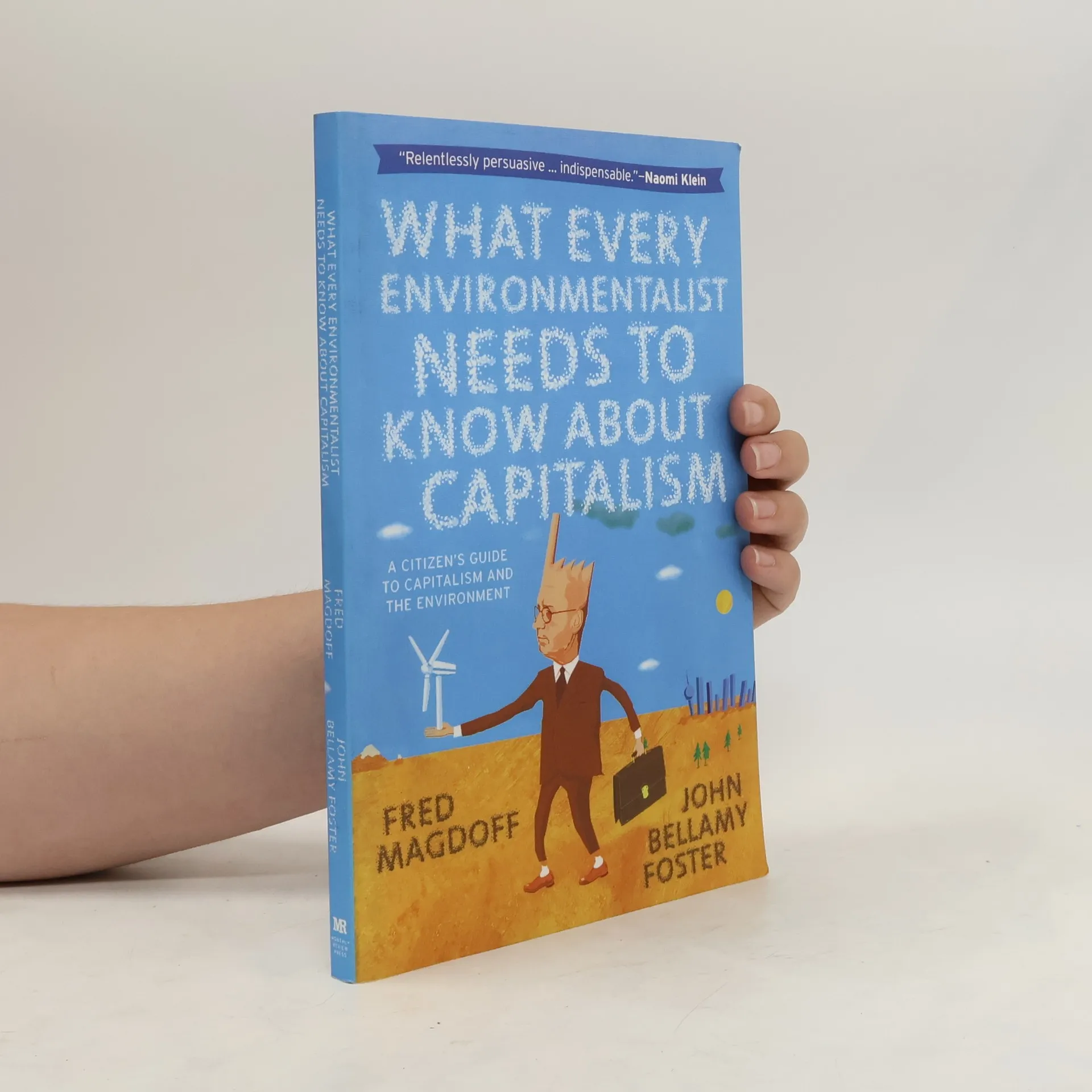
"There is a growing consensus that the planet is heading toward environmental catastrophe: climate change, ocean acidification, ozone depletion, global freshwater use, loss of biodiversity, and chemical pollution all threaten our future unless we act. What is less clear is how humanity should respond. The contemporary environmental movement is the site of many competing plans and prescriptions, and composed of a diverse set of actors, from militant activists to corporate chief executives. What Every Environmentalist Needs To Know about Capitalism tackles the two largest issues of our time, the ecological crisis and the faltering capitalist economy, in a way that is thorough, accessible, and sure to provoke debate in the environmental movement."--Pub. desc.
A charming, witty and stunning debut with the breadth of appeal from Ardal O'Hanlon to Mike Gayle.
The book explores the urgent need for revolutionary changes to address humanity's ecological crisis. John Bellamy Foster argues for the possibility of uniting humanity with the earth through ecological socialism, contrasting it with capitalist exterminism. He delves into historical debates about the relationship between nature and society, while analyzing current conflicts stemming from capitalist extractivism and the financialization of nature. Additionally, Foster highlights emerging concepts of ecological civilization and planned degrowth as radical responses to these challenges.
An illustrated thesaurus presenting over 6,000 word entries accompanied by synonyms, antonyms, and homonyms.
Na podzim 2008 se Spojené státy a s nimi většina světa propadly do finanční krize horší než kdykoli předtím od dob Velké hospodářské krize. Když se hroutily banky a stát se zasazoval o jeden z největších přesunů majetku v historii, mnozí - včetně ekonomů a finančních expertů - byli šokováni rychlostí, s jakou byly tyto záměry zveřejněny. V této nové knize (originál vyšel v New Yorku v lednu 2009) nabízejí Foster a Magdoff odvážnou analýzu finanční krize, jak k ní došlo a jaké bude mít důsledky do budoucna. Tato aktuální a vysoce fundovaná kniha, která začala vznikat už dva roky před začátkem krize, je vhodná pro všechny, kdo chtějí rozumět současné situaci, jak jsme se v ní octli a kam směřujeme.
Soubor článků od českých i zahraničních autorů, které přibližují sociální, ekonomické a politické rozměry současné klimatické krize, i systémové koncepty jejího řešení.
Die oberen zehn Prozent der Menschheit wirtschaften und leben, als hätten sie einen zweiten Planeten zur Verfügung. Der »Erdüberlastungstag« in Deutschland liegt inzwischen im Mai, d. h. an diesem Tag sind bereits sämtliche natürlichen Ressourcen für das Jahr verbraucht. Die ökologische Krise schreitet immer rascher voran. Wissenschaftler haben ermittelt, dass der Amazonas-Regenwald, die Taiga und das Mittelmeer schon jetzt kein CO2 mehr aufnehmen, sondern CO2 abgeben. Flutkatastrophen wie im Ahrtal einerseits, Hitzewellen und Dürre andererseits sind die bereits spürbaren Vorboten des sich immer stärker beschleunigenden Klimawandels. Die Erderwärmung ist nach einem neuen Bericht des Weltklimarates bereits um 1,1°C gestiegen, das Erreichen des 1,5°C-Ziels wird immer schwieriger. Können wir hinsichtlich möglicher Alternativen aus den Schriften des klassischen Marxismus noch etwas lernen? Wie kann der Stoffwechsel Mensch-Natur ohne große Zerstörungen gestaltet werden? Und wie steht es um gegenwärtig diskutierte Ansätze wie »Degrowth« oder den »linken Green New Deal«? Zu diesen Fragen enthält das Buch Beiträge von John Bellamy Foster, Michael Löwy, Jess Spear, Daniel Tanuro und Christian Zeller, die für eine ökosozialistische Alternative zur Klimakatastrophe und zum »grünen Kapitalismus« plädieren.
John Bellamy Foster weist detailliert nach, dass der Stoffwechsel von Mensch und Natur und das Denken des Menschen als Teil der Natur ein zentraler Bestandteil der Marxschen Theoriebildung ist. Das Werk des US-Theoretikers John Bellamy Foster ist zu einem ideengeschichtlichen Standardwerk zum Thema kritisches ökologisches Denken, Marx und Ökologie avanciert. Es hat für zahlreiche interdisziplinäre Diskurse einen nachdrücklichen Eindruck hinterlassen: So beziehen sich viele zeitgenössische Werke (z. B. Naomi Klein 2024, This Changes Everything, Kohei Saito 2016, Natur gegen Kapital; Eva von Redecker, 2020 Revolution für das Leben) auf Fosters Forschungsarbeit, sind davon in ihren eigenen Forschungsarbeiten inspiriert oder versuchen, die von Foster aufgedeckte „Ökologie von Karl Marx“ systematisch auszuarbeiten und zu aktualisieren.