

Meer over het boek
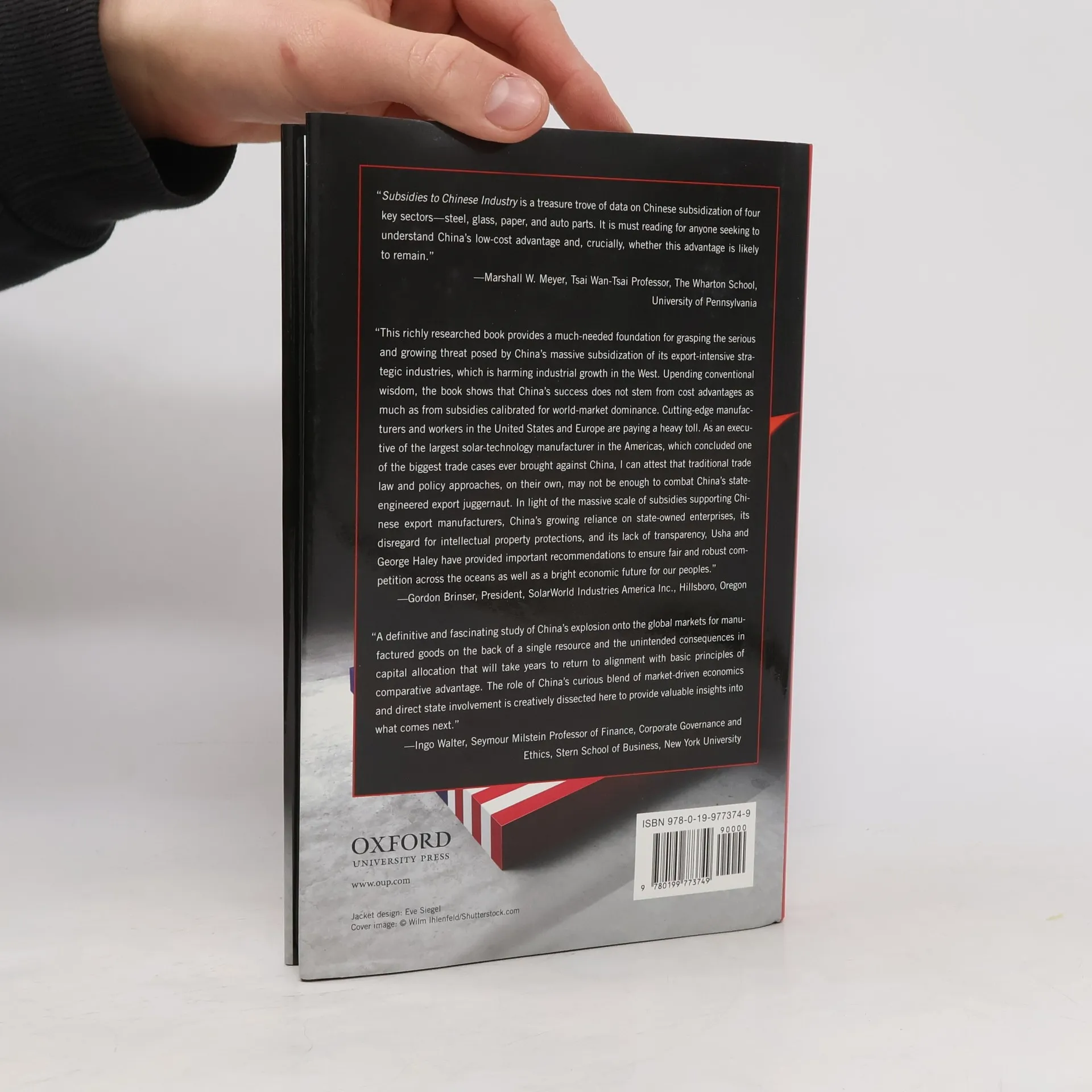
How did China rapidly ascend to become the largest manufacturer and exporter globally without labor-cost or scale advantages? This book posits that subsidies played a crucial role in this transformation, with industrial subsidies in key sectors potentially exceeding thirty percent of industrial output. While economic theories often view subsidies as distortive and inefficient, China's state-capitalist regime utilizes them to advance the interests of the government and the Communist Party. Instead of being anomalies, these subsidies enable Chinese businesses and governments to produce, stabilize, and shape market perceptions. The dynamics of capital flow reveal the interplay between central and provincial governments. The authors introduce concepts of state capitalism, including market-transition theory and the state as a paramount shareholder, to provide a nuanced understanding of Chinese subsidies. They develop independent measures of these subsidies using publicly available data at both firm and industry levels. The analysis covers various forms of subsidies, such as low-cost loans and support for energy and key inputs. Four studies trace the evolution of subsidies in Chinese manufacturing and their impact on global industries like steel, glass, paper, and auto parts. The book also examines how these subsidies influence business strategies, including lobbying and supply chain management, as well as government regulations on
Een boek kopen
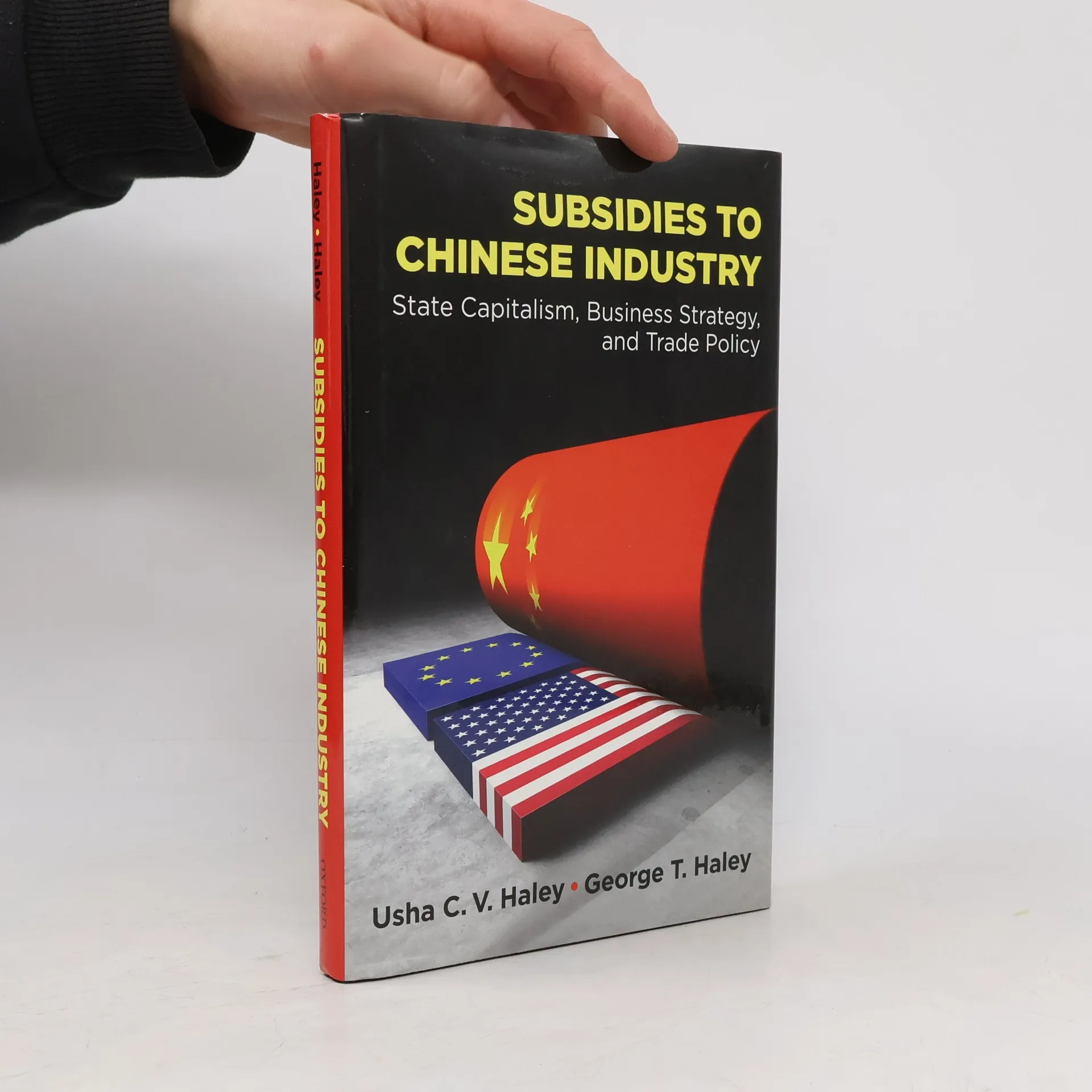
Subsidies to Chinese Industry, Usha C.V. Haley, George T. Haley
- Taal

- Jaar van publicatie
- 2013
- Bindwijze
- (Hardcover)
Betaalmethoden
We missen je recensie hier.
- Titel
- Subsidies to Chinese Industry
- Ondertitel
- State Capitalism, Business Strategy, and Trade Policy
- Taal
- Engels
- Auteurs
- Usha C.V. Haley, George T. Haley
- Uitgever
- Oxford University Press
- Jaar van publicatie
- 2013
- Formaat
- Hardcover
- Aantal pagina's
- 258
- ISBN10
- 0199773742
- ISBN13
- 9780199773749
- Reeks
- Categorieën
- Tags
- Handel, Verenigde Staten, Azië, China, Financiën, Politieke theorieën, Politieke Economie, Subsidies
- Beoordeling
- 4,15 van 5
- Aantekening
- How did China rapidly ascend to become the largest manufacturer and exporter globally without labor-cost or scale advantages? This book posits that subsidies played a crucial role in this transformation, with industrial subsidies in key sectors potentially exceeding thirty percent of industrial output. While economic theories often view subsidies as distortive and inefficient, China's state-capitalist regime utilizes them to advance the interests of the government and the Communist Party. Instead of being anomalies, these subsidies enable Chinese businesses and governments to produce, stabilize, and shape market perceptions. The dynamics of capital flow reveal the interplay between central and provincial governments. The authors introduce concepts of state capitalism, including market-transition theory and the state as a paramount shareholder, to provide a nuanced understanding of Chinese subsidies. They develop independent measures of these subsidies using publicly available data at both firm and industry levels. The analysis covers various forms of subsidies, such as low-cost loans and support for energy and key inputs. Four studies trace the evolution of subsidies in Chinese manufacturing and their impact on global industries like steel, glass, paper, and auto parts. The book also examines how these subsidies influence business strategies, including lobbying and supply chain management, as well as government regulations on