



Parameters
- 209bladzijden
- 8 uur lezen
Meer over het boek
Structural biology is increasingly becoming a standard technique for structure determination in the pharmaceutical industry. Advances in molecular biology, crystal handling, data collection, tunable synchrotron radiation sources, and high-performance computing have facilitated the production and expression of tailored protein domains, the use of the MAD (Multiple Anomalous Dispersion) method, and the collection of X-ray data from tiny crystals at cryogenic temperatures. The Protein Databank has seen a remarkable increase in protein structure deposits, with over 1,500 structures submitted annually since 1997. In just the first seven months of this year, another 1,500 structures were added. Global initiatives in "structural genomics" have led to high-throughput structure determination techniques, further boosting the number of three-dimensional protein structures identified. This structural information plays a crucial role in drug discovery, being utilized not only in structure-based drug design for new low-molecular-weight ligands but also in the early stages of target validation and assessment. As the number of protein sequences lacking significant homology to known proteins grows, structure-sequence compatibility (threading) is increasingly employed to assign functions to specific protein folds.
Een boek kopen
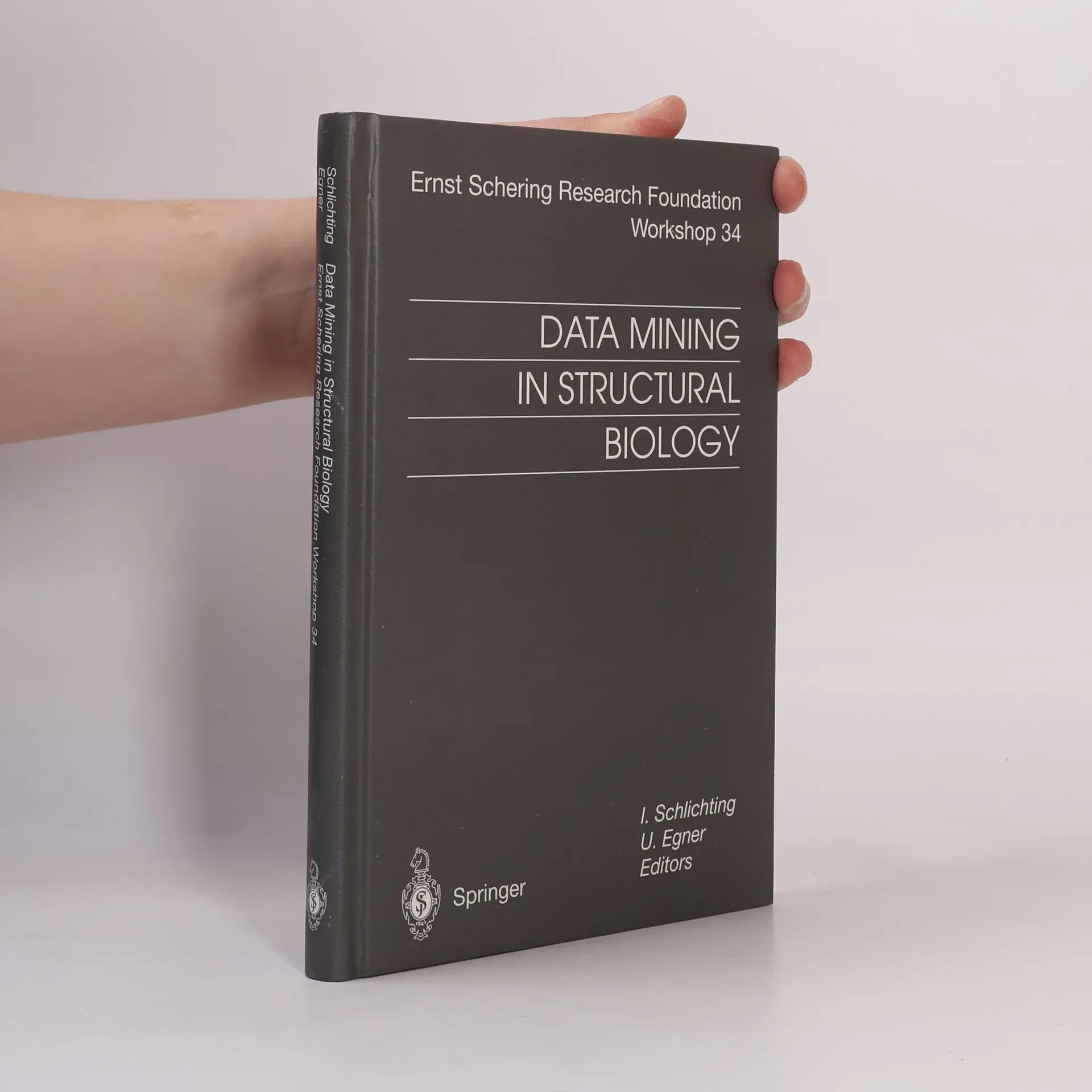
Ernst Schering Research Foundation Workshop - 34: Data Mining in Structural Biology, I. Schlichting, U. Egner
- Taal

- Jaar van publicatie
- 2001
- Bindwijze
- (Hardcover)
Betaalmethoden
Nog niemand heeft beoordeeld.
- Titel
- Ernst Schering Research Foundation Workshop - 34: Data Mining in Structural Biology
- Ondertitel
- Signal Transduction and Beyond
- Taal
- Engels
- Auteurs
- I. Schlichting, U. Egner
- Uitgever
- Springer
- Jaar van publicatie
- 2001
- Formaat
- Hardcover
- Aantal pagina's
- 209
- ISBN10
- 3540414940
- ISBN13
- 9783540414940
- Reeks
- Categorieën
- Tags
- Natuurwetenschappen, Wetenschap, Duitsland, Geneeskunde, Biochemie, Moleculaire biologie, Cytologie, Transcriptie
- Aantekening
- Structural biology is increasingly becoming a standard technique for structure determination in the pharmaceutical industry. Advances in molecular biology, crystal handling, data collection, tunable synchrotron radiation sources, and high-performance computing have facilitated the production and expression of tailored protein domains, the use of the MAD (Multiple Anomalous Dispersion) method, and the collection of X-ray data from tiny crystals at cryogenic temperatures. The Protein Databank has seen a remarkable increase in protein structure deposits, with over 1,500 structures submitted annually since 1997. In just the first seven months of this year, another 1,500 structures were added. Global initiatives in "structural genomics" have led to high-throughput structure determination techniques, further boosting the number of three-dimensional protein structures identified. This structural information plays a crucial role in drug discovery, being utilized not only in structure-based drug design for new low-molecular-weight ligands but also in the early stages of target validation and assessment. As the number of protein sequences lacking significant homology to known proteins grows, structure-sequence compatibility (threading) is increasingly employed to assign functions to specific protein folds.