

Meer over het boek
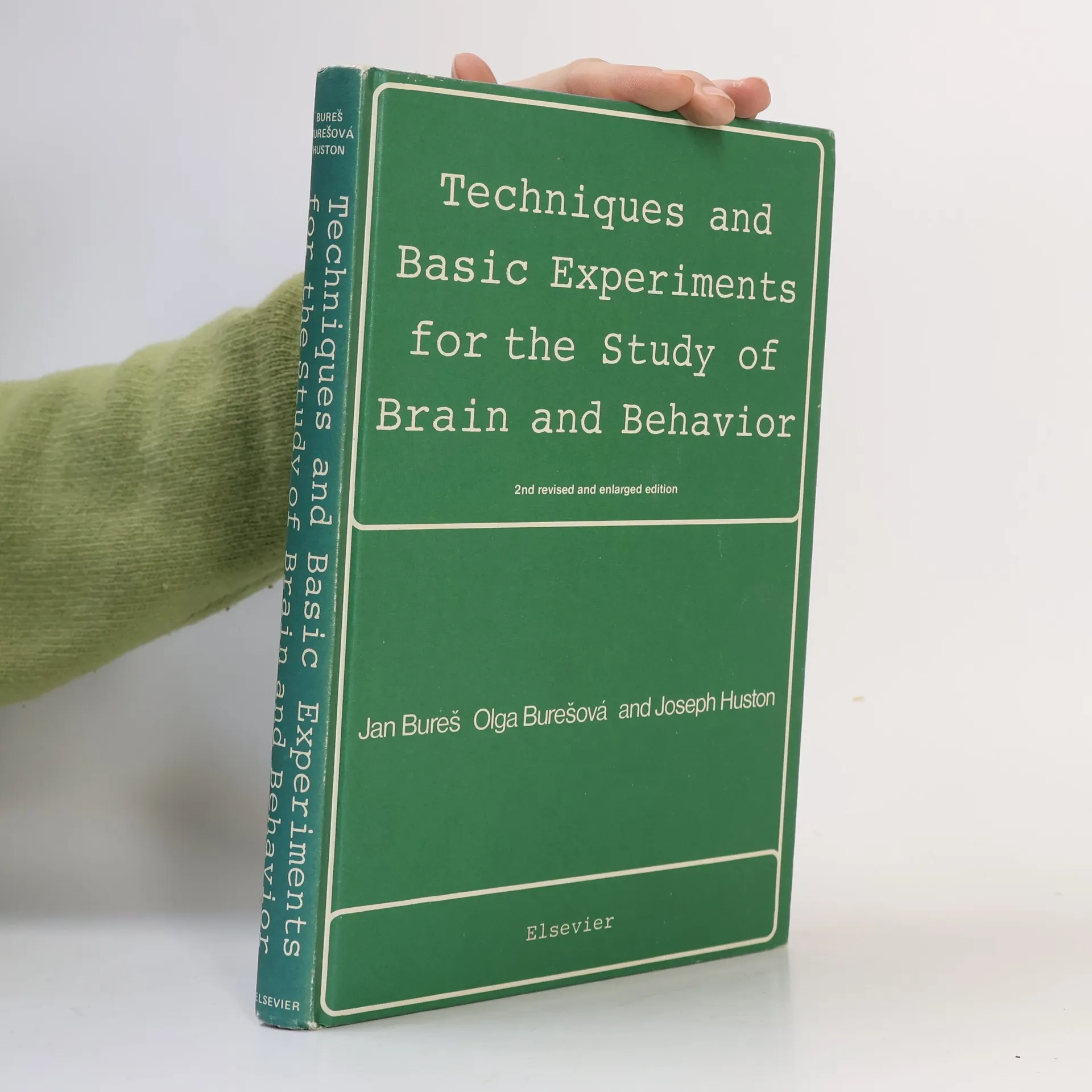
Techniques and Basic Experiments for the Study of Brain and Behavior emphasizes the practical aspects of conducting behavioral experiments, illustrates various fundamental methods with characteristic examples, and provides a thorough description of the techniques. This text aims to teach the basic skills of behavioral research by providing a wide range of reproducible experiments. Most of the experiments can be completed within a few hours, making them suitable for classroom demonstrations and laboratory courses for students. Although the book is organized into systematically arranged sections, the reader can commence with any of the experiments without studying the preceding chapters. A general knowledge of physiological psychology, as outlined in Chapter 1, is indispensable. This book is intended for students and scientists interested in physiological psychology.
Een boek kopen
Techniques and Basic Experiments for the Study of Brain and Behavior, Jan Bureš, Olga Burešová, Joseph P. Huston
- Taal

- Jaar van publicatie
- 1983
- Bindwijze
- (Hardcover)
Betaalmethoden
Nog niemand heeft beoordeeld.
- Titel
- Techniques and Basic Experiments for the Study of Brain and Behavior
- Ondertitel
- 2nd Revised and Enlarged Edition
- Taal
- Engels
- Auteurs
- Jan Bureš, Olga Burešová, Joseph P. Huston
- Jaar van publicatie
- 1983
- Formaat
- Hardcover
- Aantal pagina's
- 326
- ISBN10
- 044480448X
- ISBN13
- 9780444804488
- Reeks
- Categorieën
- Tags
- Psychologische thema’s, Scripties en Hoger Onderwijsboeken, Brein, Experimenten (wetenschap), Neuropsychologie
- Aantekening
- Techniques and Basic Experiments for the Study of Brain and Behavior emphasizes the practical aspects of conducting behavioral experiments, illustrates various fundamental methods with characteristic examples, and provides a thorough description of the techniques. This text aims to teach the basic skills of behavioral research by providing a wide range of reproducible experiments. Most of the experiments can be completed within a few hours, making them suitable for classroom demonstrations and laboratory courses for students. Although the book is organized into systematically arranged sections, the reader can commence with any of the experiments without studying the preceding chapters. A general knowledge of physiological psychology, as outlined in Chapter 1, is indispensable. This book is intended for students and scientists interested in physiological psychology.